
Nexo Earn with Nexo
Federal Reserve Vice Chair Jefferson tackles AI, energy shocks, and trade disruptions at Bank of Japan conference

Federal Reserve Vice Chair Jefferson tackles AI, energy shocks, and trade disruptions at Bank of Japan conference

Philip Jefferson's Tokyo remarks signal the Fed remains laser-focused on supply-side risks, with zero mention of crypto or digital assets in the policy conversation.

The Federal Reserve’s second-in-command just outlined what keeps him up at night, and it has nothing to do with Bitcoin.

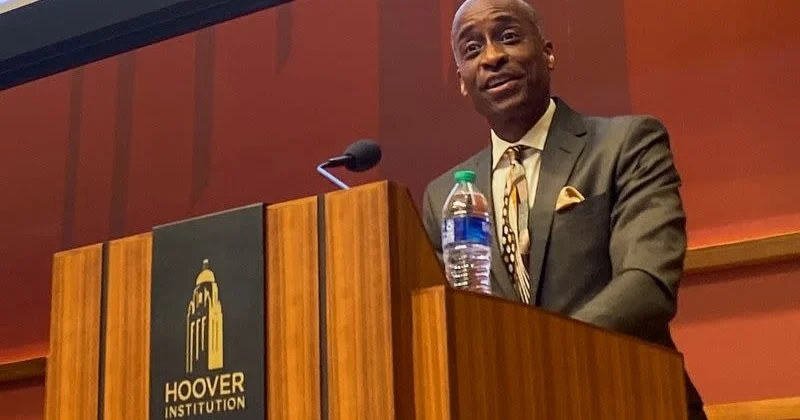
Vice Chair Philip N. Jefferson joined a fireside chat at the Bank of Japan’s Institute for Monetary and Economic Studies on May 28, sitting alongside ECB Chief Economist Philip R. Lane for a conversation titled “Monetary Policy from New Perspectives.” The discussion covered rising global energy prices, the economic implications of artificial intelligence, trade disruptions, and the broader US economic outlook. The session was moderated by Ryozo Himino of the Bank of Japan.

Advertisement

What Jefferson actually said (and why it matters)

Jefferson zeroed in on several interconnected pressures. Global energy prices continue to create inflationary headwinds. Trade disruptions, likely tied to ongoing geopolitical tensions and shifting supply chains, are adding complexity to an already uncertain outlook. Jefferson has consistently addressed AI’s economic implications across multiple speeches, exploring how AI affects both sides of the Fed’s dual mandate: maximum employment and price stability.

A late 2025 survey of Fed contacts found that 30% noted concerns about AI-driven sentiment shifts, up sharply from just 9% earlier in the year.

The cautious normalization playbook

Jefferson’s remarks fit neatly into the Fed’s current posture: cautious policy normalization with a heavy emphasis on supply-side risks. The BOJ has been dealing with its own inflationary dynamics after decades of deflation. The ECB, represented by Lane, faces energy-driven price pressures from a different angle.

What this means for crypto investors

The complete absence of crypto, digital assets, stablecoins, or CBDCs from the fireside chat is worth noting. When the vice chair is given a global stage to discuss the issues actively shaping rate decisions, digital assets didn’t make the cut.

The AI thread is also worth tracking for crypto investors specifically. If Jefferson and the broader Fed become convinced that AI is a net deflationary force, that could eventually support a more dovish stance. Jefferson has been exploring this question publicly since at least 2025.

Disclosure: This article was edited by Editorial Team. For more information on how we create and review content, see our Editorial Policy.

Federal Reserve Vice Chair Jefferson tackles AI, energy shocks, and trade disruptions at Bank of Japan conference

Federal Reserve Vice Chair Jefferson tackles AI, energy shocks, and trade disruptions at Bank of Japan conference

Philip Jefferson's Tokyo remarks signal the Fed remains laser-focused on supply-side risks, with zero mention of crypto or digital assets in the policy conversation.

The Federal Reserve’s second-in-command just outlined what keeps him up at night, and it has nothing to do with Bitcoin.

Vice Chair Philip N. Jefferson joined a fireside chat at the Bank of Japan’s Institute for Monetary and Economic Studies on May 28, sitting alongside ECB Chief Economist Philip R. Lane for a conversation titled “Monetary Policy from New Perspectives.” The discussion covered rising global energy prices, the economic implications of artificial intelligence, trade disruptions, and the broader US economic outlook. The session was moderated by Ryozo Himino of the Bank of Japan.

Advertisement

What Jefferson actually said (and why it matters)

Jefferson zeroed in on several interconnected pressures. Global energy prices continue to create inflationary headwinds. Trade disruptions, likely tied to ongoing geopolitical tensions and shifting supply chains, are adding complexity to an already uncertain outlook. Jefferson has consistently addressed AI’s economic implications across multiple speeches, exploring how AI affects both sides of the Fed’s dual mandate: maximum employment and price stability.

A late 2025 survey of Fed contacts found that 30% noted concerns about AI-driven sentiment shifts, up sharply from just 9% earlier in the year.

The cautious normalization playbook

Jefferson’s remarks fit neatly into the Fed’s current posture: cautious policy normalization with a heavy emphasis on supply-side risks. The BOJ has been dealing with its own inflationary dynamics after decades of deflation. The ECB, represented by Lane, faces energy-driven price pressures from a different angle.

What this means for crypto investors

The complete absence of crypto, digital assets, stablecoins, or CBDCs from the fireside chat is worth noting. When the vice chair is given a global stage to discuss the issues actively shaping rate decisions, digital assets didn’t make the cut.

The AI thread is also worth tracking for crypto investors specifically. If Jefferson and the broader Fed become convinced that AI is a net deflationary force, that could eventually support a more dovish stance. Jefferson has been exploring this question publicly since at least 2025.

Disclosure: This article was edited by Editorial Team. For more information on how we create and review content, see our Editorial Policy.