
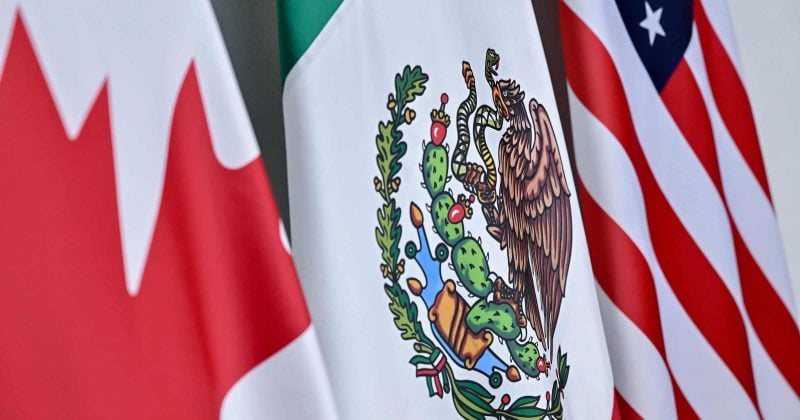
Federal Reserve’s Logan flags investment slowdown in border regions as USMCA review looms
The Dallas Fed president's warning highlights how trade policy uncertainty is already freezing capital before negotiations even begin.
Lorie Logan, President of the Federal Reserve Bank of Dallas, has flagged a noticeable deceleration in investment activity across US border regions. The culprit: growing uncertainty as the formal review of the United States-Mexico-Canada Agreement draws closer.
The USMCA, which governs roughly $1.93 trillion in North American goods and services trade, is scheduled for its mandatory review process beginning in July 2026. Groundwork discussions are expected to start earlier that year.
Border communities feel the freeze first
Logan’s observations zero in on a pattern that’s been building for months. Foreign direct investment in both Mexico and Canada has softened, and nearshoring projects that were once accelerating have hit the brakes. Companies that were pouring capital into manufacturing operations along the US-Mexico border are now sitting on their hands, waiting to see what the review produces.
Manufacturing employment in border areas has already started to decline. New greenfield investments have slowed to a crawl.
The USMCA’s track record and what’s at stake
Since the USMCA replaced NAFTA, intra-regional trade among the US, Mexico, and Canada has grown by 37%. The upcoming review was built into the deal’s DNA. When the USMCA was negotiated, the three countries agreed to a joint review every six years, with a sunset clause that could terminate the agreement after 16 years if not renewed. The 2026 review is the first of these checkpoints.
At issue are potential changes to rules of origin, tariff structures, and investment protections. Rules of origin determine how much of a product needs to be manufactured within North America to qualify for preferential tariff treatment.
The stakes are particularly high for Mexico’s nearshoring boom. In recent years, companies looking to reduce dependence on Asian supply chains had been investing billions in Mexican manufacturing capacity. That trend has now entered a holding pattern.
What this means for investors
Logan’s comments matter because the Dallas Fed sits at the nexus of US-Mexico economic activity. When the head of that institution flags a slowdown in border investment, it’s based on the kind of ground-level economic data, from business surveys and regional indicators, that the Fed’s regional banks are uniquely positioned to collect.
Industrial REITs with border-region exposure, manufacturers with cross-border supply chains, and logistics firms that move goods between the three countries all sit in the potential blast radius of a protracted or contentious review.
Investors would be wise to track the early-2026 preparatory discussions closely. The tone and substance of those preliminary talks will likely set the market’s expectations for the formal review in July. The fact that investment is already pulling back before formal discussions have begun suggests that businesses are assigning meaningful probability to disruptive changes.