
Federal Reserve’s Logan says wages are not fueling inflation, points to energy prices instead
The Dallas Fed president argues that localized wage spikes from AI data center construction haven't shown up in national data, while energy costs remain the real culprit.
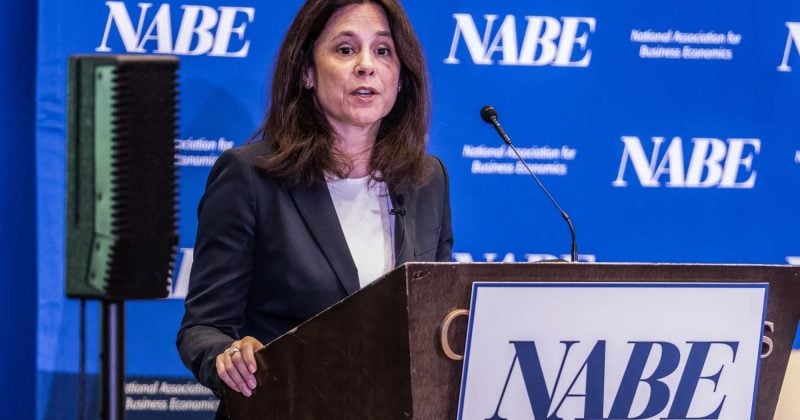
Dallas Fed President Lorie Logan wants to be very clear about one thing: don’t blame workers’ paychecks for rising prices. In remarks made on June 5, 2026, Logan stated that wages are not currently contributing to US inflation concerns, instead pointing the finger squarely at energy prices driven by geopolitical tensions, particularly the ongoing Iran conflict.
For crypto and risk-asset investors who have spent years parsing every syllable from Fed officials for clues about rate direction, this distinction matters. A lot. If wages were driving inflation, the Fed’s playbook would call for aggressive tightening to cool the labor market. But if energy is the culprit, the policy response gets murkier, and the implications for markets shift accordingly.
The AI data center wrinkle
Here’s where it gets interesting. Logan acknowledged that wages are rising in specific pockets of the economy, particularly in West Texas and across the border in Juarez, Mexico, where the construction of AI data centers has created localized labor demand surges.
But she drew a sharp line between regional spikes and national trends. Those localized increases, she argued, have not yet shown up in nationwide wage statistics. In English: a construction boom in the desert doesn’t mean your barista in Ohio is getting a raise.
This is a nuanced position from someone who leads a regional Fed bank that sits right on top of the AI infrastructure buildout. Logan has access to on-the-ground data from business leaders in her district, and she’s essentially saying the signal isn’t strong enough to move the national needle. At least not yet.
Throughout 2025 and 2026, Logan has linked non-housing services inflation to wage growth while observing that the broader job market has been cooling, with wage growth running at around 3.5%. That figure sits in a zone the Fed considers manageable, not the kind of runaway number that would justify panic.
The rate hike question that won’t go away
Despite the relatively sanguine view on wages, Logan has been anything but dovish on the broader inflation picture. Throughout 2026, she has repeatedly raised concerns that inflation could remain stubbornly above the Fed’s 2% target.
The news moving money, markets, and the world—before your day starts.
Daily. Free. Join 34,000+ readers across crypto, finance, and policy.
The federal funds rate currently sits between 3.5% and 3.75%. Logan has suggested that further upward adjustments may be necessary if price pressures don’t ease. That’s hawkish language from a Fed official, and markets have taken notice.
The logic chain is straightforward. Energy prices, amplified by geopolitical instability, are keeping headline inflation elevated. If those pressures persist, the Fed may have no choice but to tighten further, even if the labor market isn’t the problem. It’s a bit like raising the thermostat because the window is open: you’re treating symptoms, not the root cause, but the room still needs to cool down.
Logan has been consistent on this front since assuming leadership of the Dallas Fed in 2022, favoring a data-dependent but vigilant approach. Her comments signal that the Fed is not ready to declare victory on inflation, regardless of where wages are headed.
What this means for crypto and risk assets
For digital asset markets, Logan’s comments create a complicated picture. On one hand, the fact that wages aren’t driving inflation removes one potential catalyst for aggressive monetary tightening. Wage-price spirals are the scenarios that keep central bankers up at night, and Logan is saying that’s not what’s happening.
On the other hand, her openness to rate hikes based on energy-driven inflation is a headwind for risk assets across the board. Higher interest rates make borrowing more expensive, reduce liquidity, and generally pull capital away from speculative investments. Bitcoin and crypto have historically shown sensitivity to rate expectations, with tightening cycles often corresponding to drawdowns in digital asset prices.
The AI angle adds another layer. The tech sector, and particularly companies and tokens associated with AI infrastructure, could face a peculiar double bind. The very construction boom that’s creating localized wage pressure in Logan’s district is also one of the most powerful narratives driving investment into AI-related assets. If rate hikes cool investment sentiment in growth sectors, the AI trade could face turbulence even as the underlying buildout continues at pace.
Traders should also watch how Logan’s stance interacts with the broader Federal Open Market Committee. She’s one voice among many, but her position as a regional Fed president with direct visibility into the AI infrastructure boom gives her commentary outsized relevance on the intersection of technology investment and monetary policy.
The key variable to monitor is energy prices. If geopolitical tensions ease and energy costs moderate, the case for rate hikes weakens considerably, and the removal of that overhang could be a catalyst for risk assets including crypto. But if the Iran conflict escalates or new supply disruptions emerge, Logan’s hawkish warnings could quickly translate into actual policy action, tightening financial conditions in ways that ripple through every corner of the market.