
Federal Reserve officials warn of potential interest rate hikes if inflation stays sticky
Multiple Fed leaders are keeping rate increases on the table, a sharp tonal shift after 75 basis points of cuts earlier in 2025.
The Federal Reserve spent the first part of 2025 cutting rates. Now several of its most prominent officials are openly discussing the possibility of reversing course entirely.
Most Fed officials have warned they might raise interest rates if inflation remains stubbornly above the central bank’s 2% target. The current benchmark rate sits at 3.5% to 3.75%, following cumulative cuts totaling 75 basis points earlier this year. That easing cycle is looking increasingly like it may have been premature.
The hawkish chorus gets louder
Boston Fed President Susan Collins has voiced support for holding rates steady at current levels. But she’s also made clear that rate hikes are very much on her radar if economic conditions warrant them.
Chicago Fed President Austan Goolsbee has taken a deliberately ambiguous stance, noting that both cuts and hikes remain viable options depending on how the data evolves. In English: the Fed is no longer married to the idea that rates only go in one direction from here.
Here’s the thing. When two regional Fed presidents from different philosophical camps start hedging in the same direction, it’s not a coincidence. It’s a signal.
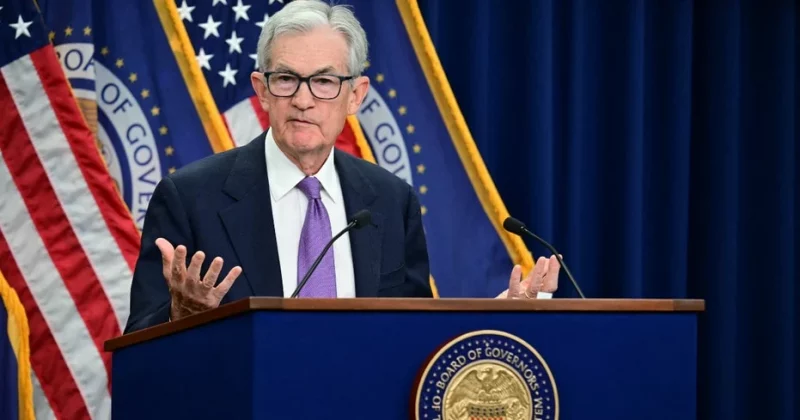
Fed Chair Jerome Powell has added his own layer of concern, cautioning that the economy could face “more frequent and persistent supply shocks” going forward. That kind of language from a sitting Fed chair isn’t idle speculation. It’s a framework for justifying prolonged periods of higher interest rates if conditions deteriorate.
The combination of energy price pressures, lingering supply chain disruptions, and a labor market that refuses to cool down has created exactly the kind of inflationary cocktail the Fed spent 2022 and 2023 fighting. The worry now is that the cocktail is being mixed again.
What changed so fast
Rewind a few months. The Fed was in easing mode, trimming rates in a series of moves that totaled 75 basis points through 2025. Markets cheered. Risk assets rallied. The narrative was simple: inflation was conquered, soft landing achieved, time to loosen up.
Macro, rates, and crypto—what moved markets and what matters next.
Daily. Free. Join 34,000+ readers across crypto, finance, and policy.
That narrative has aged poorly.
Inflation has proven more persistent than the Fed’s models projected, hovering above the 2% target that officials treat as their north star. Energy prices have contributed to upward pressure, and supply chains, which were supposed to be fully normalized by now, continue to generate friction in certain sectors.
The labor market has been another complicating factor. Strong employment data is great for workers and terrible for central bankers trying to cool demand. Every robust jobs report makes it harder for the Fed to justify staying accommodative, let alone cutting further.
Powell’s comments about supply shocks deserve particular attention. He’s essentially telling markets that the post-pandemic playbook of temporary disruptions may not apply anymore. If supply-side problems become a recurring feature of the economy rather than a one-off event, the Fed’s neutral rate, the level at which policy is neither stimulating nor restricting growth, may need to be permanently higher than what markets have priced in.
How markets are reacting
Market participants have already started adjusting their expectations. Projected rate cuts have been pushed further into the future, and some pricing now indicates possible hikes before July 2027.
That’s a meaningful shift in the rate expectations curve. Just months ago, traders were betting on additional cuts through the rest of 2025 and into 2026. Now they’re pricing in the possibility that the next move is up, not down.
For crypto markets, this matters more than most participants want to admit. Bitcoin and digital assets broadly have benefited enormously from the easing narrative. Lower rates push investors toward riskier assets in search of yield. When that dynamic reverses, capital tends to flow back toward safer harbors like treasuries and money market funds.
Look, crypto doesn’t move in lockstep with rate expectations the way bond markets do. But the correlation between monetary policy sentiment and risk asset performance has been undeniable over the past three years. A Fed that’s genuinely considering rate hikes creates a headwind that no amount of on-chain metrics or ETF inflow data can fully offset.
The 3.5% to 3.75% range is already elevated compared to the near-zero environment that fueled the 2020-2021 crypto bull run. If that range moves higher, the cost of capital increases across every market, and speculative assets tend to feel the pressure first.
Investors should watch for two things in the coming months. First, whether inflation readings start trending back toward 2% or continue to hover above it. Second, whether Powell’s rhetoric about supply shocks translates into formal policy guidance at upcoming FOMC meetings. The gap between a Fed official musing about hikes in a speech and the committee actually voting to raise rates is significant, but that gap has been closing faster than anyone expected.