
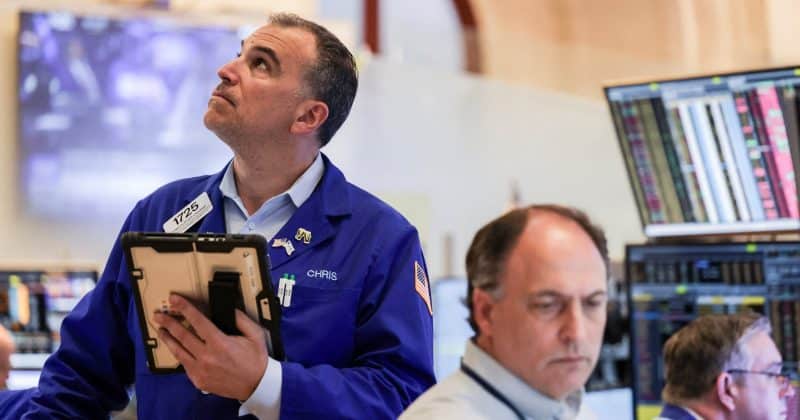
US Federal Reserve faces rate hike pressures as stocks rise, dollar nears six-week high amid Iran talks uncertainty
Fed minutes reveal officials eyeing rate increases if inflation persists above 2%, while geopolitical tensions and rising oil prices create a challenging backdrop for risk assets including crypto.
The Federal Reserve just reminded everyone that the inflation fight isn’t over. Minutes from the April meeting, released on May 20, show officials openly discussing the possibility of rate hikes if price pressures, fueled in part by the ongoing Iran conflict and surging oil costs, keep inflation stubbornly above the 2% target.
Meanwhile, the US dollar index climbed to approximately 99.37, its highest level in six weeks, as mixed signals from US-Iran peace talks kept investors on edge. Stocks managed to push higher too, creating one of those rare moments where both equities and the dollar are moving in the same direction, a setup that typically doesn’t last long and usually resolves in a way that makes someone unhappy.
What the Fed minutes actually say
The current federal funds rate sits in a target range of 3.50% to 3.75%. That’s not exactly restrictive by historical standards, but it’s not loose either.
Here’s the thing: Fed officials weren’t just musing about hypothetical scenarios. They specifically flagged the Iran conflict as a catalyst for persistent inflationary pressures, linking geopolitical instability directly to energy costs that feed into broader price increases across the economy.
Market pricing has responded accordingly. Following the minutes release, expectations shifted to reflect roughly a 60% probability of a 25 basis point rate hike by January 2027. That’s a meaningful change in sentiment from just weeks ago, when most traders were still betting on rates holding steady or even ticking lower.
In English: the market went from expecting the Fed to sit on its hands to pricing in a coin-flip-plus chance that borrowing costs go up. For anyone holding leveraged positions in any asset class, that’s the kind of shift that demands attention.
Oil, the dollar, and the geopolitical mess
Brent crude has climbed to approximately $105 per barrel, a roughly 2.5% increase, driven largely by disruptions near the Strait of Hormuz. That waterway handles about a fifth of global oil traffic, so even the suggestion of supply interruptions tends to send prices higher.
The oil price surge creates a feedback loop that the Fed clearly finds uncomfortable. Higher energy costs push up transportation and manufacturing expenses, which filter into consumer prices, which keep inflation elevated, which makes rate cuts impossible and rate hikes more likely.
The dollar’s strength compounds the picture. A stronger greenback typically makes dollar-denominated commodities more expensive for foreign buyers, but in this case, supply-side fears are overriding that dynamic. Oil is rising despite the dollar’s climb, not because of a weaker currency.
US-Iran peace talks remain the wild card. Diplomatic progress has been uneven at best, with sessions producing enough positive signals to prevent outright panic but not enough concrete results to ease market tensions. Investors are essentially pricing in uncertainty as the baseline, which explains why traditionally opposing assets like stocks and the dollar are both catching bids. Money is flowing toward US assets broadly as a relative safe haven, regardless of asset class.
What this means for crypto investors
Look, the macro setup forming right now is not the one crypto bulls want to see. A strengthening dollar and rising rate expectations have historically been kryptonite for risk assets, and Bitcoin is no exception despite years of narratives about it being an inflation hedge or digital gold.
Bitcoin’s recent price action tells the story clearly. The cryptocurrency has shown rebounds during moments when diplomatic progress on Iran appeared likely, suggesting traders view de-escalation as positive for risk appetite. But those gains have been consistently pressured by the stronger dollar and mounting expectations of tighter monetary policy.
The 60% market-implied probability of a rate hike by January 2027 deserves particular attention from crypto market participants. Higher rates reduce liquidity across the financial system, and crypto markets, which thrive on abundant cheap capital, tend to suffer disproportionately when that liquidity contracts.
There’s also a second-order effect worth considering. If the Fed does hike, it would represent a reversal of the easing trajectory that many investors had been positioning for. That kind of narrative whiplash tends to produce sharp volatility spikes, and in crypto markets, where leverage ratios can be extreme, volatility spikes often cascade into liquidation events.
The competitive landscape for investor capital is shifting too. With the federal funds rate already at 3.50% to 3.75% and potentially headed higher, risk-free yields become increasingly attractive relative to volatile assets. Money market funds and Treasury bills start looking a lot more appealing when they’re paying nearly 4% without the stomach-churning drawdowns that come with crypto exposure.
The key variable to watch is whether Iran talks produce a breakthrough or break down entirely. A genuine diplomatic resolution could simultaneously ease oil prices, reduce inflationary pressures, weaken the case for rate hikes, and soften the dollar, essentially removing four headwinds for crypto in one move. A collapse in talks would do the opposite, potentially accelerating the timeline for Fed tightening and pushing the dollar even higher. For crypto traders, the geopolitical calendar just became as important as the economic one.