
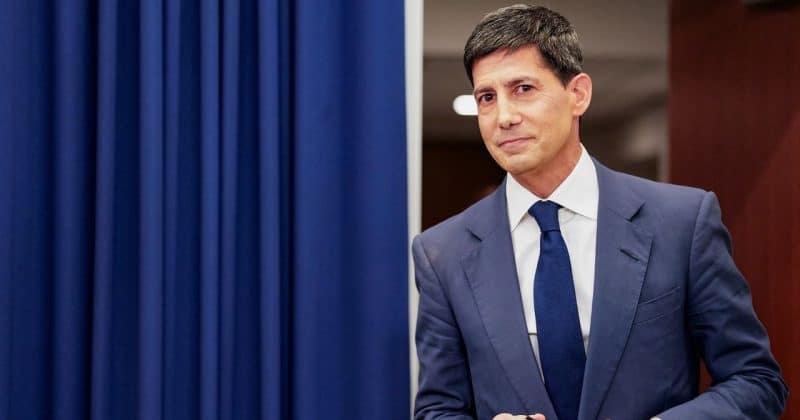
Federal Reserve officials shift towards rate rises as Kevin Warsh era begins
Nine of eighteen FOMC members now favor hiking rates by year-end, sending Bitcoin and risk assets lower
The Kevin Warsh era at the Federal Reserve is officially underway. And it’s already making crypto investors nervous.
At his first Federal Open Market Committee meeting on June 17, 2026, the newly installed Fed Chair held rates steady at roughly 3.6%. That part was expected. The part that wasn’t: half the committee now wants to raise them.
A hawkish turn nobody wanted
Nine out of eighteen FOMC members signaled support for at least one rate hike before the end of 2026. That’s a meaningful shift in tone from a central bank that, just months ago, had markets pricing in potential cuts.
The decision to hold rates marked the fourth consecutive meeting with no change. But the internal math tells a different story. When half your voting body is leaning toward tightening, “unchanged” starts to feel like a temporary condition rather than a destination.
The catalyst is familiar: inflation that won’t quit and a labor market that remains stubbornly strong. In English, the economy is running hot enough that the Fed feels pressure to cool it down, even if that means making borrowing more expensive for everyone.
Warsh, who was sworn in on May 22, 2026, succeeding Jerome Powell, has made price stability a central pillar of his chairmanship. He previously served as a Fed governor from 2006 to 2011, a tenure that spanned the financial crisis and gave him a front-row seat to what happens when central banks move too slowly.
The news moving money, markets, and the world—before your day starts.
Daily. Free. Join 34,000+ readers across crypto, finance, and policy.
What this means for crypto and risk assets
Bitcoin and other crypto assets declined following the FOMC announcement. Major equity indices weren’t spared either.
Higher interest rates reduce liquidity in financial markets. When safe assets like Treasury bonds offer better yields, the opportunity cost of holding volatile, non-yielding assets like Bitcoin goes up. Money flows toward safety, away from speculation.
Warsh himself has been described in various discussions as crypto-friendly, which initially raised hopes among digital asset investors that his tenure might bring a more accommodating regulatory environment. But being friendly to crypto as a technology doesn’t mean being friendly to the market conditions that crypto thrives in.
The bigger picture for investors
The Fed hasn’t actually raised rates yet. But in markets, signaling often matters as much as action. When nine committee members publicly indicate a preference for higher rates, traders don’t wait for the vote. They start repositioning immediately.
The labor market data and inflation readings heading into the second half of 2026 will be critical. If employment stays strong and prices remain elevated, the nine-member hawkish bloc could easily grow.
Traders who spent early 2026 expecting rate cuts have already had to reprice their assumptions once. The crypto market, with its outsized sensitivity to macro shifts, would likely amplify any resulting volatility.