
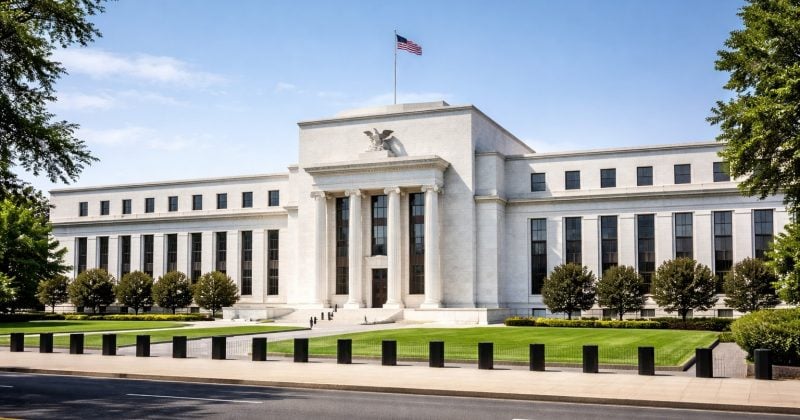
Federal Reserve faces scrutiny as US-Iran deal sends oil below $79, reshaping rate outlook
Brent crude's 15% plunge in recent sessions is rewriting the inflation calculus for the Fed and risk assets alike
Brent crude slid below $79 a barrel this week, hitting roughly $78.94 intraday for the first time in over three months. The catalyst: growing market confidence that a US-Iran framework agreement to reopen the Strait of Hormuz will flood the market with fresh supply.
Oil prices have now cratered approximately 15% over just a few sessions.
What happened and why it matters
The Strait of Hormuz is arguably the most important chokepoint in global energy. Roughly a fifth of the world’s oil supply passes through the narrow waterway between Iran and Oman.
Reports of a US-Iran deal aimed at de-escalating hostilities near the strait have sent traders scrambling to reprice the supply outlook. Earlier in June, escalating conflicts had pushed oil above $90 to $100 per barrel.
US stock futures climbed alongside bonds as oil fell. The Federal Reserve’s next policy meeting is now being viewed through a completely different lens than it was just two weeks ago. When oil was flirting with triple digits, the market had largely priced in a hawkish hold or even another rate hike. With Brent below $79, the conversation has shifted to whether the Fed has enough cover to signal easing.
The geopolitical backdrop
The US-Iran framework agreement is still in its early stages. The market is trading the expectation rather than the execution, with traders betting that even a partial reopening of Iranian supply channels will meaningfully alter the global oil balance.
Prior to the deal’s emergence, conflicts in the region had pushed Brent above $90 and briefly toward $100 earlier in June. That spike was already feeding into inflation expectations and making the Fed’s job harder. The reversal essentially unwound weeks of geopolitical risk premium in a matter of days.
What this means for crypto and risk assets
The current oil price collapse is a disinflationary event. Lower energy costs reduce the probability of further monetary tightening and increase the odds of eventual rate cuts.
No specific cryptocurrencies are directly tied to the US-Iran deal or oil price movements. But reduced macroeconomic uncertainty tends to lower volatility across asset classes, which can draw institutional capital back into digital assets.
US Treasuries rallied alongside equities as oil fell, suggesting fixed-income traders are pricing in a softer rate path.
The risk is that the US-Iran deal unravels. Any breakdown could send oil prices snapping back toward $90 or higher, which would immediately reignite inflation fears and put the Fed back on the hawkish track.