
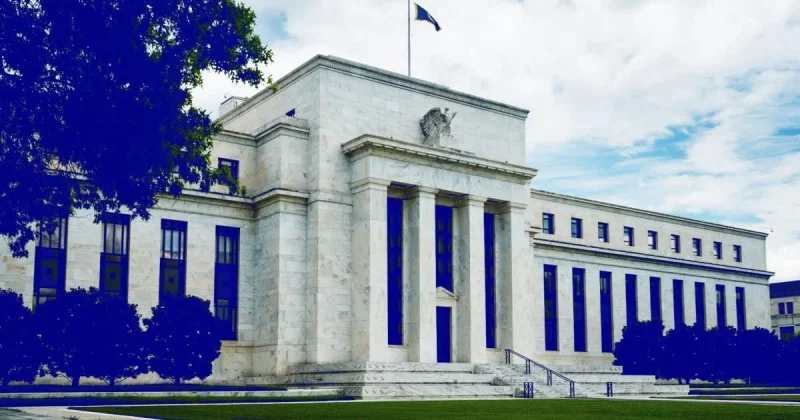
Federal Reserve proposes new ‘skinny’ payment accounts with major restrictions for eligible institutions
The Fed's new payment account prototype offers a streamlined path to its payment rails, but with guardrails that tell you a lot about what regulators are worried about.
The Federal Reserve Board is asking the public to weigh in on a proposal that would create a new, stripped-down type of account at the central bank. Think of it as a master account on a diet: access to some of the Fed’s payment infrastructure, but with significant restrictions on what you can actually do with it.
The proposal, formally called a Request for Information and Comment, outlines what’s being referred to internally as a “payment account” or, more colorfully, a “skinny master account.” It’s designed for financial institutions that are already legally eligible for a traditional master account but want a more focused, limited-scope relationship with the Fed.
What the payment account actually does
Here’s the thing. A traditional master account at the Federal Reserve is the golden ticket of American finance. It lets institutions settle payments, access the discount window for emergency lending, and tap into the full suite of Fed services. The new payment account is none of that.
Institutions with these accounts would get access to specific Fed payment services like Fedwire Funds and FedNow. That’s it. No FedACH. No check operations. No access to Fed credit facilities.
In English: you can move money through the Fed’s real-time systems, but you can’t borrow from the Fed, and you can’t use its older, broader payment networks.
Balances held in the account would earn no interest. All payments would need to be pre-funded, meaning institutions can’t send money they don’t already have sitting in the account. And there’s a hard cap on overnight balances: $500 million or 10% of the institution’s total assets, whichever applies.
That overnight balance cap is a meaningful design choice. It signals the Fed wants these accounts used as plumbing, not as parking lots for cash. The restriction prevents institutions from treating the account as a safe deposit box at the central bank, which could, in theory, drain deposits from the broader banking system.
Who this is for, and who it isn’t
One of the most important details in the proposal is who’s eligible. The payment account does not expand the universe of institutions that can bank with the Fed. Only entities that are already legally eligible for a traditional master account can apply.
The crypto and markets news you actually need—every morning.
Daily. Free. Join 34,000+ readers across crypto, finance, and policy.
That distinction matters enormously. Over the past few years, a parade of crypto firms, fintech startups, and novel charter banks have sought direct access to the Federal Reserve’s payment systems. Many of those applications have been stuck in regulatory limbo, with the Fed taking years to process some requests and quietly slow-walking others.
The skinny account doesn’t change that dynamic. If you weren’t eligible before, you’re still not eligible now. But if you were eligible and the holdup was the Fed’s discomfort with giving you the full toolkit, this new account type offers a middle ground. Limited access with limited risk.
The application process is expected to be streamlined compared to a traditional master account review. The Fed says it anticipates decisions within 90 days after submission. For context, some traditional master account applications have languished for far longer than that, making 90 days look almost brisk by central bank standards.
The RFI was originally released on October 27, 2025, with a Federal Register notice published on December 23, 2025. Public comments are due by February 6, 2026.
The crypto angle, and why it’s more nuanced than it looks
The proposal doesn’t mention cryptocurrency or digital assets explicitly. But the implications for the crypto-adjacent financial sector are hard to ignore.
Banks and fintechs that serve the digital asset industry have long struggled with a fundamental infrastructure problem. Moving dollars quickly and reliably, especially for settlement, requires some level of access to the Fed’s payment rails. Without it, these firms rely on correspondent banking relationships that can be expensive, slow, and prone to being severed when a partner bank gets nervous about crypto exposure.
A skinny master account could ease some of that friction. An eligible institution serving crypto clients could use Fedwire or FedNow to clear and settle dollar-denominated transactions in real time. The pre-funding requirement and balance caps add guardrails that might actually make the Fed more comfortable extending this access to institutions operating in the digital asset space.
Look, the Fed isn’t building this for crypto. But the design, limited services, no borrowing, mandatory pre-funding, creates exactly the kind of risk-controlled environment where regulators might be willing to let more unconventional institutions operate. It’s a structured pathway that trades flexibility for access.
For banks already serving the crypto industry, faster settlement through FedNow access could improve liquidity management and reduce the operational risks that come with delayed settlement. The 90-day application timeline, if the Fed actually sticks to it, would also bring some predictability to what has been an opaque process.
The risk, of course, is that the restrictions prove too limiting. No interest on balances means there’s an opportunity cost to keeping money at the Fed. The overnight cap means institutions would need robust cash management infrastructure to sweep excess funds out before the end of each business day. And the exclusion of FedACH removes a payment channel that many businesses still rely on heavily.
For investors watching the intersection of traditional finance and digital assets, the proposal is worth monitoring not for what it does today, but for what it signals about the Fed’s willingness to create tiered access to its systems. If the skinny account works as designed, it could become a template for how regulators manage the slow integration of new types of financial institutions into the existing banking infrastructure, without handing over the keys to the whole building.