
Federal Reserve stress tests pass all 32 major US banks, triggering dividend hikes and buybacks
JPMorgan leads the charge with a quarterly dividend bump to $1.65 per share as banks prove they can stomach over $700 billion in hypothetical losses
All 32 large US banks cleared the Federal Reserve’s annual stress tests, proving they can survive a nightmare economic scenario without collapsing. The results, released on June 24, immediately triggered shareholder-friendly announcements, with JPMorgan Chase wasting no time hiking its dividend.
The Fed’s Dodd-Frank Act Stress Test put banks through a hypothetical severe global recession featuring 10% peak unemployment, a 33% crash in real estate prices, and significant market turmoil. Every single bank remained above minimum capital requirements after absorbing the simulated beating.
The numbers behind the resilience
Collectively, the 32 tested banks demonstrated they could absorb more than $700 billion in losses while still staying solvent.
The aggregate common equity tier 1 capital ratio dropped from 12.8% to 11.2% under the stress scenario. That’s a 1.6 percentage point decline, but critically, it stays above the regulatory minimum.
JPMorgan Chase, the largest US bank by assets, responded to the results by announcing a quarterly dividend increase to $1.65 per share beginning in the third quarter of 2026. The bank also unveiled a new share buyback program, signaling that management sees enough excess capital to return significant cash to shareholders.
Macro, rates, and crypto—what moved markets and what matters next.
Daily. Free. Join 34,000+ readers across crypto, finance, and policy.
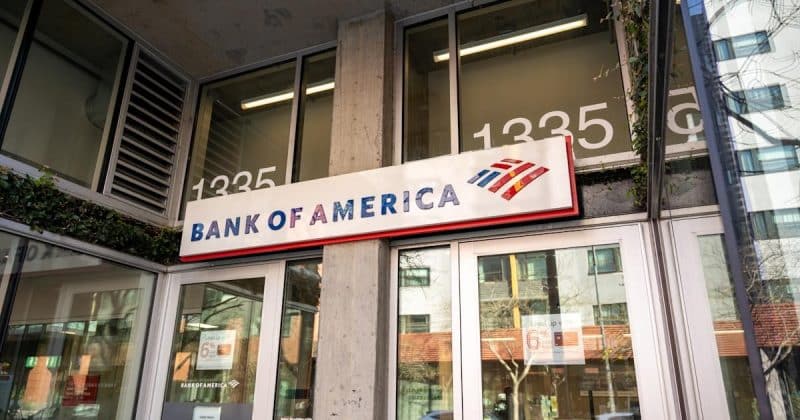
Bank of America, along with the other 30 tested institutions, also passed. The stress scenarios were finalized earlier in 2026 and included global market shock components specifically designed for the largest and most complex banks, including both JPMorgan and Bank of America.
What the stress tests actually measure
The annual stress test is essentially the Fed asking: what happens if everything goes wrong at once? Banks have to model out how their balance sheets would perform under a cascading economic disaster, and they need to prove they’d still have enough capital to keep lending and operating.
Banks that fail or perform poorly face restrictions on dividends and buybacks, effectively trapping capital inside the institution until regulators are satisfied.
The Fed also noted that stress capital buffer requirements will remain unchanged until after the next round of tests in 2027. Models used to calculate those buffers are slated for revision.
What this means for investors
For crypto-adjacent investors, the stress tests remain firmly focused on traditional banking activities. There were no crypto-specific stress scenarios, no evaluation of digital asset exposures, and no mention of how banks’ growing crypto custody or trading operations might perform under duress.