
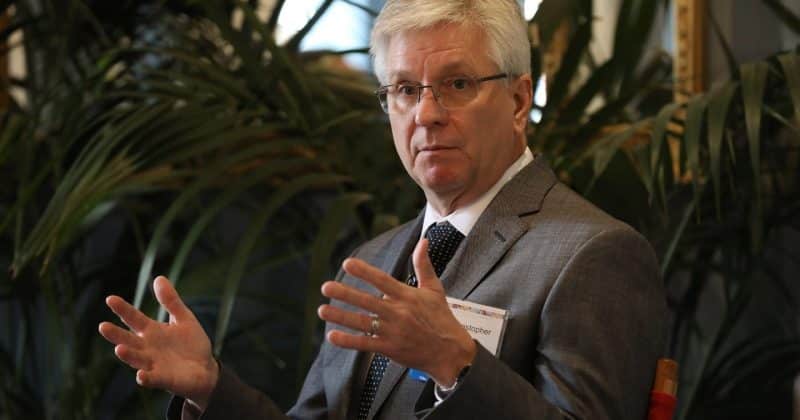
Fed’s Waller, ECB’s Schnabel join central bank panel in Rome as monetary policy crossroads loom
A closing conference on monetary policy transmission could signal where major central banks are headed, and crypto markets should be paying attention to the subtext.
Federal Reserve Governor Christopher Waller, ECB Executive Board member Isabel Schnabel, and National Bank of Belgium Governor Pierre Wunsch are set to share a stage in Rome on July 6 for a policy panel that, on its surface, has nothing to do with crypto. But when three of the most influential monetary policymakers in the Western world sit down together, digital asset markets tend to feel the ripple effects whether or not Bitcoin gets a single mention.
The panel is the closing event of the ESCB’s ChaMP Research Network conference, hosted by Banca d’Italia. Schnabel will chair the discussion, which also includes Riksbank Deputy Governor Anna Seim. The network, launched in 2023, has spent roughly three years examining how monetary policy transmission has been reshaped by recent economic shocks and persistent inflation trends.
What the ChaMP network has been studying
The ChaMP Research Network, short for Challenges in Monetary Policy, was designed to study a question that matters enormously for every asset class: when central banks pull the interest rate lever, does it still work the way textbooks say it should?
The Rome panel is scheduled for 17:00 CET, and ECB President Christine Lagarde is also expected to present at the broader conference.
Macro, rates, and crypto—what moved markets and what matters next.
Daily. Free. Join 34,000+ readers across crypto, finance, and policy.
Waller’s track record on crypto and rates
Waller has been a Fed Governor since 2020 and has established himself as one of the more data-driven voices on the FOMC. He’s also been notably blunt about digital assets, previously describing cryptocurrencies as speculative instruments comparable to collectibles.
Schnabel has been an ECB Executive Board member since 2020 and has been a prominent voice arguing that inflation dynamics in the eurozone have fundamentally shifted. Wunsch, who has led Belgium’s central bank since 2019, has been known for a more hawkish tilt in ECB deliberations.