
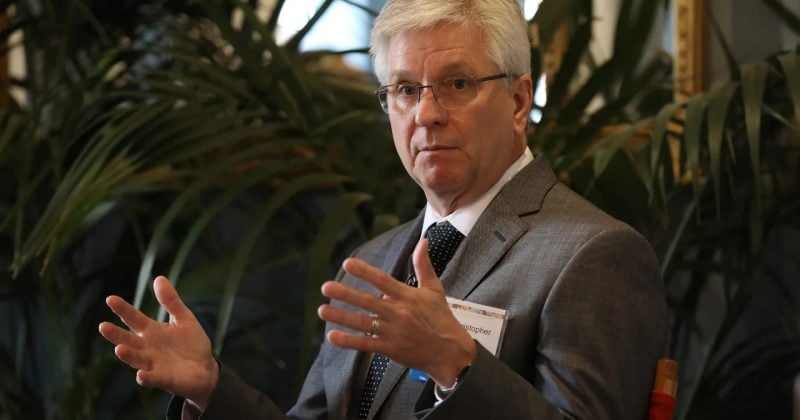
Fed Governor Waller’s Rome speech signals steady focus on traditional monetary mechanics
The central banker's analysis of policy transmission and forward guidance offers crypto markets a familiar message: you're not on the Fed's radar yet.
Federal Reserve Governor Christopher Waller traveled to Rome to talk about monetary policy at a Bank of Italy conference on July 6, 2026. His speech, titled “Two Thoughts on the Transmission of Monetary Policy,” covered how starting economic conditions shape the effectiveness of Fed actions, and why forward guidance is both a powerful tool and a potential trap.
What Waller actually said
Waller’s core argument centered on a deceptively simple idea. The effectiveness of monetary policy depends heavily on where the economy starts when the Fed begins tightening or loosening. He pointed specifically to the job vacancies-to-unemployed ratio observed in 2022 as a critical initial condition. That ratio, which measured how many open positions existed for every person looking for work, was historically elevated coming out of the pandemic. Waller argued this initial condition meaningfully shaped how quickly and effectively the Fed’s rate moves rippled through the economy.
The second major theme was forward guidance, the Fed’s practice of telegraphing its future policy intentions to markets. Waller acknowledged the tool’s power to accelerate the transmission of policy decisions. But Waller also flagged a real downside. Forward guidance that’s too rigid can box the Fed into corners when economic conditions shift unexpectedly.
The crypto angle hiding in plain sight
Waller’s speech made no mention of cryptocurrencies, digital assets, or blockchain technology. When the Fed thinks about monetary policy transmission, it’s thinking about labor markets, inflation expectations, credit conditions, and traditional financial channels. Digital assets simply aren’t part of that framework yet.
Waller’s earlier appearance in June 2026 at a separate conference focused on the international role of the US dollar. The continued absence of references to digital alternatives from a senior Fed official suggests the central bank views the dollar’s global position through an entirely conventional lens.
The news moving money, markets, and the world—before your day starts.
Daily. Free. Join 34,000+ readers across crypto, finance, and policy.
What this means for investors
For crypto investors, Waller’s emphasis on initial conditions as a determinant of policy effectiveness means that the same Fed action, whether a rate cut or a hold, can produce very different outcomes depending on the state of the labor market and broader economy at the time.
His warning about the limits of forward guidance is equally relevant. If the Fed becomes less willing to telegraph its moves precisely because rigid guidance has burned them before, markets could face more surprise decisions. Surprise Fed actions historically produce sharper, more volatile reactions in crypto than in traditional equities, partly because crypto markets trade around the clock and partly because the asset class tends to attract more leveraged positioning.
The practical takeaway is straightforward. Crypto investors should continue monitoring Fed commentary for shifts in how officials like Waller describe the economic landscape. The vacancies-to-unemployed ratio, inflation trajectory, and the Fed’s comfort level with forward guidance are all indirect but powerful drivers of crypto market conditions.