
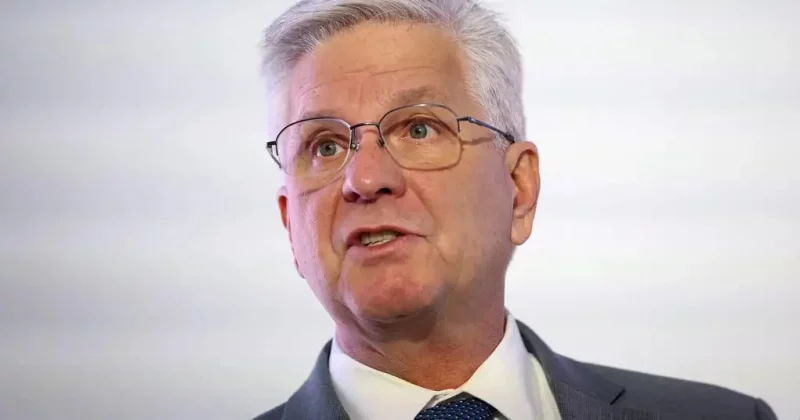
Federal Reserve’s Waller says next rate move could go either way, drops easing bias
The Fed governor signaled that rate hikes are back on the table if inflation keeps climbing, marking a notable shift from his earlier stance favoring multiple cuts.
Federal Reserve Governor Christopher Waller just told markets something they didn’t necessarily want to hear: the next move on interest rates might not be a cut after all.
In a speech at Auburn University on April 17, 2026, Waller laid out a deliberately ambiguous path forward, stating the Fed’s next rate decision “could be either a hike or a cut.” He also advocated for removing the easing bias language from the Fed’s policy statements, a move that effectively puts rate increases back on the menu.
A governor who changed his mind
During 2025 and into early 2026, Waller was among the more dovish voices on the Federal Open Market Committee. He backed multiple 25 basis point cuts and promoted a neutral rate that could land 50 to 100 basis points lower than current levels.
As recently as March 20, 2026, Waller said he would support rate cuts later in the year if labor market weakness persisted. He advised caution in the near term but kept the door firmly open for easing.
The shift appears driven largely by inflation pressures tied to geopolitical tensions, particularly rising energy prices linked to the US-Israeli conflict with Iran. Waller’s new position is essentially a wait-and-see strategy. Rates should hold steady for now, he argued, until the economic picture becomes clearer. But if inflation continues trending upward, future hikes cannot be taken off the table.
The news moving money, markets, and the world—before your day starts.
Daily. Free. Join 34,000+ readers across crypto, finance, and policy.
The geopolitical wildcard
Waller’s comments included an important conditional: a quick resolution to the geopolitical conflict could still support rate cuts later in 2026.
Cleveland Fed President Beth Hammack has signaled similar hawkish sentiment, suggesting that the shift isn’t just one governor freelancing.
What this means for crypto and risk assets
Interest rate expectations are one of the primary drivers of liquidity conditions in financial markets. Bitcoin and the broader crypto market have historically shown sensitivity to Fed policy shifts. The 2022 tightening cycle obliterated crypto valuations, and while markets have recovered significantly since then, the memory of what hawkish policy does to risk assets hasn’t faded.
Waller has been one of the more pro-innovation voices at the Fed when it comes to digital assets and payments technology. He’s reportedly a potential candidate for the Fed Chair role, and his advocacy for crypto-adjacent innovation has been noted by the industry. But even a crypto-friendly Fed governor can’t ignore his primary mandate. If inflation forces his hand toward tighter policy, his personal views on digital assets become largely irrelevant to market conditions.