
Federal Reserve’s Warsh commits to inflation and employment mandates, signaling stability for crypto markets

Federal Reserve’s Warsh commits to inflation and employment mandates, signaling stability for crypto markets

The new Fed chair's reaffirmation of the dual mandate and softening inflation rhetoric has investors eyeing risk assets with renewed optimism

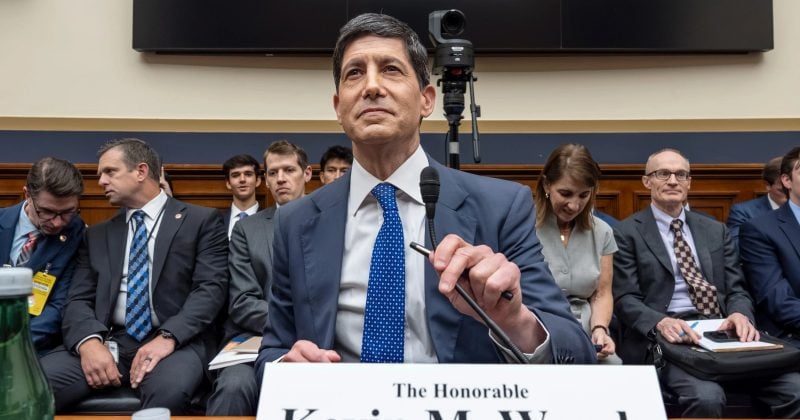
Kevin Warsh, the Federal Reserve’s new chairman, doubled down on the central bank’s commitment to both price stability and maximum employment in a statement released on July 9. The word he used was “unwavering,” which in Fed-speak is about as emphatic as it gets.

From Wall Street critic to the big chair

Warsh was confirmed by the Senate in May 2026 with a narrow 51-45 vote, replacing Jerome Powell, whose tenure was defined by the most aggressive rate-hiking cycle in decades.

Advertisement

Warsh isn’t a stranger to the building, though. He served as a Fed governor from 2006 to 2011, navigating the institution through the global financial crisis. That experience shaped his preference for data-driven policymaking over the kind of forward guidance that Powell leaned on heavily.

Warsh’s most eyebrow-raising disclosure during his confirmation process had nothing to do with monetary philosophy. He revealed personal investments in crypto assets, including positions in Ethereum and various DeFi protocols. He pledged to divest from all of them, which is standard procedure for government officials.

Inflation is cooling, and Warsh knows it

Just over a week before his July 9 statement, Warsh delivered remarks at the European Central Bank’s annual forum in Sintra, Portugal on July 1. His key message there was that inflation risks have “come down.”

The unemployment rate sits at 4.2%, with steady wage growth that suggests the labor market isn’t overheating.

What this means for crypto and risk assets

Bitcoin’s reaction to Warsh’s Sintra comments on July 1 was immediate and telling. The asset climbed back above $60,000, a level it had been struggling to reclaim.

Disclosure: This article was edited by Editorial Team. For more information on how we create and review content, see our Editorial Policy.

Federal Reserve’s Warsh commits to inflation and employment mandates, signaling stability for crypto markets

Federal Reserve’s Warsh commits to inflation and employment mandates, signaling stability for crypto markets

The new Fed chair's reaffirmation of the dual mandate and softening inflation rhetoric has investors eyeing risk assets with renewed optimism

Kevin Warsh, the Federal Reserve’s new chairman, doubled down on the central bank’s commitment to both price stability and maximum employment in a statement released on July 9. The word he used was “unwavering,” which in Fed-speak is about as emphatic as it gets.

From Wall Street critic to the big chair

Warsh was confirmed by the Senate in May 2026 with a narrow 51-45 vote, replacing Jerome Powell, whose tenure was defined by the most aggressive rate-hiking cycle in decades.

Advertisement

Warsh isn’t a stranger to the building, though. He served as a Fed governor from 2006 to 2011, navigating the institution through the global financial crisis. That experience shaped his preference for data-driven policymaking over the kind of forward guidance that Powell leaned on heavily.

Warsh’s most eyebrow-raising disclosure during his confirmation process had nothing to do with monetary philosophy. He revealed personal investments in crypto assets, including positions in Ethereum and various DeFi protocols. He pledged to divest from all of them, which is standard procedure for government officials.

Inflation is cooling, and Warsh knows it

Just over a week before his July 9 statement, Warsh delivered remarks at the European Central Bank’s annual forum in Sintra, Portugal on July 1. His key message there was that inflation risks have “come down.”

The unemployment rate sits at 4.2%, with steady wage growth that suggests the labor market isn’t overheating.

What this means for crypto and risk assets

Bitcoin’s reaction to Warsh’s Sintra comments on July 1 was immediate and telling. The asset climbed back above $60,000, a level it had been struggling to reclaim.

Disclosure: This article was edited by Editorial Team. For more information on how we create and review content, see our Editorial Policy.