
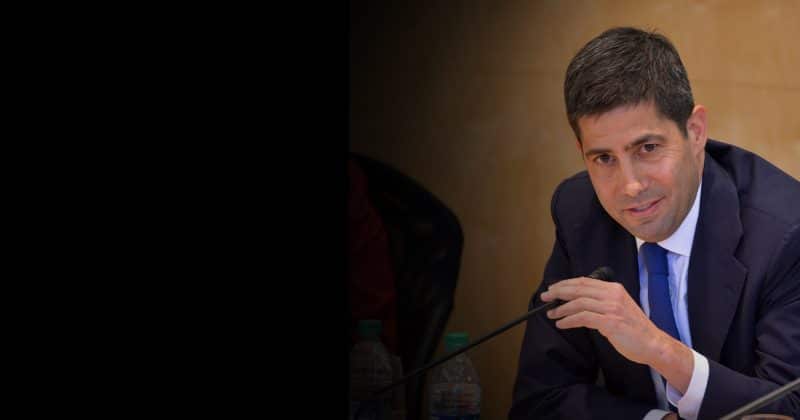
Fed holds rates steady as Warsh prioritizes inflation over growth
Bitcoin and Ethereum both dropped following the June FOMC meeting, where the Fed raised its inflation forecast and signaled a higher rate path for the rest of 2026.
The Federal Reserve had one job at its June 17 meeting: send a clear signal about where monetary policy is headed. Chair Kevin Warsh delivered that signal, and crypto markets did not like what they heard.
The Fed held its benchmark federal funds rate steady at 3.5% to 3.75%, a decision that was unanimous. But the more consequential move was what came out of the updated projections, where the Fed revised its personal consumption expenditures inflation forecast for 2026 upward to 3.6%, with core inflation sitting at 3.3%. The median projected rate path now points to 3.8% by year-end.
Warsh sets the tone early
Warsh, who took office on May 22, assumed the chair role with a reputation for hawkishness, and his first FOMC meeting did nothing to challenge that reputation. His emphasis on “price stability” as the primary mandate left little room for the growth-supportive framing that some market participants had been hoping for.
This matters because the backdrop heading into the meeting was one of moderating inflation. Consumer prices had cooled to between 0% and 1%, the kind of number that, in a different policy environment, might have opened the door to easing. Warsh effectively closed that door.
The Fed’s own projections show real GDP growth of 2.2% for 2026, with the unemployment rate expected to stabilize around 4.3%. Energy prices and supply chain disruptions were cited as ongoing contributors to inflationary pressure, which explains why the FOMC revised its projections upward even as near-term inflation readings have softened.
Macro, rates, and crypto—what moved markets and what matters next.
Daily. Free. Join 34,000+ readers across crypto, finance, and policy.
Crypto takes the hit
Bitcoin dropped between 2% and 4% following the announcement, trading in a range of $63,850 to $64,400. Ethereum saw a decline of roughly 2.5% to 3.5% over the same period.
There is also a Warsh-specific wrinkle here. He holds personal investments in digital assets, a fact that attracted attention when his appointment was announced. Some observers expected that personal exposure to translate into a more crypto-friendly policy posture. His first meeting as chair suggests those expectations were misplaced. Warsh appears to be drawing a clean line between his personal portfolio and his institutional mandate.
What investors should watch next
The most important variable is whether that 0% to 1% near-term inflation reading is a floor or a blip. If inflation genuinely stays at or near current levels, the pressure on the Fed to hold rates this high diminishes. But the FOMC’s own revised forecast of 3.6% PCE for the full year suggests the committee does not expect that softness to persist.
Traders navigating this environment may find value in watching two indicators closely. First, how the PCE inflation data prints over the next two months relative to the Fed’s revised 3.6% forecast. Second, whether Warsh signals any flexibility in his public remarks between now and the next FOMC meeting.