
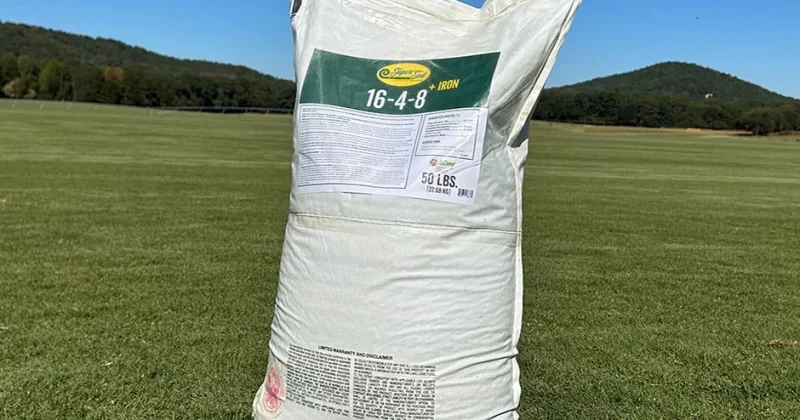
Fertilizer prices surge 44% amid Iran war, raising food price concerns
The third major fertilizer shock in six years is threatening to push global food prices higher, with nitrogen-based products like urea and ammonia leading the spike.
Fertilizer prices have climbed roughly 44% since the Iran war escalation began, and the ripple effects are heading straight for your grocery bill. Nitrogen-based products like urea and ammonia have seen the sharpest moves, with increases ranging from 30% to 50% over just a few weeks.
If that sounds like a problem, it’s because fertilizer is to modern agriculture what gasoline is to cars. Without it, crop yields drop. When its price spikes, food gets more expensive. And right now, we’re staring down the barrel of the third major global fertilizer shock in just six years.
What’s driving the spike
Two words: supply disruption. The Strait of Hormuz, that narrow chokepoint between Iran and the Arabian Peninsula, handles a significant share of global fertilizer exports. When military conflict makes shipping through the strait risky or impossible, supply contracts fast.
Here’s the thing. Fertilizer production, especially nitrogen-based fertilizer, is deeply tied to natural gas and oil prices. These are both the feedstock and the fuel for manufacturing. When oil and gas prices surge because of war in the Middle East, fertilizer production costs climb in lockstep.
So you’ve got a double hit: less supply moving through key trade routes, and higher costs to produce whatever supply remains. That’s the textbook recipe for a price spike, and it’s playing out in real time.
The US imports about 35% of its fertilizer, which makes the world’s largest agricultural economy surprisingly dependent on global supply chains for a critical input. American farmers aren’t insulated from what happens in the Strait of Hormuz, even if it feels like a world away from Iowa cornfields.
A pattern that’s becoming disturbingly familiar
Look, this isn’t new territory. The global fertilizer market has been through this movie twice in recent memory, and the sequel keeps getting worse.
The first shock came during COVID-19, when pandemic-driven supply chain chaos sent fertilizer costs soaring. Factories shut down, shipping slowed, and farmers scrambled to secure inputs at any price.
The second hit arrived with Russia’s invasion of Ukraine in 2022. Russia and Belarus are major fertilizer exporters, and sanctions plus wartime disruption yanked supply off the market almost overnight. Global food prices surged to historic levels, contributing to food crises across Africa, the Middle East, and South Asia.
Now here we are again. Three shocks in six years suggests this isn’t bad luck. It’s a structural vulnerability in how the world feeds itself. Global agriculture depends on a concentrated set of fertilizer-producing and exporting nations, many of which sit in geopolitically unstable regions. Every time conflict erupts, the same pressure points get hit.
The pattern is clear: geopolitical disruption leads to fertilizer shortages, which lead to reduced crop yields, which lead to food inflation and, in the worst cases, food insecurity. Each cycle compounds the damage from the last, because farmers who already faced thin margins from the previous shock have less financial cushion to absorb the next one.
What this means for food prices and global stability
The math here is straightforward but unpleasant. When fertilizer gets expensive, farmers face a choice: absorb the higher costs, pass them along to consumers, or simply use less fertilizer. All three options have consequences.
Absorbing costs means lower farm profitability, which can push smaller operations out of business entirely. Passing costs along means higher prices for bread, rice, corn, and basically everything else in a grocery store. And using less fertilizer means lower crop yields, which means less food supply, which also means higher prices.
There’s no version of this that doesn’t end with consumers paying more at the checkout line.
Experts warn that reduced fertilizer usage due to high costs could lead to significant crop yield declines, particularly in developing countries where farmers have the least ability to absorb price increases. These are the same regions that were hardest hit by the food price crises of 2021 and 2022.
For developed economies like the US, the impact shows up as food inflation, the kind that makes central bankers nervous and consumers frustrated. For developing nations, it shows up as hunger.
The crypto market should be paying attention here too. Historically, commodity price shocks and food inflation have influenced monetary policy decisions, which in turn affect risk asset pricing across the board. If food prices push inflation readings higher, the interest rate cuts that crypto markets have been banking on could get delayed or reversed entirely.
There’s also the broader macro picture to consider. Agricultural commodities and the inputs that produce them are increasingly becoming geopolitical weapons, whether intentionally or as collateral damage. Each successive fertilizer shock reinforces the argument for supply chain diversification and domestic production capacity, but those are multi-year investments that don’t help farmers facing a 44% cost increase right now.
For investors watching this unfold, the key variable is duration. A short-lived conflict might produce a temporary spike that markets can absorb. A prolonged war with sustained disruption to the Strait of Hormuz could trigger the kind of cascading food inflation that reshaped global markets in 2022, and that took months, not weeks, to work through the system.