
Nexo Earn with Nexo
Fetch.AI simplifies agent stack with ASI:One and uAgents framework

Fetch.AI simplifies agent stack with ASI:One and uAgents framework

The ASI Alliance member is betting that fewer layers between developers and autonomous agents will accelerate adoption across Web3.

Building an AI agent on a decentralized network has traditionally felt like assembling IKEA furniture without the instructions, in the dark, while the furniture argues with you about consensus mechanisms. Fetch.ai is trying to change that by streamlining its developer toolkit into two core components: the uAgents Python framework and ASI:One, a unified AI layer designed to collapse complexity into something a developer can actually ship with.

The goal is straightforward. Combine natural language reasoning with agent-building tools so developers spend less time wrestling with infrastructure and more time creating agents that do useful things.

What the uAgents framework actually does

At its core, uAgents is a lightweight Python library. It supports Python versions 3.10 through 3.13, which means most developers won’t need to overhaul their existing environments to get started.

In English: if you can write Python, you can build a decentralized AI agent. The framework handles the plumbing, things like peer-to-peer communication, message handling, and integration with Fetch.ai’s broader Web3 infrastructure, so developers can focus on what their agent is supposed to accomplish rather than how it talks to other agents.

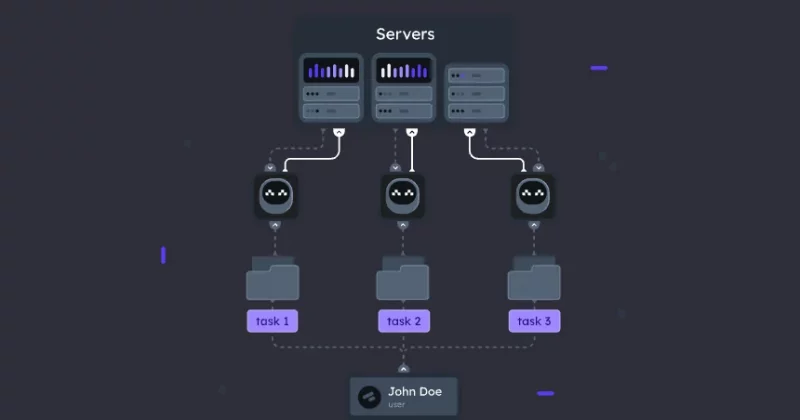
Once built, these agents can be deployed to Agentverse, Fetch.ai’s hosting platform. Agentverse serves a dual purpose. It handles deployment, eliminating the need for developers to manage their own infrastructure, and it provides discoverability, meaning other agents and users can find and interact with your agent without needing a direct introduction.

Think of it like an app store, but for autonomous AI agents that can negotiate, transact, and collaborate without human babysitting.

The framework is designed to produce agents that are lightweight and decentralized by default. That distinction matters. Centralized AI agents, the kind most people interact with through services like ChatGPT or Claude, run on servers controlled by a single company. Decentralized agents operate across distributed networks, which in theory makes them more resilient and harder to censor or shut down.

Advertisement

ASI:One and the Artificial Superintelligence Alliance

The other half of this announcement is ASI:One, described as a unified AI and ASI layer. Here’s the thing: this isn’t just a Fetch.ai product. It sits within the broader Artificial Superintelligence Alliance, commonly known as the ASI Alliance, of which Fetch.ai is a core founding member.

The ASI Alliance has been one of the more ambitious collaborative efforts in crypto-AI, attempting to merge the capabilities of multiple projects into a cohesive decentralized AI ecosystem. Fetch.ai’s role within that alliance centers on decentralized orchestration and scalable Web3 infrastructure, essentially providing the rails on which autonomous agents can operate at scale.

ASI:One is meant to be the layer where natural language processing, autonomous agent logic, and blockchain functionality converge. Rather than requiring developers to stitch together separate tools for reasoning, communication, and on-chain transactions, ASI:One aims to present a single interface that handles all three.

For developers, the pitch is efficiency. For the ASI Alliance, the pitch is standardization. If every agent built on the platform speaks the same underlying language, interoperability becomes dramatically easier. Agents built by different teams, for different purposes, on different parts of the network can still find each other, communicate, and collaborate.

Cross-chain ambitions and the Internet Computer partnership

Fetch.ai isn’t building in isolation. The project has been actively pursuing cross-chain integrations, most notably through its NextGen Agents Hackathon in partnership with the Internet Computer protocol.

That hackathon is focused on developing solutions that combine Fetch.ai’s uAgents with Internet Computer canisters, which are essentially smart contracts that run on the Internet Computer’s decentralized cloud. The combination is interesting because it pairs Fetch.ai’s agent communication infrastructure with Internet Computer’s ability to host full web applications entirely on-chain.

The practical implication is that agents could eventually operate across multiple blockchain ecosystems without needing custom bridges or adapters for each one. That’s still aspirational, but the hackathon represents a concrete step toward testing whether the integration works in practice.

Cross-chain interoperability has been a persistent challenge across the broader crypto ecosystem. Most solutions involve bridges, which have historically been among the most exploited pieces of infrastructure in DeFi. An agent-native approach to cross-chain communication could sidestep some of those vulnerabilities, though it introduces its own set of trust assumptions that developers will need to evaluate carefully.

What this means for investors and builders

The AI agent narrative in crypto has been gaining momentum throughout 2024 and into 2025. Projects across the ecosystem are racing to define what autonomous agents look like on-chain, from simple trading bots to complex multi-agent systems that can coordinate economic activity without human intervention.

Fetch.ai’s strategy here is to win on developer experience. Look, the project that makes it easiest to build, deploy, and discover agents is likely to attract the most developers. And in platform economics, developer adoption tends to precede user adoption, which tends to precede value accrual to the native token.

The risk, as always, is execution. Developer tooling is a competitive space, and Fetch.ai isn’t the only project trying to simplify the agent stack. Projects like Autonolas, Virtuals Protocol, and even non-crypto-native frameworks are all competing for the same pool of developers. The uAgents framework’s reliance on standard Python is a smart move, as it dramatically lowers the barrier to entry compared to frameworks that require learning a new language or paradigm.

For existing FET (now ASI) token holders, the question is whether simplified tooling translates into measurably more agents being deployed and used. A beautiful framework that nobody builds on is just documentation. Agentverse’s discoverability features could be the differentiator here, if agents can easily find and hire other agents, the network effects could compound quickly.

The cross-chain angle with Internet Computer is worth watching closely. If the hackathon produces viable integrations, it could serve as a template for similar partnerships with other Layer 1 and Layer 2 networks, expanding the addressable market for Fetch.ai-built agents well beyond its native ecosystem. That kind of composability across chains is exactly what the decentralized AI space needs to move from proof-of-concept to production-grade infrastructure.

Disclosure: This article was edited by Editorial Team. For more information on how we create and review content, see our Editorial Policy.

Fetch.AI simplifies agent stack with ASI:One and uAgents framework

Fetch.AI simplifies agent stack with ASI:One and uAgents framework

The ASI Alliance member is betting that fewer layers between developers and autonomous agents will accelerate adoption across Web3.

Building an AI agent on a decentralized network has traditionally felt like assembling IKEA furniture without the instructions, in the dark, while the furniture argues with you about consensus mechanisms. Fetch.ai is trying to change that by streamlining its developer toolkit into two core components: the uAgents Python framework and ASI:One, a unified AI layer designed to collapse complexity into something a developer can actually ship with.

The goal is straightforward. Combine natural language reasoning with agent-building tools so developers spend less time wrestling with infrastructure and more time creating agents that do useful things.

What the uAgents framework actually does

At its core, uAgents is a lightweight Python library. It supports Python versions 3.10 through 3.13, which means most developers won’t need to overhaul their existing environments to get started.

In English: if you can write Python, you can build a decentralized AI agent. The framework handles the plumbing, things like peer-to-peer communication, message handling, and integration with Fetch.ai’s broader Web3 infrastructure, so developers can focus on what their agent is supposed to accomplish rather than how it talks to other agents.

Once built, these agents can be deployed to Agentverse, Fetch.ai’s hosting platform. Agentverse serves a dual purpose. It handles deployment, eliminating the need for developers to manage their own infrastructure, and it provides discoverability, meaning other agents and users can find and interact with your agent without needing a direct introduction.

Think of it like an app store, but for autonomous AI agents that can negotiate, transact, and collaborate without human babysitting.

The framework is designed to produce agents that are lightweight and decentralized by default. That distinction matters. Centralized AI agents, the kind most people interact with through services like ChatGPT or Claude, run on servers controlled by a single company. Decentralized agents operate across distributed networks, which in theory makes them more resilient and harder to censor or shut down.

Advertisement

ASI:One and the Artificial Superintelligence Alliance

The other half of this announcement is ASI:One, described as a unified AI and ASI layer. Here’s the thing: this isn’t just a Fetch.ai product. It sits within the broader Artificial Superintelligence Alliance, commonly known as the ASI Alliance, of which Fetch.ai is a core founding member.

The ASI Alliance has been one of the more ambitious collaborative efforts in crypto-AI, attempting to merge the capabilities of multiple projects into a cohesive decentralized AI ecosystem. Fetch.ai’s role within that alliance centers on decentralized orchestration and scalable Web3 infrastructure, essentially providing the rails on which autonomous agents can operate at scale.

ASI:One is meant to be the layer where natural language processing, autonomous agent logic, and blockchain functionality converge. Rather than requiring developers to stitch together separate tools for reasoning, communication, and on-chain transactions, ASI:One aims to present a single interface that handles all three.

For developers, the pitch is efficiency. For the ASI Alliance, the pitch is standardization. If every agent built on the platform speaks the same underlying language, interoperability becomes dramatically easier. Agents built by different teams, for different purposes, on different parts of the network can still find each other, communicate, and collaborate.

Cross-chain ambitions and the Internet Computer partnership

Fetch.ai isn’t building in isolation. The project has been actively pursuing cross-chain integrations, most notably through its NextGen Agents Hackathon in partnership with the Internet Computer protocol.

That hackathon is focused on developing solutions that combine Fetch.ai’s uAgents with Internet Computer canisters, which are essentially smart contracts that run on the Internet Computer’s decentralized cloud. The combination is interesting because it pairs Fetch.ai’s agent communication infrastructure with Internet Computer’s ability to host full web applications entirely on-chain.

The practical implication is that agents could eventually operate across multiple blockchain ecosystems without needing custom bridges or adapters for each one. That’s still aspirational, but the hackathon represents a concrete step toward testing whether the integration works in practice.

Cross-chain interoperability has been a persistent challenge across the broader crypto ecosystem. Most solutions involve bridges, which have historically been among the most exploited pieces of infrastructure in DeFi. An agent-native approach to cross-chain communication could sidestep some of those vulnerabilities, though it introduces its own set of trust assumptions that developers will need to evaluate carefully.

What this means for investors and builders

The AI agent narrative in crypto has been gaining momentum throughout 2024 and into 2025. Projects across the ecosystem are racing to define what autonomous agents look like on-chain, from simple trading bots to complex multi-agent systems that can coordinate economic activity without human intervention.

Fetch.ai’s strategy here is to win on developer experience. Look, the project that makes it easiest to build, deploy, and discover agents is likely to attract the most developers. And in platform economics, developer adoption tends to precede user adoption, which tends to precede value accrual to the native token.

The risk, as always, is execution. Developer tooling is a competitive space, and Fetch.ai isn’t the only project trying to simplify the agent stack. Projects like Autonolas, Virtuals Protocol, and even non-crypto-native frameworks are all competing for the same pool of developers. The uAgents framework’s reliance on standard Python is a smart move, as it dramatically lowers the barrier to entry compared to frameworks that require learning a new language or paradigm.

For existing FET (now ASI) token holders, the question is whether simplified tooling translates into measurably more agents being deployed and used. A beautiful framework that nobody builds on is just documentation. Agentverse’s discoverability features could be the differentiator here, if agents can easily find and hire other agents, the network effects could compound quickly.

The cross-chain angle with Internet Computer is worth watching closely. If the hackathon produces viable integrations, it could serve as a template for similar partnerships with other Layer 1 and Layer 2 networks, expanding the addressable market for Fetch.ai-built agents well beyond its native ecosystem. That kind of composability across chains is exactly what the decentralized AI space needs to move from proof-of-concept to production-grade infrastructure.

Disclosure: This article was edited by Editorial Team. For more information on how we create and review content, see our Editorial Policy.