
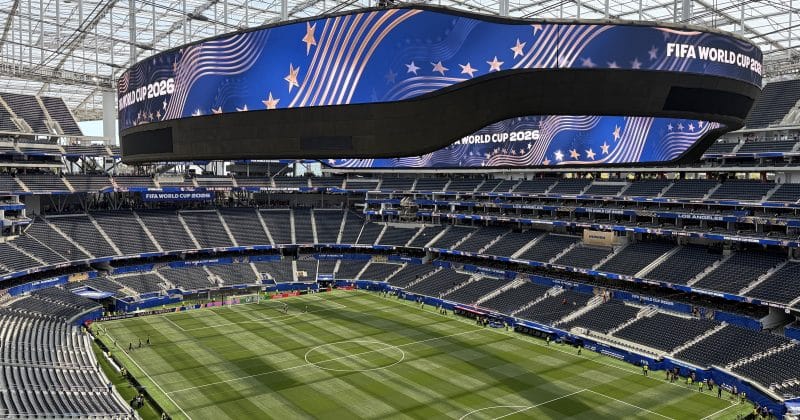
FIFA wraps first round of 2026 World Cup group games, and crypto is all over the pitch
The expanded 48-team tournament is doubling as a massive onboarding event for blockchain tech, with Kraken, Chainlink, and Avalanche all playing key roles
The biggest World Cup ever just finished its opening act. All 48 teams have now played at least once across venues in Canada, Mexico, and the United States, with the first round of group stage matches wrapping up on June 18. But the real story for crypto isn’t on the scoreboard. It’s in the infrastructure quietly humming underneath it.
FIFA’s 2026 tournament is the most blockchain-integrated sporting event in history, and the opening round has been the first real stress test for a stack of partnerships that could reshape how fans, bettors, and collectors interact with the beautiful game.
A crypto layer built into the tournament
FIFA launched its own bespoke blockchain powered by Avalanche, serving as the backbone for FIFA Collect, a dynamic NFT platform that went live in May 2026. These NFTs evolve based on actual match results, meaning a collectible tied to a team that just pulled off a shock upset looks different, and is valued differently, than one tied to a team that got bounced.
On top of the Avalanche integration, FIFA tapped Kraken as its official crypto exchange partner, announced on June 9, just two days before kickoff. Chainlink is serving as the official prediction market partner, powering on-chain markets for all 104 matches across the tournament. And Chiliz, the company behind fan token infrastructure for clubs like PSG and Barcelona, is handling fan token initiatives.
Previous FIFA partnerships with Algorand and Crypto.com laid some groundwork, but the 2026 edition is operating at an entirely different scale.
Why 48 teams changes the math
With 12 groups of four, the group stage alone features 72 matches. The full tournament runs to 104. Every single one of those games now has a corresponding on-chain prediction market through Chainlink, and every result triggers NFT evolutions on the Avalanche-based FIFA Collect platform.
The news moving money, markets, and the world—before your day starts.
Daily. Free. Join 34,000+ readers across crypto, finance, and policy.
For context, the 2022 World Cup in Qatar had 64 total matches. The 2026 edition has 63% more games, which translates directly into more on-chain activity.
The partnership playbook
Sports sponsorships in crypto have a checkered history. FTX slapped its name on an NBA arena, and we all know how that ended. Crypto.com’s previous FIFA deal during the 2022 cycle coincided with the broader market implosion.
Kraken is a regulated US exchange that survived the bear market without a scandal. Chainlink is providing actual utility by powering decentralized oracle feeds for prediction markets. Avalanche is running real infrastructure rather than just collecting a sponsorship check.
No fresh token launches have been tied to the early match results, which is arguably a sign of maturity.
What this means for investors
The tokens most directly exposed to this event are AVAX (Avalanche), LINK (Chainlink), and CHZ (Chiliz). Each has a clear, functional role in the tournament’s digital layer.
Chainlink-powered on-chain markets for every match create a legitimate use case that competes with traditional sports betting, and the transparent settlement mechanism could pull volume away from centralized platforms.