
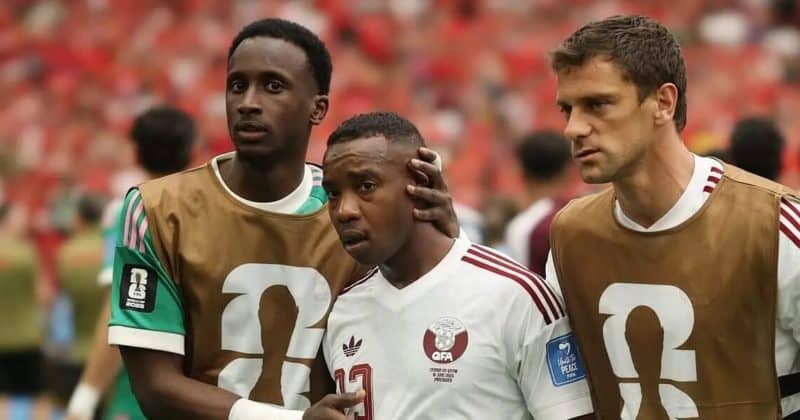
FIFA bans Qatari midfielder Assim Madibo for five games after foul on Ismael Kone

FIFA bans Qatari midfielder Assim Madibo for five games after foul on Ismael Kone

The initial one-match suspension was quadrupled after FIFA reviewed the tackle that fractured both bones in Kone's lower leg during a World Cup match in Vancouver

FIFA’s Disciplinary Committee has handed Qatari midfielder Assim Madibo a five-match ban for the tackle that broke Ismael Kone’s leg during a World Cup group stage match on June 18, 2026. The Canadian midfielder suffered a fractured tibia and fibula, requiring surgery and ending his tournament before it really started.

The decision, announced on June 24, represents a significant escalation from the original one-match sanction Madibo received after being shown a straight red card via VAR during the match in Vancouver. FIFA cited Article 14.1.e of its Disciplinary Code, which covers serious foul play, as the basis for increasing the punishment fourfold.

What happened on the pitch

The incident occurred during Canada’s group stage match against Qatar in Vancouver, a game the hosts won 6-0. Madibo’s challenge on Kone was not initially penalized by the on-field referee but was escalated through the Video Assistant Referee system, which resulted in a straight red card.

Kone was ruled out of the remainder of the World Cup, a tournament being played on home soil for Canada.

Advertisement

FIFA’s disciplinary logic

Under Article 14.1.e of FIFA’s Disciplinary Code, the committee has the authority to extend bans for serious foul play beyond the automatic suspension. A one-match ban is the standard automatic suspension that comes with any straight red card.

Five matches is the new total. Madibo had already served the first game of his suspension, sitting out Qatar’s subsequent match against Bosnia. That leaves four more matches on the sideline.

The decision is open to appeal, though as of June 25, no appeal has been filed.

The proportionality debate

FIFA’s decision has sparked debate about whether the punishment should be based on the nature of the foul itself, or whether the severity of the resulting injury should factor into the equation.

For context, FIFA has issued longer bans in the past for violent conduct deemed intentional. Luis Suarez received a nine-match international ban for biting Giorgio Chiellini at the 2014 World Cup. Madibo’s five matches suggest FIFA viewed this as reckless and dangerous, but not deliberately malicious.

What this means for both teams

For Canada, the damage is already done. Kone is out, surgery has been performed, and no disciplinary ruling can undo a fractured leg. The team demonstrated they have the depth to handle Qatar without him, given the 6-0 scoreline.

For Qatar, Madibo’s extended absence compounds what was already a difficult situation. A 6-0 loss puts a team on the brink of elimination regardless of remaining fixtures, and losing a starting midfielder for five matches makes an already steep climb even steeper.

Disclosure: This article was edited by Editorial Team. For more information on how we create and review content, see our Editorial Policy.

FIFA bans Qatari midfielder Assim Madibo for five games after foul on Ismael Kone

FIFA bans Qatari midfielder Assim Madibo for five games after foul on Ismael Kone

The initial one-match suspension was quadrupled after FIFA reviewed the tackle that fractured both bones in Kone's lower leg during a World Cup match in Vancouver

FIFA’s Disciplinary Committee has handed Qatari midfielder Assim Madibo a five-match ban for the tackle that broke Ismael Kone’s leg during a World Cup group stage match on June 18, 2026. The Canadian midfielder suffered a fractured tibia and fibula, requiring surgery and ending his tournament before it really started.

The decision, announced on June 24, represents a significant escalation from the original one-match sanction Madibo received after being shown a straight red card via VAR during the match in Vancouver. FIFA cited Article 14.1.e of its Disciplinary Code, which covers serious foul play, as the basis for increasing the punishment fourfold.

What happened on the pitch

The incident occurred during Canada’s group stage match against Qatar in Vancouver, a game the hosts won 6-0. Madibo’s challenge on Kone was not initially penalized by the on-field referee but was escalated through the Video Assistant Referee system, which resulted in a straight red card.

Kone was ruled out of the remainder of the World Cup, a tournament being played on home soil for Canada.

Advertisement

FIFA’s disciplinary logic

Under Article 14.1.e of FIFA’s Disciplinary Code, the committee has the authority to extend bans for serious foul play beyond the automatic suspension. A one-match ban is the standard automatic suspension that comes with any straight red card.

Five matches is the new total. Madibo had already served the first game of his suspension, sitting out Qatar’s subsequent match against Bosnia. That leaves four more matches on the sideline.

The decision is open to appeal, though as of June 25, no appeal has been filed.

The proportionality debate

FIFA’s decision has sparked debate about whether the punishment should be based on the nature of the foul itself, or whether the severity of the resulting injury should factor into the equation.

For context, FIFA has issued longer bans in the past for violent conduct deemed intentional. Luis Suarez received a nine-match international ban for biting Giorgio Chiellini at the 2014 World Cup. Madibo’s five matches suggest FIFA viewed this as reckless and dangerous, but not deliberately malicious.

What this means for both teams

For Canada, the damage is already done. Kone is out, surgery has been performed, and no disciplinary ruling can undo a fractured leg. The team demonstrated they have the depth to handle Qatar without him, given the 6-0 scoreline.

For Qatar, Madibo’s extended absence compounds what was already a difficult situation. A 6-0 loss puts a team on the brink of elimination regardless of remaining fixtures, and losing a starting midfielder for five matches makes an already steep climb even steeper.

Disclosure: This article was edited by Editorial Team. For more information on how we create and review content, see our Editorial Policy.