
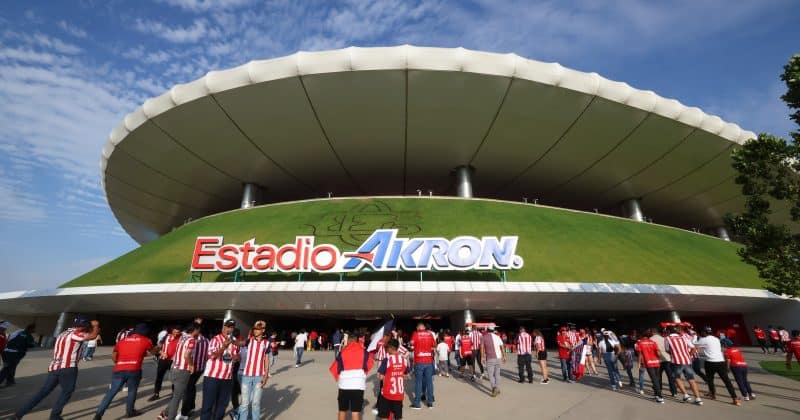
FIFA invests millions to standardize grass across World Cup stadiums
The governing body of global soccer is spending over $5 million and nearly a decade of research to make sure every blade of grass behaves the same way across 16 North American venues
FIFA has a grass problem. Sixteen stadiums spread across three countries, multiple climate zones, and a bunch of venues originally built for a sport where the playing surface is an afterthought.
The 2026 FIFA World Cup, set to kick off in mid-June across Canada, Mexico, and the United States, will be the largest edition of the tournament ever staged. An expanded 48-team format means 104 matches across 16 host stadiums.
The science of making grass boring (in a good way)
FIFA has been working on this problem for roughly eight years, partnering with turfgrass researchers at the University of Tennessee and Michigan State University. The collaboration has produced more than 170 tests aimed at developing grass blends that perform uniformly regardless of whether they’re sitting under the blazing Texas sun or inside a climate-controlled dome in Atlanta.
The testing protocols are impressively granular. Ball-drop machines measure how the surface responds to impact at high-traffic points on the pitch, like the penalty area and center circle. Cleat-simulation devices replicate the forces a player’s foot exerts during sprints, cuts, and stops.
The grass blends themselves are tailored to local conditions, using mixtures like Kentucky bluegrass and perennial ryegrass.
Converting football stadiums into football stadiums
Converting these venues to natural grass requires, in many cases, full excavation. That means ripping out existing artificial surfaces, installing proper drainage and irrigation systems, and laying down sod that has been cultivated specifically for each stadium’s conditions.
For at least three of the host venues, in Dallas, Atlanta, and Houston, the sod is being grown at a farm in Colorado. These are all domed or retractable-roof stadiums, which means the grass won’t get natural rainfall or consistent sunlight.
The pitches being installed aren’t purely natural, either. They use a hybrid system consisting of roughly 95% natural grass reinforced with synthetic fibers woven into the soil.
Why $5 million on grass actually makes sense
The 2026 World Cup is projected to generate billions in revenue for FIFA. Player safety is the other major consideration. Inconsistent surfaces increase the risk of non-contact injuries, particularly knee and ankle problems.
FIFA’s investment is partly about establishing a lasting standard for playing surfaces in North American sports venues. If the hybrid grass systems perform well during the World Cup, the technology and methodology could influence how MLS stadiums, college soccer venues, and even multi-use NFL stadiums approach their surfaces going forward.