
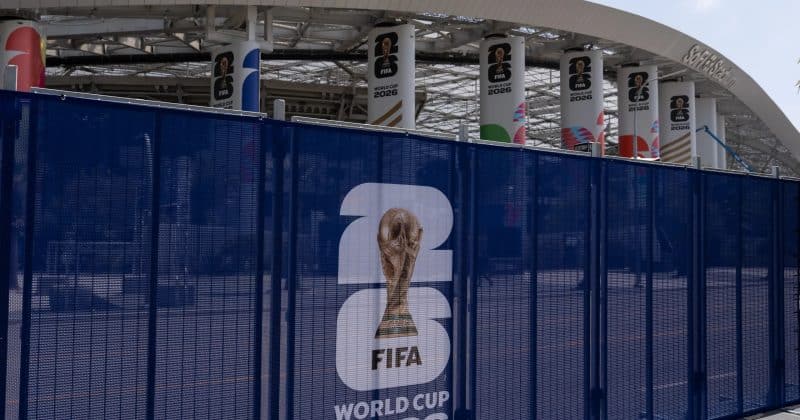
FIFA demands World Cup stadiums strip non-sponsor branding ahead of 2026 tournament
Fifteen of 16 host venues must scrub corporate logos, while Kraken secures the official crypto exchange sponsorship slot.
If you’ve ever watched a World Cup match and noticed the stadium looked weirdly sterile, like a hospital lobby with better grass, this is why. FIFA has ordered 15 of the 16 host stadiums for the 2026 World Cup to remove all pre-existing commercial branding, replacing complex corporate venue names with simple city-based identifiers.
AT&T Stadium becomes “Dallas Stadium.” The billion-dollar naming rights deals that define American sports arenas? Temporarily invisible.
How FIFA’s branding lockdown actually works
The mandate covers several prominent areas inside and around each venue, including seating, scoreboards, and other high-visibility zones. FIFA’s brand protection policies explicitly prohibit non-sponsor references in these spaces, ensuring that only official partners get airtime during the tournament.
The rebranding process kicked off in early June 2026, just ahead of the tournament’s June 11 kickoff date.
There is exactly one exception. Mercedes-Benz Stadium in Atlanta gets to keep its rooftop logo intact. Removing a massive logo from a retractable roof designed to look like a camera aperture apparently crosses the line from “inconvenient” to “impractical.”
This isn’t a new playbook. FIFA has enforced similar brand-exclusivity rules at previous World Cups. The difference this time is scale. The 2026 tournament is the first to feature 48 teams across three countries, with the vast majority of matches played in US stadiums that carry some of the most expensive naming rights in professional sports.
The news moving money, markets, and the world—before your day starts.
Daily. Free. Join 34,000+ readers across crypto, finance, and policy.
Kraken enters the pitch as FIFA’s crypto partner
Kraken was announced on June 9, 2026, as the Official Crypto Exchange Supporter of the FIFA World Cup 2026.
The partnership slots Kraken into FIFA’s carefully curated sponsor ecosystem. It’s a meaningful distinction: Kraken isn’t just buying ad space. It’s buying exclusivity in the crypto category across the biggest single sporting event on the planet.
FIFA’s relationship with blockchain isn’t exactly new territory. The organization previously explored digital collectibles and blockchain-based fan engagement during the 2022 World Cup in Qatar. But elevating a crypto exchange to an official supporter tier represents a more direct, transactional embrace of the industry.
What this means for crypto investors
Kraken’s official status could generate indirect tailwinds for tokens historically associated with FIFA’s digital initiatives. Chiliz (CHZ), the token powering the Socios fan engagement platform, and Algorand (ALGO), which was involved with FIFA during the 2022 cycle, are two names that market participants have connected to the organization’s blockchain efforts in the past.
The broader signal is arguably more important than any single token play. FIFA choosing to formalize a crypto exchange partnership at the supporter level suggests that major sports organizations view the industry as a legitimate, brand-safe sponsorship category. That wasn’t a given even two years ago, when several crypto sponsorship deals collapsed alongside exchange failures and regulatory crackdowns.