
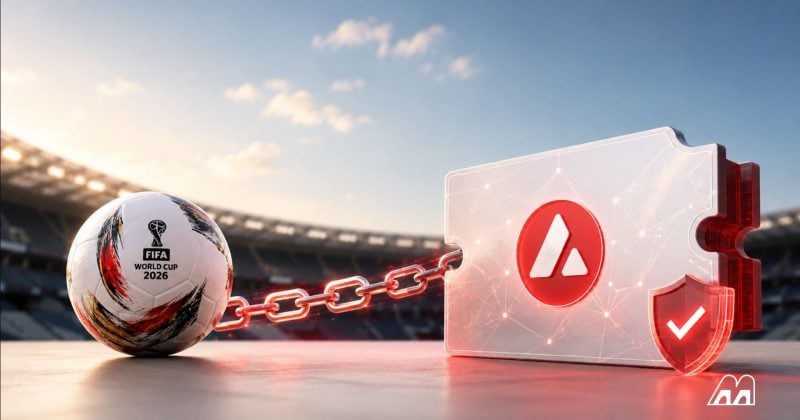
FIFA’s 2026 World Cup faces political backlash, but the real game is playing out on Avalanche
As Trump's influence over the tournament draws criticism, FIFA's blockchain pivot from Algorand to Avalanche quietly reshapes the digital collectibles landscape
The 2026 World Cup was supposed to be a celebration of scale. 48 teams, three host nations, and a projected $9 billion in FIFA revenue. Instead, the tournament is becoming a case study in what happens when global sport collides with American political ambition, and the fallout is rippling into corners of the market that most football fans never think about.
FIFA President Gianni Infantino and US President Donald Trump have drawn sharp criticism for what observers describe as a cozy arrangement: Trump leveraging the world’s most-watched sporting event to burnish his image, and Infantino appearing willing to accommodate.
The blockchain underneath the pitch
Back in 2022, FIFA partnered with Algorand to launch its digital asset strategy. That collaboration produced FIFA+ Collect, an NFT platform designed to give fans tradeable digital collectibles tied to the beautiful game.
Then FIFA changed its mind. By May 2025, the organization had ditched Algorand and migrated its entire blockchain operation to Avalanche. FIFA now runs a dedicated layer-1 blockchain built on Avalanche’s infrastructure, purpose-built for fan engagement and digital collectibles.
Avalanche’s architecture offers faster finality and the ability to spin up custom subnets, meaning FIFA gets its own blockchain without congesting the main network.
The news moving money, markets, and the world—before your day starts.
Daily. Free. Join 34,000+ readers across crypto, finance, and policy.
Where politics meets the portfolio
Trump’s involvement adds an unpredictable variable that crypto markets are particularly sensitive to. The current administration has generally adopted a favorable posture toward crypto regulation, which has helped sentiment across the sector.
Sports sponsorships and partnerships in crypto have historically been momentum trades. They work brilliantly when sentiment is positive, think of Crypto.com’s Staples Center rebrand, and they become albatrosses when the tide turns, think of FTX’s naming rights on the Miami Heat arena roughly five minutes before everything imploded.
What this means for traders watching the World Cup
For Avalanche specifically, the FIFA relationship represents one of the highest-profile enterprise use cases in all of crypto. Every digital collectible minted, traded, or purchased runs through Avalanche’s infrastructure.
For Algorand, the FIFA departure in May 2025 removed what was arguably its most recognizable partnership. The project continues to operate and develop, but losing a client generating $9 billion in tournament revenue is the kind of thing that shows up in ecosystem growth metrics.
Traders should watch two things closely. First, actual on-chain activity on FIFA’s Avalanche-based platform during the tournament, because transaction volume doesn’t lie. Second, whether the political backlash against FIFA and Trump’s involvement translates into fan boycotts of official digital products, because that would directly impact the bull case for AVAX’s World Cup catalyst.