
Nexo Earn with Nexo
FIFA World Cup opening ceremony draws 1.2 billion viewers as crypto takes center stage

FIFA World Cup opening ceremony draws 1.2 billion viewers as crypto takes center stage

Kraken's official FIFA partnership and surging fan token activity signal that the biggest sporting event on earth is now a crypto battleground

About 1.2 billion people tuned in to watch the 2026 FIFA World Cup opening. To put that number in perspective, that’s roughly one in every seven humans on the planet, all watching the same thing at roughly the same time.

The opening match between Mexico and South Africa at the historic Estadio Azteca in Mexico City kicked off what will be the largest World Cup ever staged. And for the first time, crypto isn’t lurking on the sidelines. It has an official seat at the table.

The crypto play inside the World Cup

FIFA named Kraken as the Official Crypto Exchange Supporter of the 2026 World Cup just days before the tournament began. The timing was not subtle. With over a billion eyeballs locked on the event, the partnership gives Kraken, and by extension the broader crypto industry, a level of mainstream exposure that no Super Bowl ad or influencer campaign could replicate.

Here’s the thing. This isn’t just a logo-on-a-banner sponsorship. The integration is designed to weave digital assets into the actual fan experience through fan tokens and prediction markets.

Chiliz, the blockchain platform behind fan tokens for major sports organizations, has seen increasing on-chain activity in the lead-up to the tournament. CHZ powers a system where fans can buy tokens tied to their favorite teams, unlocking voting rights on minor club decisions and access to exclusive experiences.

Advertisement

On the prediction market side, platforms like Myriad are using Chainlink oracles for match resolution. In English: they’re using decentralized data feeds to automatically settle bets on game outcomes without needing a central authority to confirm who won.

Bernstein analysts forecast that the World Cup will drive more than $5 billion in consumer engagement in prediction markets alone.

The scale of 2026

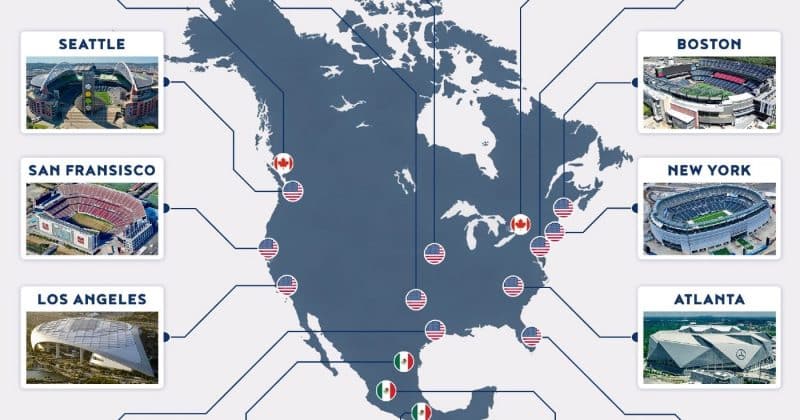
This World Cup is a different animal from its predecessors. The tournament expanded to 48 teams competing across 104 matches, up from 32 teams in previous editions. Games will be hosted across 16 cities in the US, Mexico, and Canada, running from June 11 through July 19.

Pre-event viewer estimates for the opening match ranged from 1.1 billion to 1.5 billion. The actual figure of approximately 1.2 billion landed comfortably in that window. For the full tournament, cumulative viewership is projected to surpass 5 billion.

The Estadio Azteca itself carries weight. It’s one of only two stadiums on earth to have hosted two World Cup finals, in 1970 and 1986.

What this means for crypto investors

Look, sports sponsorships in crypto have a checkered history. FTX plastered its name on an NBA arena before collapsing in spectacular fashion. Crypto.com bought naming rights to the Staples Center, and the timing coincided with one of the worst bear markets in memory.

But the Kraken-FIFA deal is structurally different. Kraken is a regulated US exchange that survived the 2022 downturn and the subsequent regulatory crackdown without imploding. And rather than just buying brand awareness, the partnership is built around functional crypto products that fans can actually use during the tournament.

Bernstein’s forecast of more than $5 billion in consumer engagement suggests that decentralized prediction platforms could see a massive influx of new users who have never interacted with blockchain technology before.

Fan tokens present a different risk profile. CHZ-based tokens tend to be highly volatile and thinly traded relative to major crypto assets. A spike in interest during the World Cup could drive prices up, but the history of fan tokens suggests that engagement, and valuations, drop sharply once the event generating excitement concludes.

Disclosure: This article was edited by Editorial Team. For more information on how we create and review content, see our Editorial Policy.

FIFA World Cup opening ceremony draws 1.2 billion viewers as crypto takes center stage

FIFA World Cup opening ceremony draws 1.2 billion viewers as crypto takes center stage

Kraken's official FIFA partnership and surging fan token activity signal that the biggest sporting event on earth is now a crypto battleground

About 1.2 billion people tuned in to watch the 2026 FIFA World Cup opening. To put that number in perspective, that’s roughly one in every seven humans on the planet, all watching the same thing at roughly the same time.

The opening match between Mexico and South Africa at the historic Estadio Azteca in Mexico City kicked off what will be the largest World Cup ever staged. And for the first time, crypto isn’t lurking on the sidelines. It has an official seat at the table.

The crypto play inside the World Cup

FIFA named Kraken as the Official Crypto Exchange Supporter of the 2026 World Cup just days before the tournament began. The timing was not subtle. With over a billion eyeballs locked on the event, the partnership gives Kraken, and by extension the broader crypto industry, a level of mainstream exposure that no Super Bowl ad or influencer campaign could replicate.

Here’s the thing. This isn’t just a logo-on-a-banner sponsorship. The integration is designed to weave digital assets into the actual fan experience through fan tokens and prediction markets.

Chiliz, the blockchain platform behind fan tokens for major sports organizations, has seen increasing on-chain activity in the lead-up to the tournament. CHZ powers a system where fans can buy tokens tied to their favorite teams, unlocking voting rights on minor club decisions and access to exclusive experiences.

Advertisement

On the prediction market side, platforms like Myriad are using Chainlink oracles for match resolution. In English: they’re using decentralized data feeds to automatically settle bets on game outcomes without needing a central authority to confirm who won.

Bernstein analysts forecast that the World Cup will drive more than $5 billion in consumer engagement in prediction markets alone.

The scale of 2026

This World Cup is a different animal from its predecessors. The tournament expanded to 48 teams competing across 104 matches, up from 32 teams in previous editions. Games will be hosted across 16 cities in the US, Mexico, and Canada, running from June 11 through July 19.

Pre-event viewer estimates for the opening match ranged from 1.1 billion to 1.5 billion. The actual figure of approximately 1.2 billion landed comfortably in that window. For the full tournament, cumulative viewership is projected to surpass 5 billion.

The Estadio Azteca itself carries weight. It’s one of only two stadiums on earth to have hosted two World Cup finals, in 1970 and 1986.

What this means for crypto investors

Look, sports sponsorships in crypto have a checkered history. FTX plastered its name on an NBA arena before collapsing in spectacular fashion. Crypto.com bought naming rights to the Staples Center, and the timing coincided with one of the worst bear markets in memory.

But the Kraken-FIFA deal is structurally different. Kraken is a regulated US exchange that survived the 2022 downturn and the subsequent regulatory crackdown without imploding. And rather than just buying brand awareness, the partnership is built around functional crypto products that fans can actually use during the tournament.

Bernstein’s forecast of more than $5 billion in consumer engagement suggests that decentralized prediction platforms could see a massive influx of new users who have never interacted with blockchain technology before.

Fan tokens present a different risk profile. CHZ-based tokens tend to be highly volatile and thinly traded relative to major crypto assets. A spike in interest during the World Cup could drive prices up, but the history of fan tokens suggests that engagement, and valuations, drop sharply once the event generating excitement concludes.

Disclosure: This article was edited by Editorial Team. For more information on how we create and review content, see our Editorial Policy.