
Nexo Earn with Nexo
Flipcash launches USDF stablecoin using Coinbase’s platform

Flipcash launches USDF stablecoin using Coinbase’s platform

The USDC-backed stablecoin will run on Solana through Coinbase's Custom Stablecoins service, with a public launch expected in early 2026.

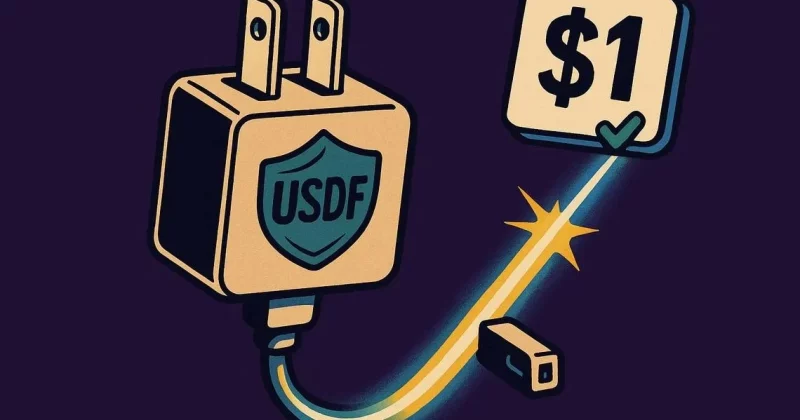
Coinbase’s push to become the AWS of stablecoins just got its latest customer. Flipcash has launched USDF, a dollar-pegged stablecoin built on Coinbase’s Custom Stablecoins platform, with the token collateralized by Circle’s USDC.

Think of it like white-label software, but for money. Coinbase provides the infrastructure, Circle’s USDC provides the backing, and Flipcash slaps its own brand on top. The result is USDF: a stablecoin that functions like USDC under the hood but carries Flipcash’s identity and potentially its own reward mechanics.

What’s actually live right now

Here’s the thing: USDF isn’t available to the public yet. Coinbase is currently running backend testing of the token on its exchange in what’s described as an operational-only mode. That means no trading, no deposits, no withdrawals. It’s the crypto equivalent of a restaurant doing soft-open service before the grand opening.

The full public launch is anticipated for early 2026, primarily on Solana with support for other Coinbase-supported blockchain networks. Solana’s selection as the initial chain makes sense given its low transaction costs and high throughput, both of which matter for the payment-oriented use cases Coinbase is targeting.

Those use cases include payroll processing, business-to-business payments, and cross-border settlements. In English: the boring-but-enormous parts of the financial system where trillions of dollars move slowly through outdated rails every year.

Advertisement

Coinbase’s stablecoin-as-a-service play

The Custom Stablecoins platform represents Coinbase’s bet that the future of stablecoins isn’t one token to rule them all. Instead, the company is positioning itself as the infrastructure layer that lets businesses issue their own branded stablecoins without having to build reserve management, compliance frameworks, or blockchain integrations from scratch.

Every custom stablecoin issued through the platform is backed by USDC, which means Circle handles the actual dollar reserves. The businesses get their branding, their customer relationships, and according to Coinbase, access to seamless cross-chain functionality and rewards programs. Coinbase gets to deepen its moat as the plumbing behind an expanding universe of dollar-denominated digital tokens.

This isn’t a charity project. Coinbase’s stablecoin-related services generated approximately $247 million in revenue in 2024. That number encompasses the company’s broader USDC relationship with Circle, but it illustrates just how central stablecoins have become to Coinbase’s bottom line. Offering a platform that multiplies the number of USDC-backed tokens in circulation is a straightforward way to grow that revenue stream further.

The model also creates a clever flywheel. More custom stablecoins means more USDC locked as collateral, which means more interest income from the reserves backing that USDC, which means more revenue to split between Coinbase and Circle. Everyone eats, as long as demand for dollar-pegged tokens keeps growing.

Why this matters for the broader stablecoin market

The stablecoin landscape has been consolidating around a few dominant players. Tether’s USDT and Circle’s USDC account for the vast majority of the market. Coinbase’s Custom Stablecoins platform doesn’t directly challenge that duopoly. It extends it.

Rather than competing with USDC, tokens like USDF are effectively distribution layers for it. Every USDF in circulation is one more unit of demand for USDC as collateral. This is the platform strategy that made companies like Shopify successful in e-commerce: don’t sell the product, sell the tools that let everyone else sell the product.

For Flipcash specifically, having a branded stablecoin creates opportunities to build loyalty programs, payment flows, and financial products that feel native to its own ecosystem rather than bolted on from a third party. It’s the difference between a store accepting Visa and a store issuing its own payment card, except in this case the card is still processed on Visa’s network.

The timing is notable. Regulatory clarity around stablecoins in the US has been advancing, with multiple legislative proposals working through Congress. A clearer legal framework could accelerate adoption of stablecoin-as-a-service platforms by reducing the compliance burden that currently deters businesses from touching crypto-native payment rails.

Investors watching Coinbase stock should pay attention to how many additional custom stablecoin partnerships the company announces in the coming quarters. If USDF becomes a template that other businesses replicate, the compounding effect on USDC collateral demand and associated revenue could be significant. The risk, of course, is that regulatory setbacks or a competing infrastructure offering from a larger player could slow adoption before the flywheel gains momentum.

For the Solana ecosystem, each new stablecoin deployment adds transaction volume and liquidity. If USDF gains meaningful traction after its early 2026 launch, it strengthens the case for Solana as the default settlement layer for payment-focused stablecoins, a narrative that has been building alongside the chain’s growing DeFi and payments infrastructure.

Disclosure: This article was edited by Editorial Team. For more information on how we create and review content, see our Editorial Policy.

Flipcash launches USDF stablecoin using Coinbase’s platform

Flipcash launches USDF stablecoin using Coinbase’s platform

The USDC-backed stablecoin will run on Solana through Coinbase's Custom Stablecoins service, with a public launch expected in early 2026.

Coinbase’s push to become the AWS of stablecoins just got its latest customer. Flipcash has launched USDF, a dollar-pegged stablecoin built on Coinbase’s Custom Stablecoins platform, with the token collateralized by Circle’s USDC.

Think of it like white-label software, but for money. Coinbase provides the infrastructure, Circle’s USDC provides the backing, and Flipcash slaps its own brand on top. The result is USDF: a stablecoin that functions like USDC under the hood but carries Flipcash’s identity and potentially its own reward mechanics.

What’s actually live right now

Here’s the thing: USDF isn’t available to the public yet. Coinbase is currently running backend testing of the token on its exchange in what’s described as an operational-only mode. That means no trading, no deposits, no withdrawals. It’s the crypto equivalent of a restaurant doing soft-open service before the grand opening.

The full public launch is anticipated for early 2026, primarily on Solana with support for other Coinbase-supported blockchain networks. Solana’s selection as the initial chain makes sense given its low transaction costs and high throughput, both of which matter for the payment-oriented use cases Coinbase is targeting.

Those use cases include payroll processing, business-to-business payments, and cross-border settlements. In English: the boring-but-enormous parts of the financial system where trillions of dollars move slowly through outdated rails every year.

Advertisement

Coinbase’s stablecoin-as-a-service play

The Custom Stablecoins platform represents Coinbase’s bet that the future of stablecoins isn’t one token to rule them all. Instead, the company is positioning itself as the infrastructure layer that lets businesses issue their own branded stablecoins without having to build reserve management, compliance frameworks, or blockchain integrations from scratch.

Every custom stablecoin issued through the platform is backed by USDC, which means Circle handles the actual dollar reserves. The businesses get their branding, their customer relationships, and according to Coinbase, access to seamless cross-chain functionality and rewards programs. Coinbase gets to deepen its moat as the plumbing behind an expanding universe of dollar-denominated digital tokens.

This isn’t a charity project. Coinbase’s stablecoin-related services generated approximately $247 million in revenue in 2024. That number encompasses the company’s broader USDC relationship with Circle, but it illustrates just how central stablecoins have become to Coinbase’s bottom line. Offering a platform that multiplies the number of USDC-backed tokens in circulation is a straightforward way to grow that revenue stream further.

The model also creates a clever flywheel. More custom stablecoins means more USDC locked as collateral, which means more interest income from the reserves backing that USDC, which means more revenue to split between Coinbase and Circle. Everyone eats, as long as demand for dollar-pegged tokens keeps growing.

Why this matters for the broader stablecoin market

The stablecoin landscape has been consolidating around a few dominant players. Tether’s USDT and Circle’s USDC account for the vast majority of the market. Coinbase’s Custom Stablecoins platform doesn’t directly challenge that duopoly. It extends it.

Rather than competing with USDC, tokens like USDF are effectively distribution layers for it. Every USDF in circulation is one more unit of demand for USDC as collateral. This is the platform strategy that made companies like Shopify successful in e-commerce: don’t sell the product, sell the tools that let everyone else sell the product.

For Flipcash specifically, having a branded stablecoin creates opportunities to build loyalty programs, payment flows, and financial products that feel native to its own ecosystem rather than bolted on from a third party. It’s the difference between a store accepting Visa and a store issuing its own payment card, except in this case the card is still processed on Visa’s network.

The timing is notable. Regulatory clarity around stablecoins in the US has been advancing, with multiple legislative proposals working through Congress. A clearer legal framework could accelerate adoption of stablecoin-as-a-service platforms by reducing the compliance burden that currently deters businesses from touching crypto-native payment rails.

Investors watching Coinbase stock should pay attention to how many additional custom stablecoin partnerships the company announces in the coming quarters. If USDF becomes a template that other businesses replicate, the compounding effect on USDC collateral demand and associated revenue could be significant. The risk, of course, is that regulatory setbacks or a competing infrastructure offering from a larger player could slow adoption before the flywheel gains momentum.

For the Solana ecosystem, each new stablecoin deployment adds transaction volume and liquidity. If USDF gains meaningful traction after its early 2026 launch, it strengthens the case for Solana as the default settlement layer for payment-focused stablecoins, a narrative that has been building alongside the chain’s growing DeFi and payments infrastructure.

Disclosure: This article was edited by Editorial Team. For more information on how we create and review content, see our Editorial Policy.