
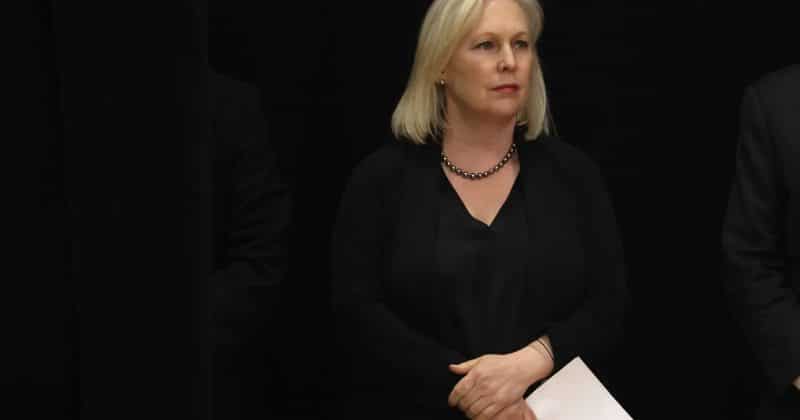
Kirsten Gillibrand calls for ban on elected officials issuing memecoins after Trump’s $636 million crypto windfall

Kirsten Gillibrand calls for ban on elected officials issuing memecoins after Trump’s $636 million crypto windfall

The New York senator is tying ethics provisions to any crypto legislation after Trump's financial disclosure revealed his memecoin venture became his biggest income source


Senator Kirsten Gillibrand wants to make sure the leader of the free world can’t also be the leader of a memecoin empire. The New York Democrat is pushing for a blanket ban on elected officials, senior administration figures, and their families profiting from digital assets like memecoins and stablecoins, a stance that’s taken on new urgency following President Trump’s 2025 financial disclosure.

That 927-page document, released on July 1, showed Trump earned over $636 million from his $TRUMP memecoin business. Crypto wasn’t a side hustle. It was his main hustle, surpassing even his real estate earnings for the year.

The numbers behind the outrage

The memecoin income was just one piece of a much larger crypto portfolio. Trump also reported between $524 million and $594 million from World Liberty Financial, a DeFi project tied to his family. Add it all up and you’re looking at roughly $1.4 billion in crypto-related income for 2025.

Advertisement

The $TRUMP memecoin launched between January 17 and 20, 2025, just days before Trump’s inauguration. The timing alone raised eyebrows. A sitting president launching a speculative digital token while preparing to shape the regulatory landscape for that exact asset class is, to put it mildly, a situation with some conflicts baked in.

Things got more colorful in May 2025, when Trump held a private dinner for the biggest $TRUMP memecoin holders. Meanwhile, retail investors who piled into $TRUMP reportedly faced significant losses while the Trump family profited handsomely.

Gillibrand draws the line

Gillibrand sharpened the message at the Consensus Miami conference in May 2026.

“There will be no deal without an ethics provision.”

Her vehicle for this fight is the End Crypto Corruption Act, a bill designed to prohibit top officials and their immediate families from issuing or profiting from crypto assets like memecoins. The legislation targets a specific and uncomfortable reality: people who write the rules for an industry probably shouldn’t also be its biggest beneficiaries.

Democrats have been linking ethical safeguards to crypto legislation since early 2025, including during debates over the GENIUS Act, a stablecoin-focused bill that has been a flashpoint for partisan disagreements. The Democratic position is straightforward: they won’t support comprehensive crypto regulation unless it includes provisions preventing the kind of scenario playing out right now.

Why this matters for the crypto market

If Democrats hold firm on requiring ethics provisions, then any bipartisan crypto legislation faces a much narrower path to passage. Republicans who want market structure rules or stablecoin frameworks will need to decide whether they’re willing to accept restrictions on official crypto dealings as the price of admission.

The broader market impact has been muted so far. Crypto prices haven’t moved significantly on the disclosure news or Gillibrand’s statements alone. The real test comes when a crypto bill actually reaches a floor vote, and Democrats force the ethics question into a binary choice: accept the restrictions or watch the legislation die.

Disclosure: This article was edited by Editorial Team. For more information on how we create and review content, see our Editorial Policy.

Kirsten Gillibrand calls for ban on elected officials issuing memecoins after Trump’s $636 million crypto windfall

Kirsten Gillibrand calls for ban on elected officials issuing memecoins after Trump’s $636 million crypto windfall

The New York senator is tying ethics provisions to any crypto legislation after Trump's financial disclosure revealed his memecoin venture became his biggest income source

Senator Kirsten Gillibrand wants to make sure the leader of the free world can’t also be the leader of a memecoin empire. The New York Democrat is pushing for a blanket ban on elected officials, senior administration figures, and their families profiting from digital assets like memecoins and stablecoins, a stance that’s taken on new urgency following President Trump’s 2025 financial disclosure.

That 927-page document, released on July 1, showed Trump earned over $636 million from his $TRUMP memecoin business. Crypto wasn’t a side hustle. It was his main hustle, surpassing even his real estate earnings for the year.

The numbers behind the outrage

The memecoin income was just one piece of a much larger crypto portfolio. Trump also reported between $524 million and $594 million from World Liberty Financial, a DeFi project tied to his family. Add it all up and you’re looking at roughly $1.4 billion in crypto-related income for 2025.

Advertisement

The $TRUMP memecoin launched between January 17 and 20, 2025, just days before Trump’s inauguration. The timing alone raised eyebrows. A sitting president launching a speculative digital token while preparing to shape the regulatory landscape for that exact asset class is, to put it mildly, a situation with some conflicts baked in.

Things got more colorful in May 2025, when Trump held a private dinner for the biggest $TRUMP memecoin holders. Meanwhile, retail investors who piled into $TRUMP reportedly faced significant losses while the Trump family profited handsomely.

Gillibrand draws the line

Gillibrand sharpened the message at the Consensus Miami conference in May 2026.

“There will be no deal without an ethics provision.”

Her vehicle for this fight is the End Crypto Corruption Act, a bill designed to prohibit top officials and their immediate families from issuing or profiting from crypto assets like memecoins. The legislation targets a specific and uncomfortable reality: people who write the rules for an industry probably shouldn’t also be its biggest beneficiaries.

Democrats have been linking ethical safeguards to crypto legislation since early 2025, including during debates over the GENIUS Act, a stablecoin-focused bill that has been a flashpoint for partisan disagreements. The Democratic position is straightforward: they won’t support comprehensive crypto regulation unless it includes provisions preventing the kind of scenario playing out right now.

Why this matters for the crypto market

If Democrats hold firm on requiring ethics provisions, then any bipartisan crypto legislation faces a much narrower path to passage. Republicans who want market structure rules or stablecoin frameworks will need to decide whether they’re willing to accept restrictions on official crypto dealings as the price of admission.

The broader market impact has been muted so far. Crypto prices haven’t moved significantly on the disclosure news or Gillibrand’s statements alone. The real test comes when a crypto bill actually reaches a floor vote, and Democrats force the ethics question into a binary choice: accept the restrictions or watch the legislation die.

Disclosure: This article was edited by Editorial Team. For more information on how we create and review content, see our Editorial Policy.