
SingularityNET founder pushes back on Bernie Sanders’ AI ownership plan

SingularityNET founder pushes back on Bernie Sanders’ AI ownership plan

The SingularityNET founder argues that nationalizing AI companies would concentrate power and stifle innovation, pointing to decentralized alternatives already in motion.

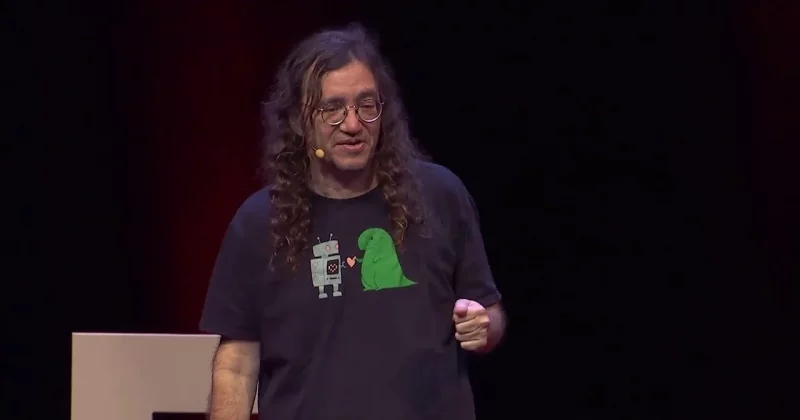
SingularityNET founder Ben Goertzel pushed back against Senator Bernie Sanders’ proposal for public ownership of major AI companies, arguing that Artificial General Intelligence should be built through open source and decentralized networks instead.

Goertzel published his response on June 2 after Sanders proposed the American AI Sovereign Wealth Fund Act, which would give the public a 50% ownership stake in large AI firms through a one time tax on company stock.

Goertzel said the goal of broad AI ownership is understandable, but warned that handing control of advanced AI to any single entity, whether a corporation or a government, risks concentrating power in ways that could limit innovation and weaken public participation.

Goertzel’s argument is that beneficial AGI is more likely to emerge from collaborative networks than from centralized institutions.

Advertisement

He has long argued that no single company or state should control the development of advanced AI systems. In his view, decentralization makes it harder for any one actor to dominate the technology and gives more developers, users, and communities a role in shaping how AI evolves.

Sanders’ proposal takes a different route. His plan would create a sovereign wealth fund by taking a 50% ownership stake in major AI companies, including firms such as OpenAI, Anthropic, xAI, and others. 

Sanders has argued that AI companies built their systems using public knowledge and data, meaning the public should share directly in the economic upside.

Goertzel rejected that framework as too state centric. He argued that public benefit should come from open participation, transparent systems, and decentralized governance rather than government ownership of dominant AI companies.

Goertzel is not only making the argument from the sidelines. SingularityNET, which he founded in 2017, operates as a decentralized marketplace for AI services, allowing developers to publish AI tools and users to access them without relying on a single platform owner.

In 2024, SingularityNET helped form the Artificial Superintelligence Alliance with Fetch.ai, Ocean Protocol, and later CUDOS. The alliance was designed to combine decentralized AI services, autonomous agents, data infrastructure, and compute into a broader open AI network.

The ASI token now supports transactions, staking, governance, and access to services across the alliance’s ecosystem. That makes the project one of the most visible attempts to connect AI development with crypto based coordination.

Disclosure: This article was edited by Editorial Team. For more information on how we create and review content, see our Editorial Policy.

SingularityNET founder pushes back on Bernie Sanders’ AI ownership plan

SingularityNET founder pushes back on Bernie Sanders’ AI ownership plan

The SingularityNET founder argues that nationalizing AI companies would concentrate power and stifle innovation, pointing to decentralized alternatives already in motion.

Share

Add us on Google

SingularityNET founder Ben Goertzel pushed back against Senator Bernie Sanders’ proposal for public ownership of major AI companies, arguing that Artificial General Intelligence should be built through open source and decentralized networks instead.

Goertzel published his response on June 2 after Sanders proposed the American AI Sovereign Wealth Fund Act, which would give the public a 50% ownership stake in large AI firms through a one time tax on company stock.

Goertzel said the goal of broad AI ownership is understandable, but warned that handing control of advanced AI to any single entity, whether a corporation or a government, risks concentrating power in ways that could limit innovation and weaken public participation.

Goertzel’s argument is that beneficial AGI is more likely to emerge from collaborative networks than from centralized institutions.

Advertisement

He has long argued that no single company or state should control the development of advanced AI systems. In his view, decentralization makes it harder for any one actor to dominate the technology and gives more developers, users, and communities a role in shaping how AI evolves.

Sanders’ proposal takes a different route. His plan would create a sovereign wealth fund by taking a 50% ownership stake in major AI companies, including firms such as OpenAI, Anthropic, xAI, and others. 

Sanders has argued that AI companies built their systems using public knowledge and data, meaning the public should share directly in the economic upside.

Goertzel rejected that framework as too state centric. He argued that public benefit should come from open participation, transparent systems, and decentralized governance rather than government ownership of dominant AI companies.

Goertzel is not only making the argument from the sidelines. SingularityNET, which he founded in 2017, operates as a decentralized marketplace for AI services, allowing developers to publish AI tools and users to access them without relying on a single platform owner.

In 2024, SingularityNET helped form the Artificial Superintelligence Alliance with Fetch.ai, Ocean Protocol, and later CUDOS. The alliance was designed to combine decentralized AI services, autonomous agents, data infrastructure, and compute into a broader open AI network.

The ASI token now supports transactions, staking, governance, and access to services across the alliance’s ecosystem. That makes the project one of the most visible attempts to connect AI development with crypto based coordination.

Disclosure: This article was edited by Editorial Team. For more information on how we create and review content, see our Editorial Policy.