
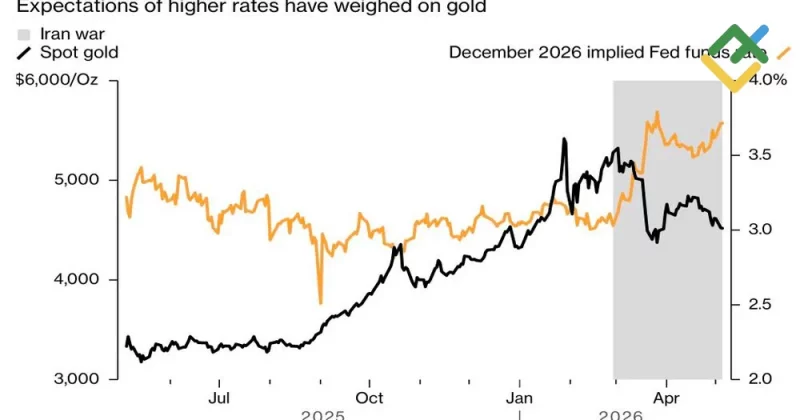
Gold consolidates as Fed rate hike expectations weigh on prices
The precious metal is stuck in a holding pattern as traders weigh inflation risks against softening economic data, with Fed policy as the deciding variable.
Gold is in a consolidation phase, caught between traders who see more upside and a Federal Reserve that keeps reminding everyone it’s in no rush to cut rates.
The tug-of-war keeping gold stuck
Recent US economic data has shown some genuine softness. Weaker labor numbers and disappointing retail figures had bolstered the case that the Fed might start cutting rates sooner rather than later. That expectation weakened the US dollar, and since gold has a well-documented inverse relationship with the greenback, the metal caught a bid.
On the other hand, renewed price pressures and elevated real yields have created a headwind for gold. Higher real yields make non-yielding assets like gold less attractive by comparison.
This push-and-pull dynamic has left gold trading in a range, with analysts identifying resistance around the $5,070 to $5,100 zone and support near $5,141.
The news moving money, markets, and the world—before your day starts.
Daily. Free. Join 34,000+ readers across crypto, finance, and policy.
Why the Fed is the main character
Traders are now laser-focused on upcoming US employment and inflation data. A hot inflation print could send gold lower as rate cut hopes fade. A weak jobs report could reignite the rally.
Context: how gold got here
Gold has climbed above $5,000 on the back of geopolitical uncertainty, central bank buying, and growing concerns about the sustainability of US fiscal policy. Central banks around the world have been accumulating gold reserves at an elevated pace, providing a structural floor under prices.
What this means for investors
A sustained break above the $5,070 to $5,100 resistance zone would signal renewed bullish momentum. A breakdown below the $5,141 support level would indicate that sellers are gaining control and could open the door to deeper pullbacks.