
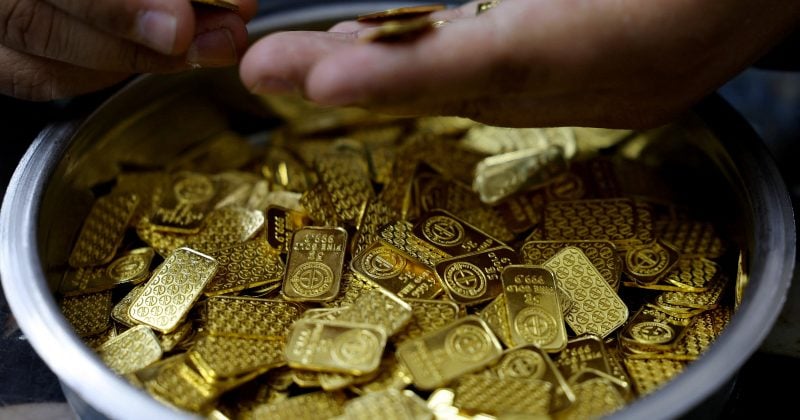
Gold steadies near $4,140 as investors weigh Middle East conflict against rate hike fears
The traditional safe haven asset is down 26% from its January record as a stronger dollar and rising yields undercut its appeal
Gold is doing something it’s not supposed to do during a geopolitical crisis: going sideways. Spot prices have been hovering around $4,140 per ounce in early July, a far cry from the $5,598 record set back in January 2026. That’s a 26% decline in roughly six months, which is the kind of drawdown that makes “safe haven” sound more like a marketing slogan than a market reality.
The metal’s muted performance comes as investors try to reconcile two competing forces: escalating conflict in the Middle East that should, in theory, send gold soaring, and the growing likelihood of Federal Reserve rate hikes that make holding a non-yielding asset feel increasingly expensive.
The Middle East factor isn’t working the way it used to
Tensions involving Iran, the US, and Israel have been escalating for months. Incidents in the Strait of Hormuz have rattled energy markets and injected fresh uncertainty into global asset pricing. Oil prices have climbed as a direct result of regional instability.
Instead, gold is 19% below where it was trading at the end of February, before the Iran conflict intensified. The reason is deceptively simple: higher oil prices feed inflation expectations, inflation expectations feed rate hike bets, and rate hike bets feed dollar strength. Gold gets squeezed from both sides.
The Fed’s shadow looms large
Gold prices edged down again on July 7, fluctuating between $4,070 and $4,145 per ounce as markets waited for the release of Federal Reserve minutes.
Macro, rates, and crypto—what moved markets and what matters next.
Daily. Free. Join 34,000+ readers across crypto, finance, and policy.
Rising inflation driven by energy costs gives the Fed cover, and arguably obligation, to tighten. Higher interest rates boost Treasury yields and strengthen the dollar. Both of those developments are kryptonite for gold, which generates no income and is priced in dollars.
This dynamic has been building since June 1, when gold fell sharply amid escalating Middle East tensions. That date marked a turning point where the market collectively decided that inflation fears outweighed geopolitical fears, at least when it came to gold positioning.
The stronger dollar has been particularly punishing. For international buyers, a rising greenback makes gold more expensive in local currency terms, dampening demand at precisely the moment you’d expect it to surge.
What crypto investors should watch
If gold can lose 26% during an active military conflict in one of the world’s most strategically important regions, it raises uncomfortable questions about what “store of value” actually means in a high-rate environment. Bitcoin faces the same headwinds: it generates no yield, and its correlation with risk assets has been stubbornly persistent.
For traders with shorter time horizons, the $4,070 level has emerged as near-term support. A break below that could accelerate selling pressure, particularly if Fed minutes signal hawkish intent. On the upside, a de-escalation in Middle East tensions, paradoxically, might actually help gold by reducing oil-driven inflation fears and taking rate hikes off the table.