
Nexo Earn with Nexo
Google revamps Search and YouTube with Gemini AI features at I/O conference

Google revamps Search and YouTube with Gemini AI features at I/O conference

Google is betting that cannibalizing its own products with AI is better than letting someone else do it first.

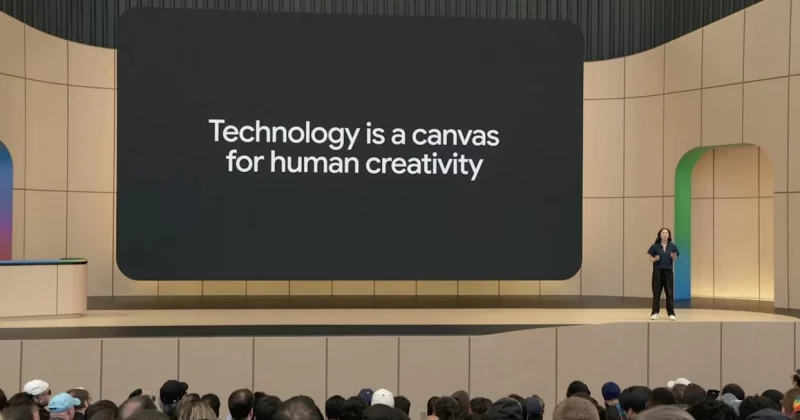
Google just announced the most aggressive overhaul of its core products in years, embedding its Gemini AI models deep into Search and YouTube at the I/O 2026 developer conference. The company is essentially trying to disrupt itself before OpenAI and Anthropic do it for them.

It’s a move that carries real stakes. Google’s advertising business generates tens of billions in profit, and rebuilding those products around AI risks undermining the very revenue engine that funds everything else. But standing still isn’t an option when your competitors are sprinting.

What Google actually announced

The centerpiece of the announcement is a dramatically expanded AI mode for Google Search, turning it from a link-recommendation engine into something closer to an AI-powered research assistant. AI Overviews in Search now reach more than 2.5 billion users, a number that reflects just how much real estate Google is willing to hand over to AI-generated answers instead of traditional blue links.

YouTube is getting its own AI makeover, with enhanced AI-generated content features that Google hopes will keep creators and viewers locked into its ecosystem. The details suggest a platform that increasingly uses AI to generate, recommend, and contextualize video content.

Google also unveiled two new Gemini model variants. Gemini Omni is designed to create content from various input types, think text, images, audio, and video all feeding into one generation pipeline. Gemini Flash, on the other hand, is optimized for efficient AI workloads, essentially doing more with less compute.

Then there’s Gemini Spark, a personal AI agent running on Google Cloud. It can handle ongoing tasks autonomously and will soon integrate with other tools, positioning it as Google’s answer to the agentic AI wave that every major tech company is chasing right now.

Advertisement

Here’s the number that caught everyone’s attention: users are consuming roughly 3.2 quadrillion AI tokens monthly across Google’s products. That’s a sevenfold increase from the previous year. To put that in perspective, a quadrillion is a thousand trillion. Google is processing volumes of AI inference that would have sounded like science fiction two years ago.

Gemini itself now has around 900 million monthly active users. For context, that’s roughly the population of Europe. Google’s distribution advantage, the thing that differentiates it from AI-native startups, is clearly working.

The balancing act

Look, what Google is attempting here is genuinely difficult. It’s trying to reinvent products that already dominate their categories while keeping the ad revenue flowing. It’s like rebuilding a plane’s engine mid-flight, except the plane is also a money printer.

Unlike OpenAI and Anthropic, which can move fast because they have no legacy business to protect, Google has an empire. Search alone is one of the most profitable products ever built. YouTube is the world’s dominant video platform. Both run on advertising models that depend on users clicking links and watching pre-roll ads, behaviors that AI-first interfaces could fundamentally change.

Google’s leadership appears to have decided that the bigger risk is inaction. If AI chatbots start siphoning search queries, better that they’re Google’s chatbots doing the siphoning. It’s the classic innovator’s dilemma, and Google is choosing self-cannibalization over slow irrelevance.

That said, the company still has ground to make up. Despite its massive scale and distribution advantages, Google reportedly still lags behind Anthropic and OpenAI in coding capabilities, one of the highest-value use cases for AI right now. Being the biggest doesn’t automatically mean being the best, and developer mindshare in the AI tools space is fiercely contested.

What this means for crypto and Web3

At first glance, a Google AI conference might seem distant from crypto markets. It’s not.

The aggressive push toward AI-first platforms by the world’s largest tech company has direct implications for how blockchain projects, decentralized applications, and token ecosystems interact with mainstream users. Google’s AI integrations promise new pathways for Web3 data and token usage to reach billions of users through Search and YouTube, two platforms that already serve as primary discovery channels for crypto projects.

For crypto investors, the key dynamic to watch is the ongoing convergence of AI and blockchain infrastructure. Projects building at the intersection of these two technologies, whether it’s decentralized compute networks, AI-focused tokens, or on-chain data feeds optimized for AI consumption, stand to benefit from Google’s normalization of AI as the default interface layer for the internet.

The flip side is worth considering too. Google’s scale advantage is enormous. When a company with 900 million monthly AI users and 2.5 billion AI Overview users decides to build something, decentralized alternatives face an even steeper uphill climb for adoption. The AI compute market is consolidating around a handful of hyperscalers, and Google just made clear it intends to be at the center of that consolidation.

There’s also a subtler market signal here. The sevenfold increase in AI token consumption across Google’s products suggests that demand for compute infrastructure is growing at a pace that could strain even centralized providers. That’s exactly the kind of bottleneck that decentralized compute networks have been positioning themselves to address. Whether they can actually deliver at the scale Google operates at remains the multi-billion-dollar question.

For traders watching AI-adjacent crypto tokens, Google’s I/O announcements tend to act as a sentiment catalyst. The narrative that AI is eating the internet just got a major endorsement from the company that arguably built the modern internet. Projects that can credibly tie their value proposition to this trend, rather than just slapping “AI” on a whitepaper, are the ones most likely to capture sustained attention from institutional and retail investors alike.

Disclosure: This article was edited by Editorial Team. For more information on how we create and review content, see our Editorial Policy.

Google revamps Search and YouTube with Gemini AI features at I/O conference

Google revamps Search and YouTube with Gemini AI features at I/O conference

Google is betting that cannibalizing its own products with AI is better than letting someone else do it first.

Google just announced the most aggressive overhaul of its core products in years, embedding its Gemini AI models deep into Search and YouTube at the I/O 2026 developer conference. The company is essentially trying to disrupt itself before OpenAI and Anthropic do it for them.

It’s a move that carries real stakes. Google’s advertising business generates tens of billions in profit, and rebuilding those products around AI risks undermining the very revenue engine that funds everything else. But standing still isn’t an option when your competitors are sprinting.

What Google actually announced

The centerpiece of the announcement is a dramatically expanded AI mode for Google Search, turning it from a link-recommendation engine into something closer to an AI-powered research assistant. AI Overviews in Search now reach more than 2.5 billion users, a number that reflects just how much real estate Google is willing to hand over to AI-generated answers instead of traditional blue links.

YouTube is getting its own AI makeover, with enhanced AI-generated content features that Google hopes will keep creators and viewers locked into its ecosystem. The details suggest a platform that increasingly uses AI to generate, recommend, and contextualize video content.

Google also unveiled two new Gemini model variants. Gemini Omni is designed to create content from various input types, think text, images, audio, and video all feeding into one generation pipeline. Gemini Flash, on the other hand, is optimized for efficient AI workloads, essentially doing more with less compute.

Then there’s Gemini Spark, a personal AI agent running on Google Cloud. It can handle ongoing tasks autonomously and will soon integrate with other tools, positioning it as Google’s answer to the agentic AI wave that every major tech company is chasing right now.

Advertisement

Here’s the number that caught everyone’s attention: users are consuming roughly 3.2 quadrillion AI tokens monthly across Google’s products. That’s a sevenfold increase from the previous year. To put that in perspective, a quadrillion is a thousand trillion. Google is processing volumes of AI inference that would have sounded like science fiction two years ago.

Gemini itself now has around 900 million monthly active users. For context, that’s roughly the population of Europe. Google’s distribution advantage, the thing that differentiates it from AI-native startups, is clearly working.

The balancing act

Look, what Google is attempting here is genuinely difficult. It’s trying to reinvent products that already dominate their categories while keeping the ad revenue flowing. It’s like rebuilding a plane’s engine mid-flight, except the plane is also a money printer.

Unlike OpenAI and Anthropic, which can move fast because they have no legacy business to protect, Google has an empire. Search alone is one of the most profitable products ever built. YouTube is the world’s dominant video platform. Both run on advertising models that depend on users clicking links and watching pre-roll ads, behaviors that AI-first interfaces could fundamentally change.

Google’s leadership appears to have decided that the bigger risk is inaction. If AI chatbots start siphoning search queries, better that they’re Google’s chatbots doing the siphoning. It’s the classic innovator’s dilemma, and Google is choosing self-cannibalization over slow irrelevance.

That said, the company still has ground to make up. Despite its massive scale and distribution advantages, Google reportedly still lags behind Anthropic and OpenAI in coding capabilities, one of the highest-value use cases for AI right now. Being the biggest doesn’t automatically mean being the best, and developer mindshare in the AI tools space is fiercely contested.

What this means for crypto and Web3

At first glance, a Google AI conference might seem distant from crypto markets. It’s not.

The aggressive push toward AI-first platforms by the world’s largest tech company has direct implications for how blockchain projects, decentralized applications, and token ecosystems interact with mainstream users. Google’s AI integrations promise new pathways for Web3 data and token usage to reach billions of users through Search and YouTube, two platforms that already serve as primary discovery channels for crypto projects.

For crypto investors, the key dynamic to watch is the ongoing convergence of AI and blockchain infrastructure. Projects building at the intersection of these two technologies, whether it’s decentralized compute networks, AI-focused tokens, or on-chain data feeds optimized for AI consumption, stand to benefit from Google’s normalization of AI as the default interface layer for the internet.

The flip side is worth considering too. Google’s scale advantage is enormous. When a company with 900 million monthly AI users and 2.5 billion AI Overview users decides to build something, decentralized alternatives face an even steeper uphill climb for adoption. The AI compute market is consolidating around a handful of hyperscalers, and Google just made clear it intends to be at the center of that consolidation.

There’s also a subtler market signal here. The sevenfold increase in AI token consumption across Google’s products suggests that demand for compute infrastructure is growing at a pace that could strain even centralized providers. That’s exactly the kind of bottleneck that decentralized compute networks have been positioning themselves to address. Whether they can actually deliver at the scale Google operates at remains the multi-billion-dollar question.

For traders watching AI-adjacent crypto tokens, Google’s I/O announcements tend to act as a sentiment catalyst. The narrative that AI is eating the internet just got a major endorsement from the company that arguably built the modern internet. Projects that can credibly tie their value proposition to this trend, rather than just slapping “AI” on a whitepaper, are the ones most likely to capture sustained attention from institutional and retail investors alike.

Disclosure: This article was edited by Editorial Team. For more information on how we create and review content, see our Editorial Policy.