
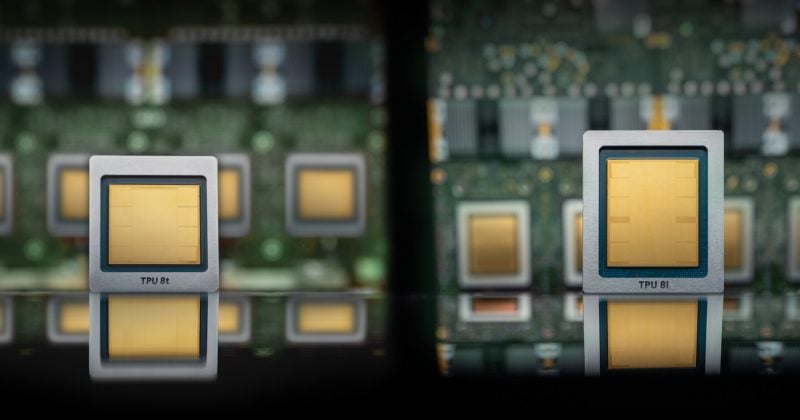
Google targets Nvidia customers with TPU sales effort, signaling a major shift in AI chip wars
Alphabet's decision to sell its custom AI chips directly to external customers could reshape the semiconductor landscape and ripple through crypto mining economics
Google just stopped playing defense. On April 29, Alphabet CEO Sundar Pichai announced the company will begin selling its Tensor Processing Units directly to select customers’ data centers, a move that transforms Google from a cloud landlord into a full-blown chip merchant. The target list reportedly includes some of Nvidia’s most valuable relationships.
The numbers tell the story
Google’s ambitions here aren’t modest. The company plans to ship 4.3 million TPUs in 2026, then ramp to more than 35 million units by 2028. That’s roughly an eightfold increase in two years.
Morgan Stanley estimates that selling 500,000 TPU chips alone could generate approximately $13 billion in revenue for Google by 2027.
Anthropic, the AI safety lab behind Claude, has reportedly committed to deploying up to one million TPUs and investing in approximately 3.5 gigawatts of power capacity starting in 2027. Meta is also said to be in discussions about substantial TPU commitments.
Most of the revenue from this push is expected to land in 2027, with initial shipments to customer data centers happening within this year. Pichai unveiled the strategy during Google’s Q1 earnings call.
AI, tech, and the markets they move—in one daily briefing.
Daily. Free. Join 34,000+ readers across crypto, finance, and policy.
A broader shift away from Nvidia dependence
Google has been hoarding TPUs for internal use since the mid-2010s. The internal groundwork for this commercial move started back in 2022, when Google reorganized to give Google Cloud greater control over TPU allocation.
Google isn’t alone in trying to chip away at Nvidia’s position. Amazon has its Trainium and Inferentia chips. Microsoft has its Maia accelerator. But Google’s TPUs have powered internal workloads including Search, YouTube recommendations, and Gemini model training for years.
The difference now is that Google is willing to let outsiders buy the silicon rather than just rent access through Google Cloud, putting Google in direct competition with Nvidia on hardware sales rather than just cloud services.
What this means for investors
The $13 billion revenue projection from Morgan Stanley for 2027 is eye-catching, but the real signal is the scale of deployment Google is planning. Going from 4.3 million to 35 million TPUs shipped in two years suggests Google believes the AI accelerator market is far larger than any single vendor can serve.