
First Gulf-to-Europe crude oil tanker since March is paying its way through the Strait of Hormuz in Bitcoin
A two-million-barrel shipment of Iraqi crude is headed to Rotterdam, but the real story is the $1-per-barrel crypto toll Iran now charges to pass through the world's most important oil chokepoint.
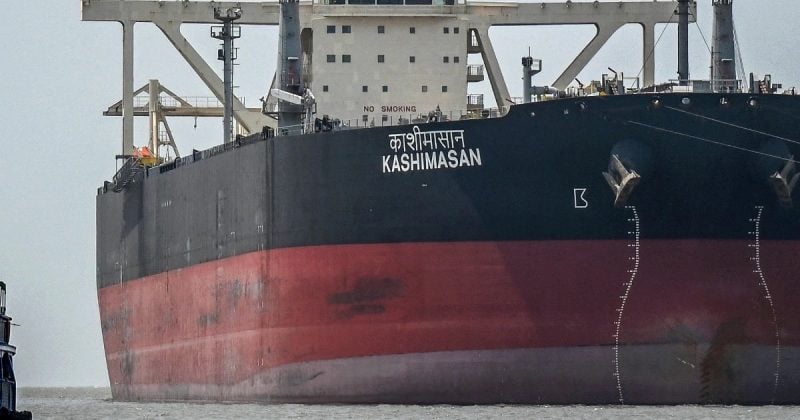
For the first time since early March, a tanker loaded with Gulf crude oil is actually heading toward Europe. The Advantage Victory, a Marshall Islands-flagged vessel carrying roughly two million barrels of Iraqi oil, transited the Strait of Hormuz on May 27 and is expected to dock in Rotterdam on July 7.
Maritime data firm Kpler reported on June 10 that the Advantage Victory is the first vessel to carry Gulf crude to Europe since the New Vision departed on March 1. The tanker was loaded with Iraqi oil at Basra during late February and early March.
Since March 1, 103 tankers have left the Gulf carrying a combined 185 million barrels of oil. Almost none of it went west. A full 84% of exported oil since mid-April was redirected to Asia or the Middle East.
Iran has instituted a transit fee of $1 per barrel for any vessel crossing the Strait of Hormuz. That fee must be paid in cryptocurrency, and Bitcoin is explicitly accepted.
For a tanker like the Advantage Victory carrying two million barrels, that works out to a $2 million crypto toll for a single passage. Scale that across 103 tankers and 185 million barrels since March 1, and you’re looking at a potential revenue stream of $185 million, all denominated in digital assets.
The news moving money, markets, and the world—before your day starts.
Daily. Free. Join 34,000+ readers across crypto, finance, and policy.
One tanker does not make a trade route. The Advantage Victory’s journey toward Rotterdam is notable precisely because it’s singular. The 102 other tankers that left the Gulf since March all went somewhere else.
Kpler’s tracking data suggests the flow of oil has fundamentally changed since the onset of US-Iran friction. Whether the Advantage Victory represents a modest reopening of the Gulf-to-Europe corridor or just an outlier depends entirely on what happens next in the Strait.
For crypto investors, the immediate question is whether Iran’s Bitcoin toll creates meaningful buy pressure. A $1-per-barrel fee across all Strait of Hormuz traffic would generate significant crypto demand, but the actual volume flowing through under this fee structure is unclear. Not every nation or shipping company is willing to comply with Iran’s terms, which is partly why so few tankers have attempted the Europe-bound route.
Any shipping company paying Iran’s toll in Bitcoin is potentially exposing itself to secondary sanctions risk. For traders, the variables to watch are straightforward: the pace of additional Gulf-to-Europe shipments, any formal Western response to Iran’s crypto toll mechanism, and whether the $1-per-barrel fee structure expands or evolves.