
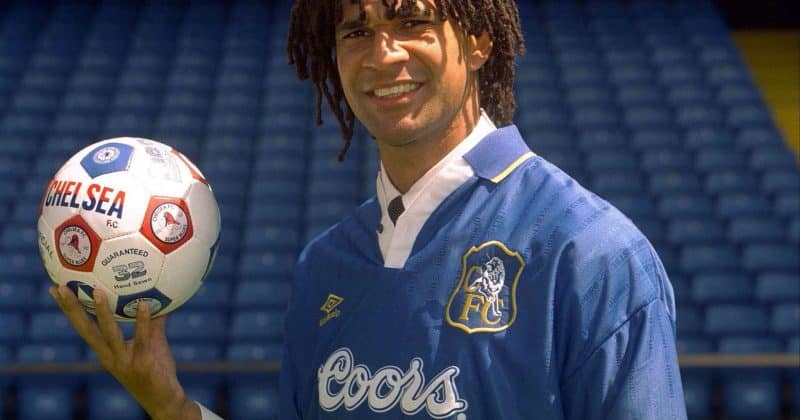
Ruud Gullit praises Canada’s multicultural 2026 World Cup squad
The Dutch football legend says Canada's diverse roster gives him 'enormous joy' ahead of the team's home World Cup debut
Ruud Gullit, one of the most decorated footballers in Dutch history, has turned his attention to an unlikely source of inspiration ahead of the 2026 FIFA World Cup: the Canadian men’s national team.
In comments on beIN Sports around June 13, Gullit singled out Canada’s squad for its striking diversity, noting that more than half of the players are Black and many come from immigrant backgrounds. For a country co-hosting its first World Cup alongside the United States and Mexico, the roster reads like a census of the global diaspora.
A former Ballon d’Or winner weighs in
Gullit is no stranger to conversations about race and identity in football. The former AC Milan and Chelsea star, himself of Surinamese-Dutch heritage, won the Ballon d’Or and spent decades navigating European football as a player and manager who looked different from most of his peers.
His reaction to Canada’s squad composition was unambiguous. Gullit said the team’s makeup gave him “enormous joy” and a “very good feeling.”
The comments came in response to head coach Jesse Marsch’s own emphasis on building a welcoming environment for players from all backgrounds.
Gullit drew parallels to Switzerland, another national team whose roster has long reflected waves of immigration from the Balkans, Africa, and Southern Europe.
He also referenced the historical immigration patterns of his own native Netherlands, a country whose football identity was transformed by players with roots in Suriname, the Dutch Antilles, Morocco, and Turkey.
Toronto sets the stage
Canada’s first home match of the 2026 World Cup is set to take place in Toronto, a city regularly cited as one of the most diverse urban centers on the planet.
Why Gullit’s voice matters here
Gullit grew up as a mixed-race kid in Amsterdam in the 1960s and 1970s, a period when the Netherlands was still grappling with its colonial legacy and the meaning of Dutch identity. He went on to captain the national team and win the 1988 European Championship, becoming one of the most recognizable athletes in the world.