
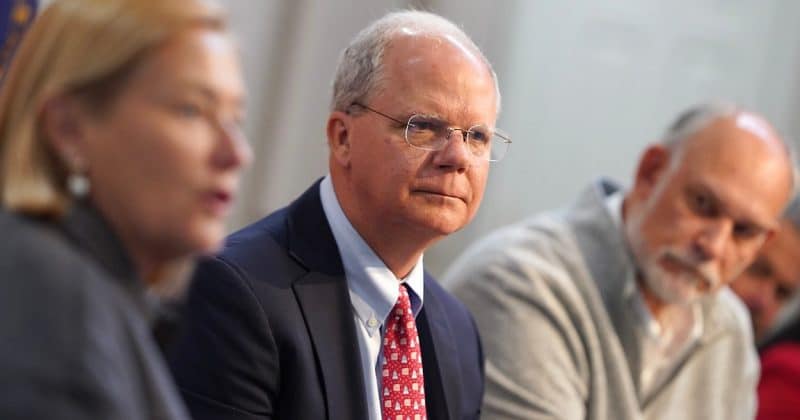
Rep. Brett Guthrie calls for AI regulation, data centers to bear costs
The House Energy and Commerce Committee chairman wants tech companies to pay their own electric bills instead of passing data center costs to residential ratepayers
Rep. Brett Guthrie, the chairman of the House Energy and Commerce Committee, is drawing a line in the sand on who foots the bill for America’s AI infrastructure boom. His message to tech companies is refreshingly simple: pay your own electricity bill.
Guthrie emphasized on June 16 that companies building and operating data centers must cover their own energy costs, rather than shifting that financial burden onto residential customers.
The cost question nobody wants to answer
Current projections suggest that data center electricity loads could double or triple by 2028. When a massive data center plugs into a local power grid, the utility often needs to upgrade transmission lines, build new substations, or secure additional generation capacity. Without clear rules, those costs can get rolled into the rate base that every customer pays.
To address this directly, Guthrie supports the proposed Ratepayer Protection Act, which would prevent data centers from shifting their infrastructure costs to residential ratepayers.
Guthrie’s own district in Kentucky has become a central battleground for data center development, with local communities increasingly pushing back against expansions that strain local resources.
The news moving money, markets, and the world—before your day starts.
Daily. Free. Join 34,000+ readers across crypto, finance, and policy.
Regulation without suffocation
Guthrie has been careful to distinguish between smart oversight and what he calls “suffocating regulation.” As far back as March 2025, he advocated for tailored AI governance rather than broad, blunt rules that could slow American innovation.
He has explicitly opposed blanket moratoria on data center construction. Instead, Guthrie wants local communities to have meaningful input on specific issues like water use and energy requirements.
The geopolitical angle
On June 4, he co-signed a letter with Representatives Joyce and Latta requesting investigations into alleged foreign influence campaigns aimed at slowing American data center construction. The letter specifically pointed to China as a potential source of these campaigns.