
Erling Haaland’s 13-match scoring streak sparks renewed interest in athlete-linked crypto assets

Erling Haaland’s 13-match scoring streak sparks renewed interest in athlete-linked crypto assets

The Norwegian striker's 25 goals in 13 consecutive internationals have rippled beyond the pitch into NFT and token markets tied to athlete performance.

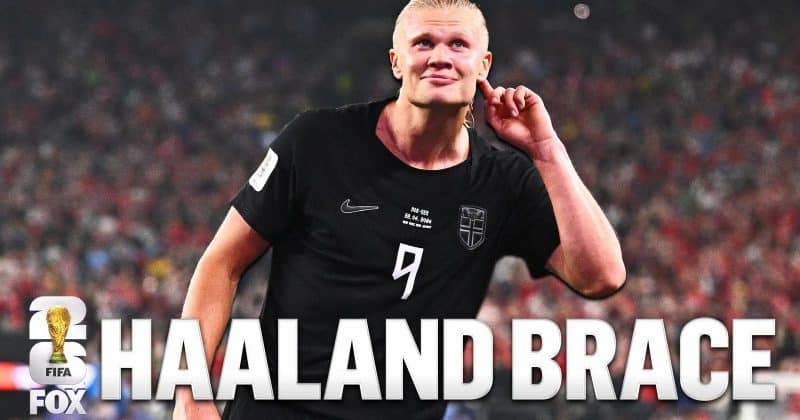
Erling Haaland just did something that makes most international scoring records look quaint. The Norwegian striker has now scored in 13 consecutive competitive matches for his national team, racking up 25 goals across that stretch.

His overall record for Norway now stands at 59 goals in 52 appearances. Read that again. He has more goals than caps.

A World Cup stage for an already absurd run

The streak has coincided with Norway’s participation in the 2026 FIFA World Cup, where Haaland has been the engine driving his team into the knockout stages. His performances have included braces against Iraq and Senegal, the kind of multi-goal outings that have become almost routine for the Manchester City forward.

Advertisement

Where crypto enters the conversation

The most concrete data point: a 1-of-1 Sorare NFT card featuring Haaland previously sold for 265.1 ETH, which was worth over $600,000 at the time of the transaction. Sorare operates a fantasy football platform built on blockchain technology, where player cards function as NFTs whose value fluctuates based on real-world performance.

Then there’s the wilder side of the ledger. A community-driven meme token called $HAALAND exists on the Solana blockchain. It has no official connection to the player whatsoever. No endorsement, no licensing agreement, no indication that Haaland himself is aware of or involved with it. This is worth emphasizing because the crypto space has a long history of unofficial tokens riding the coattails of famous names, and buyers should understand exactly what they’re purchasing: a speculative asset tied to sentiment, not to any contractual relationship with the athlete.

What this means for investors watching athlete-linked assets

Licensed platforms like Sorare offer something closer to a structured market. Card values are tied to verifiable performance metrics, scarcity is enforced by smart contracts, and there’s a functioning game layer that creates organic demand. The $600,000 Haaland card sale represents the high end of this market.

Unofficial tokens are a different beast entirely. The $HAALAND meme token on Solana trades purely on sentiment and speculation. There’s no revenue model, no licensing revenue, no performance oracle feeding data into the token’s value. When Haaland scores a brace at the World Cup, social media volume spikes, and tokens like these can see short-term pumps. When the news cycle moves on, the floor tends to follow it down.

The risk that regulators eventually take a closer look at unauthorized athlete tokens is non-trivial. Several jurisdictions are already scrutinizing celebrity-linked tokens, and a high-profile case involving a player of Haaland’s stature could accelerate that scrutiny. Anyone holding positions in unofficial athlete tokens should factor regulatory risk into their calculus, not just market sentiment.

Disclosure: This article was edited by Editorial Team. For more information on how we create and review content, see our Editorial Policy.

Erling Haaland’s 13-match scoring streak sparks renewed interest in athlete-linked crypto assets

Erling Haaland’s 13-match scoring streak sparks renewed interest in athlete-linked crypto assets

The Norwegian striker's 25 goals in 13 consecutive internationals have rippled beyond the pitch into NFT and token markets tied to athlete performance.

Erling Haaland just did something that makes most international scoring records look quaint. The Norwegian striker has now scored in 13 consecutive competitive matches for his national team, racking up 25 goals across that stretch.

His overall record for Norway now stands at 59 goals in 52 appearances. Read that again. He has more goals than caps.

A World Cup stage for an already absurd run

The streak has coincided with Norway’s participation in the 2026 FIFA World Cup, where Haaland has been the engine driving his team into the knockout stages. His performances have included braces against Iraq and Senegal, the kind of multi-goal outings that have become almost routine for the Manchester City forward.

Advertisement

Where crypto enters the conversation

The most concrete data point: a 1-of-1 Sorare NFT card featuring Haaland previously sold for 265.1 ETH, which was worth over $600,000 at the time of the transaction. Sorare operates a fantasy football platform built on blockchain technology, where player cards function as NFTs whose value fluctuates based on real-world performance.

Then there’s the wilder side of the ledger. A community-driven meme token called $HAALAND exists on the Solana blockchain. It has no official connection to the player whatsoever. No endorsement, no licensing agreement, no indication that Haaland himself is aware of or involved with it. This is worth emphasizing because the crypto space has a long history of unofficial tokens riding the coattails of famous names, and buyers should understand exactly what they’re purchasing: a speculative asset tied to sentiment, not to any contractual relationship with the athlete.

What this means for investors watching athlete-linked assets

Licensed platforms like Sorare offer something closer to a structured market. Card values are tied to verifiable performance metrics, scarcity is enforced by smart contracts, and there’s a functioning game layer that creates organic demand. The $600,000 Haaland card sale represents the high end of this market.

Unofficial tokens are a different beast entirely. The $HAALAND meme token on Solana trades purely on sentiment and speculation. There’s no revenue model, no licensing revenue, no performance oracle feeding data into the token’s value. When Haaland scores a brace at the World Cup, social media volume spikes, and tokens like these can see short-term pumps. When the news cycle moves on, the floor tends to follow it down.

The risk that regulators eventually take a closer look at unauthorized athlete tokens is non-trivial. Several jurisdictions are already scrutinizing celebrity-linked tokens, and a high-profile case involving a player of Haaland’s stature could accelerate that scrutiny. Anyone holding positions in unofficial athlete tokens should factor regulatory risk into their calculus, not just market sentiment.

Disclosure: This article was edited by Editorial Team. For more information on how we create and review content, see our Editorial Policy.