
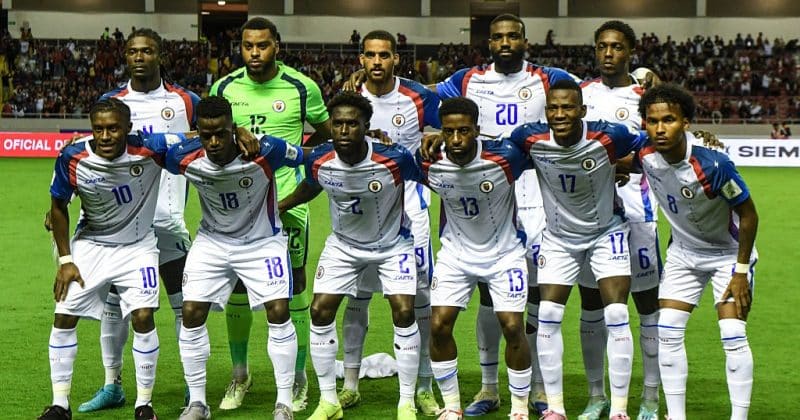
Haiti to debut redesigned World Cup jersey after FIFA rejects initial design as political
FIFA deemed graphics referencing the Battle of Vertières a violation of equipment regulations, forcing a last-minute redesign days before Haiti's first World Cup match in 52 years.
Haiti is heading to its first World Cup in over half a century, and it almost did so wearing the wrong jersey. FIFA rejected the national team’s original kit design, deeming elements of it political, which forced manufacturer Saeta to scramble for a redesign just days before the tournament kicks off.
The offending graphics referenced the Battle of Vertières, the 1803 clash that effectively sealed Haitian independence from France. Apparently, commemorating a 223-year-old battle for freedom counts as a political statement in FIFA’s eyes.
What FIFA found objectionable
FIFA’s equipment regulations prohibit political messaging on match-day kits. The governing body determined that the imagery inspired by the Battle of Vertières crossed that line, regardless of its historical and cultural significance to the Haitian people.
Saeta, the Colombia-based manufacturer responsible for the kit, made the necessary modifications. The revised design has since been approved by FIFA, clearing Haiti to take the pitch in compliant gear.
The announcement about the updated jersey came on June 10, 2026. That timeline is worth noting: it landed just days before Haiti’s opening match, leaving precious little margin for error in getting new stock produced and distributed.
A return 52 years in the making
Haiti last appeared on the sport’s biggest stage in 1974. That’s 52 years of absence.
Haiti earned its spot the hard way, topping their CONCACAF qualifying group. That’s not a participation trophy. CONCACAF qualification is a grind, and finishing first in a group means consistent results over multiple windows against regional rivals.
Official jerseys have been flying off shelves, with stock shortages reported as fans rush to grab gear ahead of the tournament. Independent Haitian designers have stepped into the gap. Several have released culturally themed apparel that sold out quickly, tapping into the national pride surrounding the team’s return. These unofficial designs, unburdened by FIFA’s equipment regulations, have been free to lean into the kind of historical and cultural imagery that the official kit could not.
Saeta, for its part, navigated the situation about as well as a manufacturer can when a governing body vetoes your design weeks before a major tournament. The revised kit got approved, production moved forward, and Haiti will take the field in gear that meets FIFA’s standards, even if it’s not the gear the designers originally envisioned.