
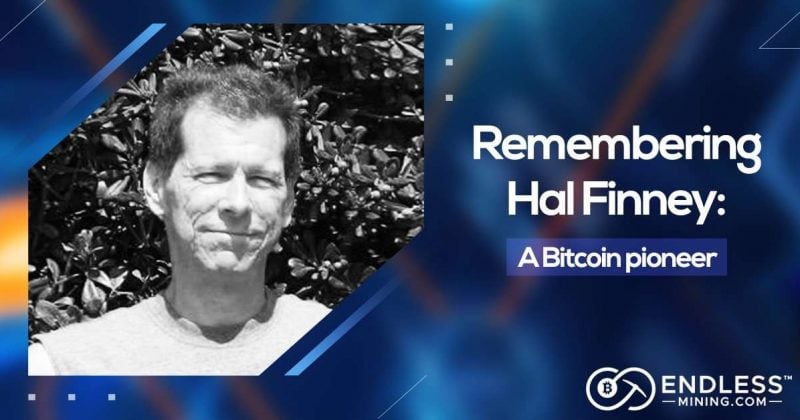
Hal Finney’s Bitcoin debug log gets its first forensic deep dive, and the findings rewrite early network history
Researcher Alex Waltz's analysis reveals Finney joined the Bitcoin network later than assumed and that only two nodes kept the whole thing alive.
For nearly eight years, one of the most historically significant documents in Bitcoin’s origin story sat in plain sight, unexamined. Hal Finney’s debug.log file, the technical diary of the first person to ever receive a Bitcoin transaction, has been publicly accessible since at least 2018. Nobody had actually done a proper forensic analysis of it. Until now.
Bitcoin researcher and filmmaker Alex Waltz, known on X as @raw_avocado, published a comprehensive breakdown of the log file in late June 2026. The findings paint a picture of Bitcoin’s earliest days that’s more fragile, more human, and more fascinating than the mythology suggests.
Two nodes and a prayer
The headline finding: Finney didn’t join the Bitcoin network at launch. He connected around block 49, which is meaningfully later than the “there from day one” narrative that’s become Bitcoin lore.
Waltz arrived at this conclusion by cross-referencing the debug.log’s timestamps and entries against early blockchain data. The method is straightforward in concept but painstaking in execution, essentially matching what Finney’s node recorded against what actually happened on-chain during Bitcoin’s first hours and days.
The log reveals that during Bitcoin’s infancy, the entire network consisted of just two active nodes. One operated on the clearnet and is likely attributable to Satoshi Nakamoto. The other ran through Tor.
The time gaps between blocks during this period were staggering. Some blocks took 8 hours to produce. Others stretched to 24 hours. For context, Bitcoin’s target block time is 10 minutes. The network was frequently non-operational, particularly when the primary node, presumably Satoshi’s, restarted.
Waltz also identified a quirk in the extraNonce value behavior, tracing it to a bug in the Bitcoin v0.1 client. The extraNonce functioned essentially as an uptime counter, and its periodic resets corresponded with node restarts. This technical detail became a forensic tool, letting Waltz map when nodes went offline and came back, reconstructing the early network’s operational heartbeat.
The news moving money, markets, and the world—before your day starts.
Daily. Free. Join 34,000+ readers across crypto, finance, and policy.
Why nobody looked before
The debug.log file isn’t new. It’s been floating around publicly for years, and other researchers have poked at it. Jameson Lopp, among others, has examined aspects of the file previously. But those earlier efforts primarily focused on the perennial question of Satoshi Nakamoto’s identity rather than on understanding network behavior.
Waltz took a different approach, treating the log as a window into how the network actually functioned rather than as a clue in a detective story. Instead of asking “who was Satoshi,” Waltz asked “what was the network actually doing,” and the answers turned out to be more revealing.
The analysis was shared across X, Stacker News, and Bitcointalk, with supporting visuals and a video summary. Waltz had been building toward this work since at least April 2025, posting related research and observations that culminated in the full June 2026 analysis.
Finney’s place in the story
Hal Finney received the first-ever Bitcoin transaction, 10 BTC from Satoshi Nakamoto, on January 12, 2009. He was a cryptographer, a cypherpunk, and by all accounts one of the earliest people to genuinely understand what Nakamoto had built. He died in 2014 from ALS.
The debug.log confirms what historians already suspected about Finney’s role: he was an active, engaged early adopter who provided feedback during Bitcoin’s development. The “around block 49” finding subtly shifts the timeline. Finney wasn’t co-launching the network alongside Satoshi. He was an early joiner, likely drawn in after initial testing proved the system could work at all.
Some theories have posited Finney as Satoshi or as a close collaborator from the very start. The debug.log data suggests a cleaner separation: Satoshi launched, got the network limping along, and Finney joined shortly after.
What this means for investors
The findings haven’t moved markets. No price spike, no volume surge. As of July 6, 2026, the work has attracted limited mainstream attention and no immediate market reaction from major news outlets, although it has stirred significant interest within niche communities.