
Hawaii becomes strategic launch site for B-2 bombers with hot-pit refueling

https://www.armyrecognition.com/news/aerospace-news/2026/u-s-b-2-stealth-bombers-hot-pit-refueling-in-hawaii-bolsters-distributed-deterrence-across-the-pacific

Hawaii becomes strategic launch site for B-2 bombers with hot-pit refueling

China invasion of Taiwan

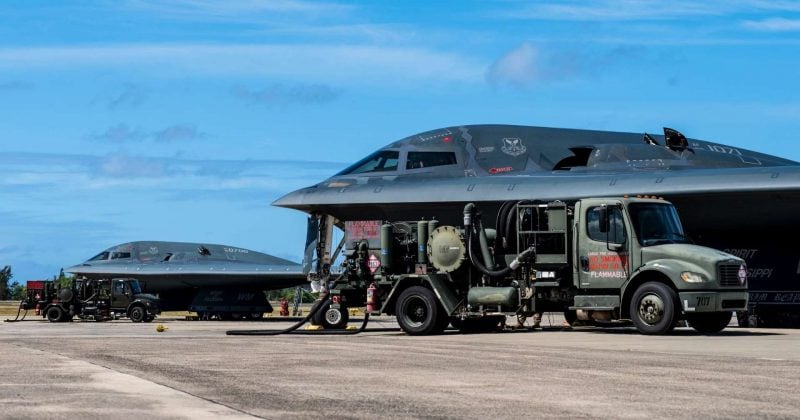
Hawaii is now serving as a strategic launch site for B-2 bombers equipped with hot-pit refueling capabilities, enhancing U.S. military operations in the Indo-Pacific region. This development is part of the U.S. Bomber Task Force’s efforts to bolster distributed deterrence against China’s expanding military reach. The hot-pit refueling capability at Joint Base Pearl Harbor-Hickam allows the B-2 Spirit stealth bombers to regenerate quickly without engine shutdowns, extending their operating range in contested environments. This strategic shift towards forward-deployed resilience enables the U.S. to conduct bomber operations closer to the First Island Chain, reducing reliance on mainland bases.

Advertisement

Key Takeaways

  • The introduction of hot-pit refueling for B-2 bombers in Hawaii suggests a strategic enhancement consistent with increased U.S. military readiness in the Indo-Pacific.
  • Pricing in the “China Invasion of Taiwan” market appears to have reacted to this development, with odds slightly decreasing to 10.5%, suggesting a nuanced interpretation of the geopolitical impact.
  • The move may indicate a shift in U.S. military posture, positioning Hawaii as a critical hub for operations in proximity to China.

What to Watch

Observers should monitor any further military developments or strategic deployments by the U.S. in the Indo-Pacific region, as these could influence market perceptions of regional stability. Statements or actions from key actors such as the U.S. Indo-Pacific Command, the Chinese government, or Taiwan’s defense authorities could serve as indicators of potential escalations or de-escalations in the region. Additionally, shifts in market pricing would be consistent with new intelligence or diplomatic engagements that could alter the perceived likelihood of conflict in the Taiwan Strait.

Get live prediction-market analysis, powered by Vera. Sign up for Vera.

Disclosure: This article was edited by Estefano Gomez. For more information on how we create and review content, see our Editorial Policy.

Hawaii becomes strategic launch site for B-2 bombers with hot-pit refueling

Hawaii becomes strategic launch site for B-2 bombers with hot-pit refueling

China invasion of Taiwan

https://www.armyrecognition.com/news/aerospace-news/2026/u-s-b-2-stealth-bombers-hot-pit-refueling-in-hawaii-bolsters-distributed-deterrence-across-the-pacific

Hawaii is now serving as a strategic launch site for B-2 bombers equipped with hot-pit refueling capabilities, enhancing U.S. military operations in the Indo-Pacific region. This development is part of the U.S. Bomber Task Force’s efforts to bolster distributed deterrence against China’s expanding military reach. The hot-pit refueling capability at Joint Base Pearl Harbor-Hickam allows the B-2 Spirit stealth bombers to regenerate quickly without engine shutdowns, extending their operating range in contested environments. This strategic shift towards forward-deployed resilience enables the U.S. to conduct bomber operations closer to the First Island Chain, reducing reliance on mainland bases.

Advertisement

Key Takeaways

  • The introduction of hot-pit refueling for B-2 bombers in Hawaii suggests a strategic enhancement consistent with increased U.S. military readiness in the Indo-Pacific.
  • Pricing in the “China Invasion of Taiwan” market appears to have reacted to this development, with odds slightly decreasing to 10.5%, suggesting a nuanced interpretation of the geopolitical impact.
  • The move may indicate a shift in U.S. military posture, positioning Hawaii as a critical hub for operations in proximity to China.

What to Watch

Observers should monitor any further military developments or strategic deployments by the U.S. in the Indo-Pacific region, as these could influence market perceptions of regional stability. Statements or actions from key actors such as the U.S. Indo-Pacific Command, the Chinese government, or Taiwan’s defense authorities could serve as indicators of potential escalations or de-escalations in the region. Additionally, shifts in market pricing would be consistent with new intelligence or diplomatic engagements that could alter the perceived likelihood of conflict in the Taiwan Strait.

Get live prediction-market analysis, powered by Vera. Sign up for Vera.

Disclosure: This article was edited by Estefano Gomez. For more information on how we create and review content, see our Editorial Policy.