
Nexo Earn with Nexo
Heatbit releases Bitair, a portable air purifier that mines Bitcoin

Heatbit releases Bitair, a portable air purifier that mines Bitcoin

The $149 device pairs HEPA filtration with a solo Bitcoin miner, because apparently your air purifier wasn't working hard enough.

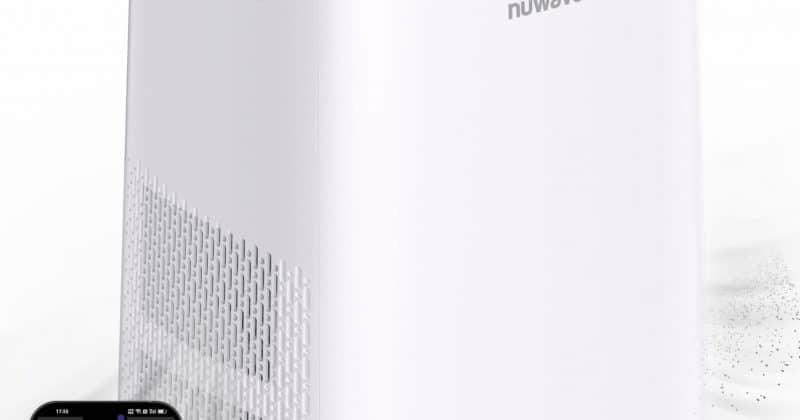
Heatbit just dropped what might be the most 2026 product imaginable: an air purifier that also mines Bitcoin. The device, called Bitair, is now available for preorder starting at $149, with shipments expected to begin in September 2026.

Bitair combines a HEPA air filtration system with a low-hashrate solo Bitcoin miner running at 1.2 TH/s. In English: this thing will clean your air reliably and mine Bitcoin extremely slowly.

The device is designed as a plug-and-play appliance. No technical setup, no configuring mining pools, no ventilation considerations. You plug it in, it purifies air, and it runs mining computations using the electricity it’s already consuming. The heat generated by the mining chip, which would otherwise be waste energy in a traditional mining setup, gets channeled through the HEPA filter system.

Refundable reservations are available for $5, with the Genesis batch priced from $149. That price point positions Bitair well below Heatbit’s existing product lineup. The company’s Trio and Maxi series, which combine heating, air purification, and Bitcoin mining at higher power levels, start from $900.

Advertisement

Bitair focuses exclusively on Bitcoin. No altcoins, no alternative protocols, no token launches attached to the hardware.

Heatbit’s journey from Kickstarter to consumer crypto appliances

Heatbit was founded by Alex Busarov and got its start as a Kickstarter project back in 2021. The original thesis was elegant: Bitcoin mining hardware generates enormous amounts of heat, so why not turn that heat into something useful? The company achieved certification and began shipping its initial models in October 2022.

Since then, the product line has expanded. Air filtration capabilities were added to subsequent iterations. The Trio and Maxi models serve as combination heater-purifier-miners for consumers who want more power and are willing to pay for it.

Bitair represents the opposite end of that spectrum. It strips away the heating function entirely, shrinks the form factor into something portable, and drops the price dramatically.

The company has garnered attention primarily through its own channels, reflecting what remains a niche market for crypto-integrated consumer electronics.

The math problem (and why it might not matter)

At 1.2 TH/s, the mining economics of Bitair are modest. Most likely, the device connects to a mining pool where its contribution gets aggregated with thousands of other miners, earning fractional payouts proportional to its hashrate contribution. At current difficulty levels and Bitcoin prices, the daily mining revenue from 1.2 TH/s would be measured in pennies, not dollars.

Heatbit’s marketing strategy doesn’t target crypto miners looking to maximize returns. It targets consumers who want cleaner air and think earning a trickle of Bitcoin is a fun bonus. That reframing is the most interesting part of the announcement: Heatbit isn’t competing with Bitmain or MicroBT for mining hardware market share. It’s competing with Dyson and Levoit for shelf space in someone’s apartment.

The risk is that the mining component becomes more gimmick than genuine utility. If the Bitcoin earnings over the device’s lifetime amount to less than the cost of the electricity consumed by the mining chip, the value proposition rests entirely on air purification quality. At $149, consumers will expect it to actually compete as a standalone air purifier, not just coast on crypto novelty.

Disclosure: This article was edited by Editorial Team. For more information on how we create and review content, see our Editorial Policy.

Heatbit releases Bitair, a portable air purifier that mines Bitcoin

Heatbit releases Bitair, a portable air purifier that mines Bitcoin

The $149 device pairs HEPA filtration with a solo Bitcoin miner, because apparently your air purifier wasn't working hard enough.

Heatbit just dropped what might be the most 2026 product imaginable: an air purifier that also mines Bitcoin. The device, called Bitair, is now available for preorder starting at $149, with shipments expected to begin in September 2026.

Bitair combines a HEPA air filtration system with a low-hashrate solo Bitcoin miner running at 1.2 TH/s. In English: this thing will clean your air reliably and mine Bitcoin extremely slowly.

The device is designed as a plug-and-play appliance. No technical setup, no configuring mining pools, no ventilation considerations. You plug it in, it purifies air, and it runs mining computations using the electricity it’s already consuming. The heat generated by the mining chip, which would otherwise be waste energy in a traditional mining setup, gets channeled through the HEPA filter system.

Refundable reservations are available for $5, with the Genesis batch priced from $149. That price point positions Bitair well below Heatbit’s existing product lineup. The company’s Trio and Maxi series, which combine heating, air purification, and Bitcoin mining at higher power levels, start from $900.

Advertisement

Bitair focuses exclusively on Bitcoin. No altcoins, no alternative protocols, no token launches attached to the hardware.

Heatbit’s journey from Kickstarter to consumer crypto appliances

Heatbit was founded by Alex Busarov and got its start as a Kickstarter project back in 2021. The original thesis was elegant: Bitcoin mining hardware generates enormous amounts of heat, so why not turn that heat into something useful? The company achieved certification and began shipping its initial models in October 2022.

Since then, the product line has expanded. Air filtration capabilities were added to subsequent iterations. The Trio and Maxi models serve as combination heater-purifier-miners for consumers who want more power and are willing to pay for it.

Bitair represents the opposite end of that spectrum. It strips away the heating function entirely, shrinks the form factor into something portable, and drops the price dramatically.

The company has garnered attention primarily through its own channels, reflecting what remains a niche market for crypto-integrated consumer electronics.

The math problem (and why it might not matter)

At 1.2 TH/s, the mining economics of Bitair are modest. Most likely, the device connects to a mining pool where its contribution gets aggregated with thousands of other miners, earning fractional payouts proportional to its hashrate contribution. At current difficulty levels and Bitcoin prices, the daily mining revenue from 1.2 TH/s would be measured in pennies, not dollars.

Heatbit’s marketing strategy doesn’t target crypto miners looking to maximize returns. It targets consumers who want cleaner air and think earning a trickle of Bitcoin is a fun bonus. That reframing is the most interesting part of the announcement: Heatbit isn’t competing with Bitmain or MicroBT for mining hardware market share. It’s competing with Dyson and Levoit for shelf space in someone’s apartment.

The risk is that the mining component becomes more gimmick than genuine utility. If the Bitcoin earnings over the device’s lifetime amount to less than the cost of the electricity consumed by the mining chip, the value proposition rests entirely on air purification quality. At $149, consumers will expect it to actually compete as a standalone air purifier, not just coast on crypto novelty.

Disclosure: This article was edited by Editorial Team. For more information on how we create and review content, see our Editorial Policy.