
HIVE surges 35% after announcing 320MW AI gigafactory plans
The Bitcoin miner is betting CAD $3.5 billion that its future lies in GPUs, not hash rates, with a massive Toronto-area AI facility slated for 2027.
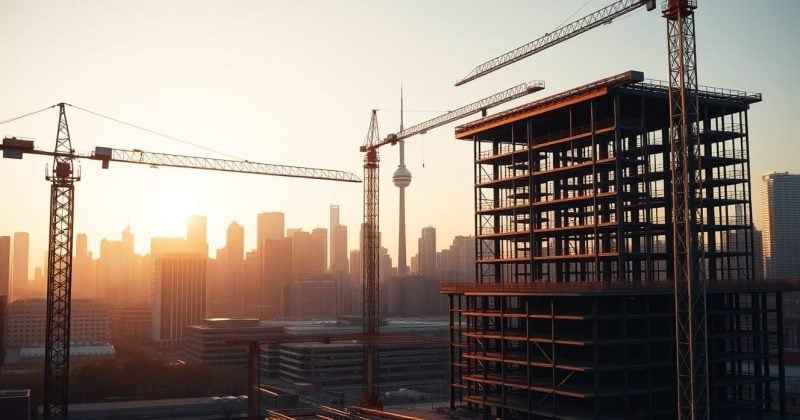
HIVE Digital Technologies just told the market where it thinks the money is headed, and it’s not Bitcoin mining. The company’s stock surged 35% after it unveiled plans for a 320 MW “AI gigafactory” in the Greater Toronto Area, a facility designed to house over 100,000 GPUs and carry a price tag of roughly CAD $3.5 billion.
The project, announced through HIVE’s BUZZ High Performance Computing subsidiary, is expected to come online in the second half of 2027. For a company that built its reputation on crypto mining rigs, this is a pivot with real conviction behind it.
From mining rigs to GPU racks
The facility will sit on a 25-acre site that BUZZ HPC has already acquired, split between a 21-acre and a 4-acre parcel. At full build-out, 320 MW of power capacity feeding 100,000-plus GPUs would make this one of the larger AI data center projects announced in North America.
The CAD $3.5 billion investment (roughly USD $2.5 billion at current exchange rates) dwarfs anything HIVE has previously committed to a single project.
HIVE says its global power portfolio now exceeds 850 MW total. Of that, 450 MW is currently operational, with another 400 MW sitting in the development pipeline. The Toronto gigafactory would eat into a meaningful chunk of that pipeline capacity, concentrating resources on AI rather than spreading them across additional mining operations.
Why Bitcoin miners keep chasing AI
The economics tell the story. Running GPUs for AI workloads generates significantly higher revenue per megawatt than Bitcoin mining, especially in a post-halving environment where mining margins get squeezed. Bitcoin’s April 2024 halving cut block rewards in half, making the math harder for miners who don’t have the lowest energy costs on the planet.
The news moving money, markets, and the world—before your day starts.
Daily. Free. Join 34,000+ readers across crypto, finance, and policy.
Core Scientific, Iris Energy, and several other mining firms have already begun similar transitions, either converting existing facilities or building new ones purpose-built for AI. The market has consistently rewarded these announcements. HIVE’s 35% pop follows a well-established pattern.
What this means for investors
The bull case is straightforward. Demand for AI compute is growing faster than supply. If HIVE can actually build a 320 MW facility and fill it with paying customers, the revenue potential is substantially higher than what Bitcoin mining delivers per unit of power consumed.
The bear case is equally clear. CAD $3.5 billion is a lot of money. HIVE’s market capitalization before this announcement was a fraction of that figure, which means the company will need to raise significant capital through some combination of debt, equity, and potentially strategic partnerships. Dilution risk is real. Construction timelines for projects of this scale have a habit of slipping, and the AI infrastructure market is getting crowded fast.
There’s also the question of execution. The 2027 target gives HIVE roughly two years, which is aggressive for a facility of this magnitude. Permitting, grid interconnection, and supply chain logistics for GPU procurement at this scale are each capable of introducing delays.
Investors watching this space should track two things: how HIVE plans to finance the build, and whether it can secure anchor tenants before construction is complete. Pre-leasing commitments from major cloud providers or AI companies would dramatically de-risk the project.