
Nexo Earn with Nexo
Hive Digital Technologies plans $2.5B AI gigafactory in Ontario by 2027

Hive Digital Technologies plans $2.5B AI gigafactory in Ontario by 2027

The Bitcoin miner turned AI infrastructure play is betting big on a 320 MW facility near Toronto that could house over 100,000 GPUs.

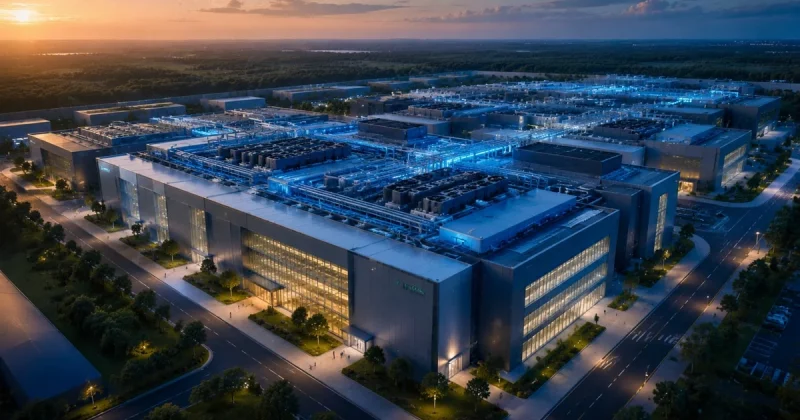
Hive Digital Technologies just made the kind of bet that signals where crypto-native companies think the real money is heading. The company announced plans to build a 320 MW AI gigafactory in the Greater Toronto Area, a facility designed to support AI and machine learning workloads at a scale that would make it one of the largest of its kind in Canada.

The project, developed through Hive’s BUZZ High Performance Computing unit, carries a projected capital investment of approximately CAD $3.5 billion. At full build-out, the facility aims to house more than 100,000 GPUs, with an operational target set for the second half of 2027.

What Hive is actually building

The company has already started assembling the physical footprint. Land acquisitions in the Greater Toronto Area total 25 acres across two purchases: $46M for a 21-acre parcel and $12M for an adjacent 4-acre plot. That’s $58M just for the dirt, before a single server rack gets installed.

The facility will utilize a closed-loop cooling system, which is Hive’s nod toward clean energy infrastructure. Cooling is one of the biggest operational headaches in high-performance computing. Traditional data centers can burn through enormous amounts of water and electricity just keeping chips from overheating. A closed-loop system recirculates coolant rather than pulling fresh water continuously, reducing both environmental impact and long-term operating costs.

Hive is framing this as “sovereign AI infrastructure,” a term that’s gained traction as governments and corporations increasingly worry about relying on foreign-owned compute capacity. The pitch is straightforward: Canada should have its own large-scale AI compute facilities rather than depending on hyperscalers headquartered elsewhere.

Advertisement

Construction alone is projected to create more than 800 jobs, which gives the project a political tailwind that pure crypto plays rarely enjoy.

From Bitcoin mining to AI compute

Hive’s pivot, or more accurately its expansion, from Bitcoin mining to AI infrastructure follows a well-worn path in the industry. Companies like Core Scientific, Iris Energy, and Applied Digital have all made similar moves over the past two years, recognizing that the same power infrastructure and cooling expertise required for mining Bitcoin translates directly to running GPU clusters for AI training and inference.

The economics tell the story. Bitcoin mining revenue depends on a volatile commodity price and an ever-increasing difficulty adjustment. AI compute, by contrast, operates on long-term contracts with enterprise clients who need guaranteed capacity. The margins can be more predictable, the revenue more stable, and the customer base includes some of the most well-capitalized companies on the planet.

Hive has been positioning for this shift through its BUZZ High Performance Computing division, which serves as the corporate vehicle for its AI ambitions. The 320 MW capacity target puts the planned Ontario facility in serious territory. For context, 320 MW is enough to power a small city, and dedicating that entirely to GPU compute creates an enormous amount of processing capability.

Over 100,000 GPUs at full build-out would represent a significant concentration of AI training capacity. The exact GPU models haven’t been specified, but at that scale, even mid-tier chips would produce a facility capable of handling the largest commercial AI workloads currently in demand.

What this means for investors

Here’s the thing about a CAD $3.5 billion project: it dwarfs Hive’s current market capitalization. As of recent trading, Hive Digital is a company valued in the low single-digit billions in USD. Financing a project of this magnitude will require some combination of debt, equity raises, partnerships, and potentially government incentives. The gap between announcement and execution is where the risk lives.

Canada has been actively courting AI infrastructure investment, and Ontario’s relatively affordable power grid compared to major US data center markets gives the location a cost advantage. But building a facility of this scale on schedule and on budget is a monumental operational challenge, even for companies with deep experience in large construction projects. Hive is not one of those companies.

The competitive landscape is also worth watching. Hive isn’t the only former crypto miner chasing AI compute dollars. Core Scientific has secured deals with CoreWeave, and Iris Energy has been expanding its own GPU hosting capabilities. The question for Hive is whether it can differentiate on location, cost structure, or customer relationships in a market that’s getting crowded fast.

Investors should pay close attention to financing announcements over the coming quarters. A CAD $3.5 billion commitment needs to be backed by capital, not just press releases. The land purchases totaling $58M show real money moving, which is a start. But the distance between 25 acres of Ontario real estate and a fully operational 320 MW AI gigafactory is measured in billions of dollars and years of execution risk.

Disclosure: This article was edited by Editorial Team. For more information on how we create and review content, see our Editorial Policy.

Hive Digital Technologies plans $2.5B AI gigafactory in Ontario by 2027

Hive Digital Technologies plans $2.5B AI gigafactory in Ontario by 2027

The Bitcoin miner turned AI infrastructure play is betting big on a 320 MW facility near Toronto that could house over 100,000 GPUs.

Hive Digital Technologies just made the kind of bet that signals where crypto-native companies think the real money is heading. The company announced plans to build a 320 MW AI gigafactory in the Greater Toronto Area, a facility designed to support AI and machine learning workloads at a scale that would make it one of the largest of its kind in Canada.

The project, developed through Hive’s BUZZ High Performance Computing unit, carries a projected capital investment of approximately CAD $3.5 billion. At full build-out, the facility aims to house more than 100,000 GPUs, with an operational target set for the second half of 2027.

What Hive is actually building

The company has already started assembling the physical footprint. Land acquisitions in the Greater Toronto Area total 25 acres across two purchases: $46M for a 21-acre parcel and $12M for an adjacent 4-acre plot. That’s $58M just for the dirt, before a single server rack gets installed.

The facility will utilize a closed-loop cooling system, which is Hive’s nod toward clean energy infrastructure. Cooling is one of the biggest operational headaches in high-performance computing. Traditional data centers can burn through enormous amounts of water and electricity just keeping chips from overheating. A closed-loop system recirculates coolant rather than pulling fresh water continuously, reducing both environmental impact and long-term operating costs.

Hive is framing this as “sovereign AI infrastructure,” a term that’s gained traction as governments and corporations increasingly worry about relying on foreign-owned compute capacity. The pitch is straightforward: Canada should have its own large-scale AI compute facilities rather than depending on hyperscalers headquartered elsewhere.

Advertisement

Construction alone is projected to create more than 800 jobs, which gives the project a political tailwind that pure crypto plays rarely enjoy.

From Bitcoin mining to AI compute

Hive’s pivot, or more accurately its expansion, from Bitcoin mining to AI infrastructure follows a well-worn path in the industry. Companies like Core Scientific, Iris Energy, and Applied Digital have all made similar moves over the past two years, recognizing that the same power infrastructure and cooling expertise required for mining Bitcoin translates directly to running GPU clusters for AI training and inference.

The economics tell the story. Bitcoin mining revenue depends on a volatile commodity price and an ever-increasing difficulty adjustment. AI compute, by contrast, operates on long-term contracts with enterprise clients who need guaranteed capacity. The margins can be more predictable, the revenue more stable, and the customer base includes some of the most well-capitalized companies on the planet.

Hive has been positioning for this shift through its BUZZ High Performance Computing division, which serves as the corporate vehicle for its AI ambitions. The 320 MW capacity target puts the planned Ontario facility in serious territory. For context, 320 MW is enough to power a small city, and dedicating that entirely to GPU compute creates an enormous amount of processing capability.

Over 100,000 GPUs at full build-out would represent a significant concentration of AI training capacity. The exact GPU models haven’t been specified, but at that scale, even mid-tier chips would produce a facility capable of handling the largest commercial AI workloads currently in demand.

What this means for investors

Here’s the thing about a CAD $3.5 billion project: it dwarfs Hive’s current market capitalization. As of recent trading, Hive Digital is a company valued in the low single-digit billions in USD. Financing a project of this magnitude will require some combination of debt, equity raises, partnerships, and potentially government incentives. The gap between announcement and execution is where the risk lives.

Canada has been actively courting AI infrastructure investment, and Ontario’s relatively affordable power grid compared to major US data center markets gives the location a cost advantage. But building a facility of this scale on schedule and on budget is a monumental operational challenge, even for companies with deep experience in large construction projects. Hive is not one of those companies.

The competitive landscape is also worth watching. Hive isn’t the only former crypto miner chasing AI compute dollars. Core Scientific has secured deals with CoreWeave, and Iris Energy has been expanding its own GPU hosting capabilities. The question for Hive is whether it can differentiate on location, cost structure, or customer relationships in a market that’s getting crowded fast.

Investors should pay close attention to financing announcements over the coming quarters. A CAD $3.5 billion commitment needs to be backed by capital, not just press releases. The land purchases totaling $58M show real money moving, which is a start. But the distance between 25 acres of Ontario real estate and a fully operational 320 MW AI gigafactory is measured in billions of dollars and years of execution risk.

Disclosure: This article was edited by Editorial Team. For more information on how we create and review content, see our Editorial Policy.