
Nexo Earn with Nexo
HIVE Digital Technologies scales Tier III AI infrastructure in Sweden

HIVE Digital Technologies scales Tier III AI infrastructure in Sweden

The Bitcoin miner is converting its 32 MW Boden facility into a liquid-cooled AI data center targeting 2,000 NVIDIA GPUs, betting it can start generating revenue in nine months instead of three years.

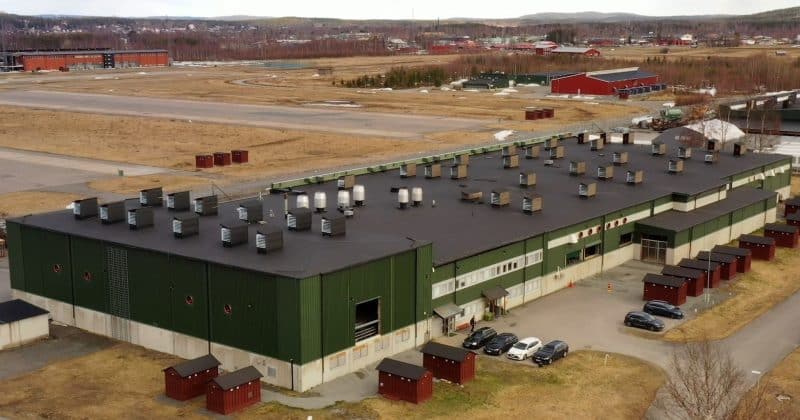
HIVE Digital Technologies is turning a Bitcoin mining facility in northern Sweden into a Tier III AI data center.

The facility in Boden, Sweden, currently runs at approximately 32 MW of capacity. HIVE plans to retrofit it into a liquid-cooled high-performance computing center designed to run enterprise-grade AI workloads, targeting deployment of around 2,000 NVIDIA GPUs for AI training and inference across the European Union.

From hashrate to GPU racks

Building data centers from scratch typically takes about three years before you see any revenue. HIVE’s retrofit approach is designed to compress that timeline dramatically, with the company anticipating revenue generation within roughly nine months of breaking ground.

Engineering and design work is expected to wrap up by late October 2025. Construction should begin shortly after, in the same quarter.

Advertisement

The Boden conversion is part of what HIVE calls its “dual-engine strategy.” One engine keeps Bitcoin mining humming. The other expands its BUZZ HPC subsidiary into AI and cloud computing markets. In practice, this means HIVE made a strategic decision in March 2026 to reduce the Bitcoin mining hashrate at Boden, freeing up power and physical space for AI and HPC services instead.

The company expects to operate around 6,000 GPUs globally by 2026, with simultaneous upgrades underway at additional sites in Canada.

Why Sweden, and why it matters

HIVE plans to leverage hydroelectric and wind energy for the Boden facility. HIVE is also positioning the facility to contribute to grid stability through demand response and frequency response services.

The company has also invested in local community engagement, including sponsorships like the Boden Hockey Club.

HIVE has over two years of AI operations experience from its Stockholm location, which gives the Boden project a running start in terms of operational know-how.

What this means for investors

The key risk is execution. Tier III certification requires 99.982% uptime, which demands redundancy in power, cooling, and networking that a typical Bitcoin mining operation doesn’t need.

HIVE is targeting the European AI compute market. EU data sovereignty regulations mean that many European enterprises prefer, or are required, to keep their compute workloads within EU borders. A 2,000-GPU facility running on renewable energy in Sweden is positioned to capture that demand.

For crypto-focused investors, HIVE’s dual-engine approach offers a natural hedge. Bitcoin mining revenue provides cash flow during bull markets, while the AI infrastructure business offers more predictable, contract-based revenue streams that are less correlated with crypto price action.

Disclosure: This article was edited by Editorial Team. For more information on how we create and review content, see our Editorial Policy.

HIVE Digital Technologies scales Tier III AI infrastructure in Sweden

HIVE Digital Technologies scales Tier III AI infrastructure in Sweden

The Bitcoin miner is converting its 32 MW Boden facility into a liquid-cooled AI data center targeting 2,000 NVIDIA GPUs, betting it can start generating revenue in nine months instead of three years.

HIVE Digital Technologies is turning a Bitcoin mining facility in northern Sweden into a Tier III AI data center.

The facility in Boden, Sweden, currently runs at approximately 32 MW of capacity. HIVE plans to retrofit it into a liquid-cooled high-performance computing center designed to run enterprise-grade AI workloads, targeting deployment of around 2,000 NVIDIA GPUs for AI training and inference across the European Union.

From hashrate to GPU racks

Building data centers from scratch typically takes about three years before you see any revenue. HIVE’s retrofit approach is designed to compress that timeline dramatically, with the company anticipating revenue generation within roughly nine months of breaking ground.

Engineering and design work is expected to wrap up by late October 2025. Construction should begin shortly after, in the same quarter.

Advertisement

The Boden conversion is part of what HIVE calls its “dual-engine strategy.” One engine keeps Bitcoin mining humming. The other expands its BUZZ HPC subsidiary into AI and cloud computing markets. In practice, this means HIVE made a strategic decision in March 2026 to reduce the Bitcoin mining hashrate at Boden, freeing up power and physical space for AI and HPC services instead.

The company expects to operate around 6,000 GPUs globally by 2026, with simultaneous upgrades underway at additional sites in Canada.

Why Sweden, and why it matters

HIVE plans to leverage hydroelectric and wind energy for the Boden facility. HIVE is also positioning the facility to contribute to grid stability through demand response and frequency response services.

The company has also invested in local community engagement, including sponsorships like the Boden Hockey Club.

HIVE has over two years of AI operations experience from its Stockholm location, which gives the Boden project a running start in terms of operational know-how.

What this means for investors

The key risk is execution. Tier III certification requires 99.982% uptime, which demands redundancy in power, cooling, and networking that a typical Bitcoin mining operation doesn’t need.

HIVE is targeting the European AI compute market. EU data sovereignty regulations mean that many European enterprises prefer, or are required, to keep their compute workloads within EU borders. A 2,000-GPU facility running on renewable energy in Sweden is positioned to capture that demand.

For crypto-focused investors, HIVE’s dual-engine approach offers a natural hedge. Bitcoin mining revenue provides cash flow during bull markets, while the AI infrastructure business offers more predictable, contract-based revenue streams that are less correlated with crypto price action.

Disclosure: This article was edited by Editorial Team. For more information on how we create and review content, see our Editorial Policy.