
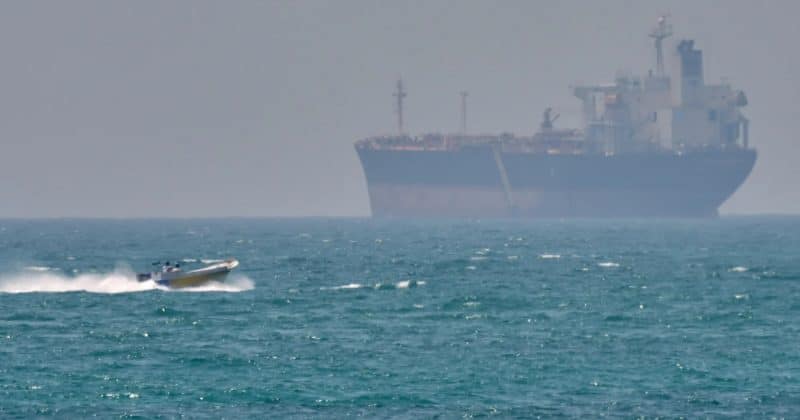
Hormuz tanker traffic plunges after US strikes on Iran

Hormuz tanker traffic plunges after US strikes on Iran

Vessel transits through the world's most critical oil chokepoint fell from 74 to 22 in four days as US-Iran hostilities reignite shipping fears.

The Strait of Hormuz just got very quiet, and not in a good way.

According to maritime analytics firm Kpler, vessel transits through the strait dropped from a peak of 74 ships on June 24 to as low as 22 by June 28. That is a collapse of roughly 70% in four days, triggered by a fresh round of US strikes on Iranian targets between June 27 and 29, 2026.

To understand why that number matters, consider what flows through this narrow strip of water between Iran and Oman. Roughly 20 to 25% of the world’s seaborne oil trade passes through the Strait of Hormuz. When shipping companies start rerouting or idling, the ripple effects reach fuel prices, supply chains, and energy markets globally.

Oil prices began moving higher on June 29 as traders priced in the renewed risk of supply disruption.

What actually happened

The latest escalation did not come from nowhere. Iranian forces had already targeted at least two commercial vessels earlier in June, including the M/T Kiku, a Panama-flagged tanker carrying over 2 million barrels of crude oil.

Advertisement

A fragile ceasefire had been established around mid-June. It did not hold.

US Central Command conducted strikes on Iranian targets between June 27 and 29 in response to continued attacks on commercial shipping. Shipping companies, already operating under elevated risk premiums in the region, responded by dramatically pulling back transit activity through the strait.

The conflict itself did not begin last week. US military engagement in the region to protect shipping lanes dates back to February 28, 2026, meaning this latest flare-up is part of a months-long pattern of escalation, partial de-escalation, and re-escalation.

Why shipping companies are pulling back

The drop from 74 transits to 22 in four days reflects that calculation happening in real time across dozens of shipping companies simultaneously.

Traffic through the strait has historically shown significant declines during active hostilities and partial recoveries during ceasefires. The current pattern fits that template.

Ships cannot simply reroute around the Arabian Peninsula without adding weeks to voyage times and significant costs, options that work for some cargo types but are far harder for time-sensitive crude deliveries.

What this means for energy and markets

Short-term disruptions tend to be absorbed by strategic reserves and spot market adjustments. Prolonged disruption, measured in weeks rather than days, starts to create genuine supply gaps that reserves alone cannot fill.

The ceasefire that briefly held in mid-June demonstrated that diplomatic off-ramps exist. The problem is that every failed ceasefire narrows the credibility of the next one.

Earlier in the conflict, discussions emerged around crypto-based maritime transit mechanisms, including a concept called Hormuz Safe, which floated the idea of Bitcoin-anchored tolls and insurance platforms tied to strait passage. None of these proposals have materialized into operational systems, and the direct link between this geopolitical event and crypto markets remains tenuous.

Companies with significant tanker fleets operating in the Persian Gulf, refiners dependent on Gulf crude, and broadly any portfolio with meaningful energy sector weight are all looking at a risk environment that has meaningfully worsened over a four-day window.

Disclosure: This article was edited by Editorial Team. For more information on how we create and review content, see our Editorial Policy.

Hormuz tanker traffic plunges after US strikes on Iran

Hormuz tanker traffic plunges after US strikes on Iran

Vessel transits through the world's most critical oil chokepoint fell from 74 to 22 in four days as US-Iran hostilities reignite shipping fears.

The Strait of Hormuz just got very quiet, and not in a good way.

According to maritime analytics firm Kpler, vessel transits through the strait dropped from a peak of 74 ships on June 24 to as low as 22 by June 28. That is a collapse of roughly 70% in four days, triggered by a fresh round of US strikes on Iranian targets between June 27 and 29, 2026.

To understand why that number matters, consider what flows through this narrow strip of water between Iran and Oman. Roughly 20 to 25% of the world’s seaborne oil trade passes through the Strait of Hormuz. When shipping companies start rerouting or idling, the ripple effects reach fuel prices, supply chains, and energy markets globally.

Oil prices began moving higher on June 29 as traders priced in the renewed risk of supply disruption.

What actually happened

The latest escalation did not come from nowhere. Iranian forces had already targeted at least two commercial vessels earlier in June, including the M/T Kiku, a Panama-flagged tanker carrying over 2 million barrels of crude oil.

Advertisement

A fragile ceasefire had been established around mid-June. It did not hold.

US Central Command conducted strikes on Iranian targets between June 27 and 29 in response to continued attacks on commercial shipping. Shipping companies, already operating under elevated risk premiums in the region, responded by dramatically pulling back transit activity through the strait.

The conflict itself did not begin last week. US military engagement in the region to protect shipping lanes dates back to February 28, 2026, meaning this latest flare-up is part of a months-long pattern of escalation, partial de-escalation, and re-escalation.

Why shipping companies are pulling back

The drop from 74 transits to 22 in four days reflects that calculation happening in real time across dozens of shipping companies simultaneously.

Traffic through the strait has historically shown significant declines during active hostilities and partial recoveries during ceasefires. The current pattern fits that template.

Ships cannot simply reroute around the Arabian Peninsula without adding weeks to voyage times and significant costs, options that work for some cargo types but are far harder for time-sensitive crude deliveries.

What this means for energy and markets

Short-term disruptions tend to be absorbed by strategic reserves and spot market adjustments. Prolonged disruption, measured in weeks rather than days, starts to create genuine supply gaps that reserves alone cannot fill.

The ceasefire that briefly held in mid-June demonstrated that diplomatic off-ramps exist. The problem is that every failed ceasefire narrows the credibility of the next one.

Earlier in the conflict, discussions emerged around crypto-based maritime transit mechanisms, including a concept called Hormuz Safe, which floated the idea of Bitcoin-anchored tolls and insurance platforms tied to strait passage. None of these proposals have materialized into operational systems, and the direct link between this geopolitical event and crypto markets remains tenuous.

Companies with significant tanker fleets operating in the Persian Gulf, refiners dependent on Gulf crude, and broadly any portfolio with meaningful energy sector weight are all looking at a risk environment that has meaningfully worsened over a four-day window.

Disclosure: This article was edited by Editorial Team. For more information on how we create and review content, see our Editorial Policy.