
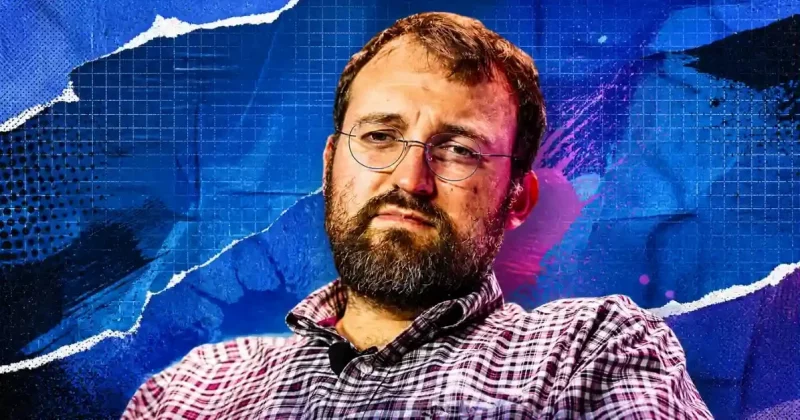
Charles Hoskinson reviews governance models from 11,000 DAOs to enhance Cardano’s conflict resolution
The Cardano founder is mining a decade of DAO literature and governance frameworks ahead of the network's 2027 governance cycle.
Charles Hoskinson, founder of Cardano and CEO of Input Output Global, is embarking on what might be the most ambitious governance homework assignment in crypto history. He’s reviewing governance models from more than 11,000 decentralized autonomous organizations, plus a decade of related academic and industry literature, all in an effort to fix how Cardano handles internal disputes.
What Hoskinson is actually proposing
The review, announced on May 23, 2026, zeroes in on three areas: executive functions, roadmap planning, and strategy setting. In English: who gets to make decisions, how priorities are ranked, and what happens when people disagree about direction.
That last part, conflict resolution, is the real target here. Cardano’s shift toward decentralized governance under its Voltaire era has surfaced the kind of friction that any large, distributed organization eventually hits. Previous tensions between Hoskinson and the Cardano Foundation over governance structure and transparency are a case study in why this matters.
Hoskinson isn’t just reading papers and tweeting about it, either. He’s reportedly contemplating becoming a Delegated Representative, or DRep, himself. He’s also floating the idea of organizing a mini-convention to bring the community into the process more directly.
Where Cardano’s governance stands today
Cardano ratified its on-chain constitution in February 2025. The vote cleared with an 85% approval rate, well above the 75% threshold required.
The news moving money, markets, and the world—before your day starts.
Daily. Free. Join 34,000+ readers across crypto, finance, and policy.
The ecosystem now operates with hundreds of DReps, who function like elected representatives in a liquid democracy model. Token holders can delegate their voting power to DReps rather than voting on every proposal themselves. There’s also a community-elected constitutional committee that serves as a check on governance actions.
Late in 2024, Hoskinson proposed relocating the Cardano Foundation to jurisdictions like Wyoming or Abu Dhabi, a move that signaled his dissatisfaction with how the Foundation was operating. The ambition of the current governance review is to develop new constitutional provisions and technological features that can absorb and resolve these conflicts before they escalate.
The treasury factor
Cardano’s treasury currently holds approximately 1.65 billion ADA, valued at roughly $429 million. Treasury-driven development models only work if the people controlling the treasury can agree on where to spend it. And “the people” in Cardano’s case is an increasingly decentralized group of DReps, committee members, and community participants who don’t always see eye to eye.
What this means for investors
Market reactions to the announcement have been cautiously optimistic. There hasn’t been any immediate price impact from the news.
Investors watching Cardano should track three things in the coming months: whether Hoskinson actually becomes a DRep, the specifics of any proposed constitutional amendments, and community sentiment around the mini-convention idea.