
Nexo Earn with Nexo
Huawei develops 122TB SSD using innovative packaging amid US export controls

Huawei develops 122TB SSD using innovative packaging amid US export controls

The Chinese tech giant's Die-on-Board technology squeezes 33% more density out of restricted NAND chips, with a 245TB model already in the works.

When the US government put Huawei on its Entity List back in 2019, the implicit bet was that cutting off access to advanced chip technology would slow the company down. Seven years later, Huawei just unveiled a 122.88TB solid-state drive built with a packaging trick that sidesteps those very restrictions.

The company showcased the new enterprise SSDs during its ID Forum events from May 21 to May 23, 2026, alongside a 61.44TB model and confirmation that a 245TB variant is currently under development.

How Die-on-Board changes the math

The core innovation here is something Huawei calls Die-on-Board, or DoB, packaging. Traditional SSDs stack NAND flash memory dies into packages that are then soldered onto a printed circuit board. Huawei’s approach skips the middleman: it mounts the NAND dies directly onto the PCB itself.

Advertisement

The result is a 33% increase in capacity density compared to conventional packaging methods.

This innovation isn’t purely about engineering ambition. It’s a direct response to the fact that Huawei can’t access the most advanced NAND flash chips from foreign suppliers. US export controls have effectively walled off cutting-edge components, forcing Huawei to get creative with what it can source domestically.

Working within the sanctions box

Huawei’s SSDs utilize NAND flash from YMTC, China’s leading domestic memory chip manufacturer, specifically its Xtacking 4.0 technology. But YMTC’s output is currently limited to 232-layer 3D NAND, a consequence of the same sanctions regime that constrains Huawei. Leading international competitors like Samsung, SK Hynix, and Micron have already pushed past 300 layers in their latest generation products.

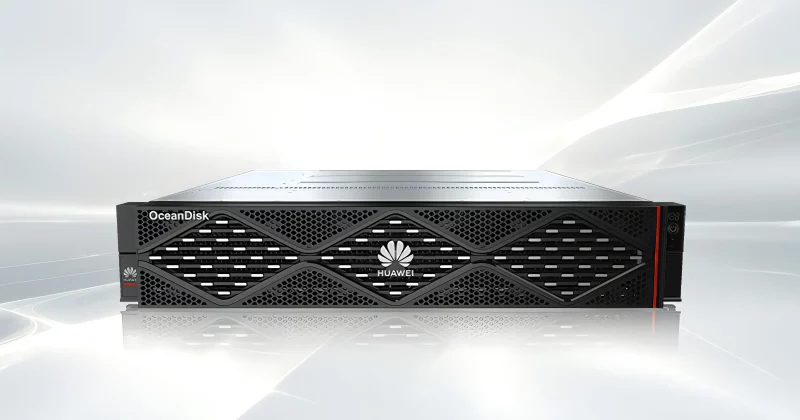
The drives are being integrated into Huawei’s OceanStor Pacific 9926, an all-flash array system designed for AI inference and large-scale data center workloads. According to details shared at the forum, this system can achieve up to 4.42 petabytes of raw capacity in a 2RU chassis.

The AI storage angle

Huawei isn’t positioning these drives as generic storage products. The company is explicitly targeting AI workloads, particularly inference, which is the phase where trained AI models actually process queries and generate outputs.

During the forum, Huawei also discussed plans to form an AI SSD Innovation Alliance, a collaborative effort aimed at optimizing software layers to squeeze better AI performance out of these high-capacity drives.

For investors watching the semiconductor and AI infrastructure space, Huawei’s progress complicates the narrative around US export controls. In raw layer count, that gap persists: YMTC’s 232-layer NAND trails the industry frontier by a meaningful margin. But Huawei’s packaging innovation demonstrates that layer count isn’t the only variable that determines competitive storage capacity.

Disclosure: This article was edited by Editorial Team. For more information on how we create and review content, see our Editorial Policy.

Huawei develops 122TB SSD using innovative packaging amid US export controls

Huawei develops 122TB SSD using innovative packaging amid US export controls

The Chinese tech giant's Die-on-Board technology squeezes 33% more density out of restricted NAND chips, with a 245TB model already in the works.

When the US government put Huawei on its Entity List back in 2019, the implicit bet was that cutting off access to advanced chip technology would slow the company down. Seven years later, Huawei just unveiled a 122.88TB solid-state drive built with a packaging trick that sidesteps those very restrictions.

The company showcased the new enterprise SSDs during its ID Forum events from May 21 to May 23, 2026, alongside a 61.44TB model and confirmation that a 245TB variant is currently under development.

How Die-on-Board changes the math

The core innovation here is something Huawei calls Die-on-Board, or DoB, packaging. Traditional SSDs stack NAND flash memory dies into packages that are then soldered onto a printed circuit board. Huawei’s approach skips the middleman: it mounts the NAND dies directly onto the PCB itself.

Advertisement

The result is a 33% increase in capacity density compared to conventional packaging methods.

This innovation isn’t purely about engineering ambition. It’s a direct response to the fact that Huawei can’t access the most advanced NAND flash chips from foreign suppliers. US export controls have effectively walled off cutting-edge components, forcing Huawei to get creative with what it can source domestically.

Working within the sanctions box

Huawei’s SSDs utilize NAND flash from YMTC, China’s leading domestic memory chip manufacturer, specifically its Xtacking 4.0 technology. But YMTC’s output is currently limited to 232-layer 3D NAND, a consequence of the same sanctions regime that constrains Huawei. Leading international competitors like Samsung, SK Hynix, and Micron have already pushed past 300 layers in their latest generation products.

The drives are being integrated into Huawei’s OceanStor Pacific 9926, an all-flash array system designed for AI inference and large-scale data center workloads. According to details shared at the forum, this system can achieve up to 4.42 petabytes of raw capacity in a 2RU chassis.

The AI storage angle

Huawei isn’t positioning these drives as generic storage products. The company is explicitly targeting AI workloads, particularly inference, which is the phase where trained AI models actually process queries and generate outputs.

During the forum, Huawei also discussed plans to form an AI SSD Innovation Alliance, a collaborative effort aimed at optimizing software layers to squeeze better AI performance out of these high-capacity drives.

For investors watching the semiconductor and AI infrastructure space, Huawei’s progress complicates the narrative around US export controls. In raw layer count, that gap persists: YMTC’s 232-layer NAND trails the industry frontier by a meaningful margin. But Huawei’s packaging innovation demonstrates that layer count isn’t the only variable that determines competitive storage capacity.

Disclosure: This article was edited by Editorial Team. For more information on how we create and review content, see our Editorial Policy.