
Nexo Earn with Nexo
IDF confirms assassination of Hamas military chief Mohammed Ouda after two weeks in role

IDF confirms assassination of Hamas military chief Mohammed Ouda after two weeks in role

Israel's targeted strike in Gaza eliminated Ouda just 12 days after his predecessor was killed, continuing a systematic campaign against Hamas's military leadership.

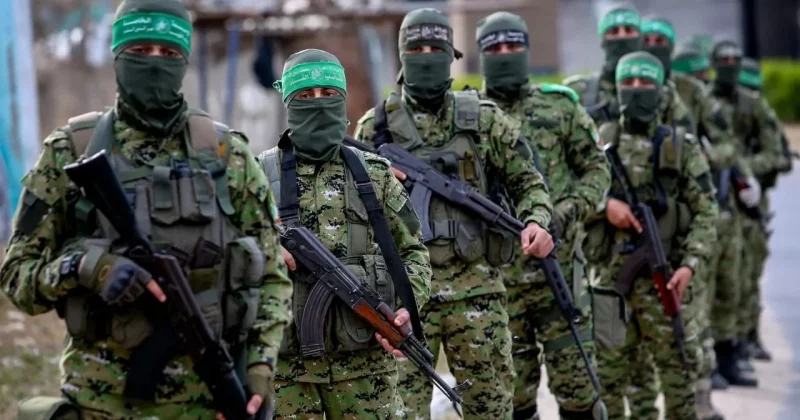
Mohammed Ouda, the newly appointed head of Hamas’s Izzadin al-Qassam Brigades, was killed in an Israeli airstrike on May 26, making him the latest in a rapid succession of Hamas military commanders eliminated by Israeli forces. He held the position for roughly eight days.

The strike took place in the Rimal neighborhood of Gaza City. Israeli Prime Minister Benjamin Netanyahu and Defense Minister Israel Katz confirmed the operation, citing a “high likelihood” of success. The IDF has since confirmed Ouda’s death.

A revolving door at the top of Hamas’s military wing

Ouda’s predecessor, Izz al-Din al-Haddad, was killed in an IDF strike on May 15. Three days later, on May 18, Ouda was appointed to replace him. Eight days after that, he was dead.

Advertisement

Israel has been systematically targeting Hamas’s senior military leadership for months, a campaign that has already claimed figures like Abu Obaida and, before him, Mohammed Sinwar, who was assassinated in May 2025.

Ouda himself had reportedly declined the top military position once before, after Sinwar’s assassination in May 2025. He eventually accepted it, with fatal consequences.

What this means for broader markets and crypto

In conflict-impacted regions, stablecoin usage tends to increase as residents seek dollar-denominated assets that can be moved without relying on banking infrastructure that may be disrupted. This creates localized spikes in trading volume and can affect liquidity dynamics on exchanges that serve those markets.

Crypto traders who lived through the initial days of the conflict in late 2023 will remember the pattern: a sharp initial dip in Bitcoin and altcoins, followed by a recovery as markets priced in the conflict as contained.

During calmer periods, Bitcoin often trades on its own internal narratives: ETF flows, halving cycles, regulatory developments. During crises, it snaps back to behaving like a high-beta risk asset.

Disclosure: This article was edited by Editorial Team. For more information on how we create and review content, see our Editorial Policy.

IDF confirms assassination of Hamas military chief Mohammed Ouda after two weeks in role

IDF confirms assassination of Hamas military chief Mohammed Ouda after two weeks in role

Israel's targeted strike in Gaza eliminated Ouda just 12 days after his predecessor was killed, continuing a systematic campaign against Hamas's military leadership.

Mohammed Ouda, the newly appointed head of Hamas’s Izzadin al-Qassam Brigades, was killed in an Israeli airstrike on May 26, making him the latest in a rapid succession of Hamas military commanders eliminated by Israeli forces. He held the position for roughly eight days.

The strike took place in the Rimal neighborhood of Gaza City. Israeli Prime Minister Benjamin Netanyahu and Defense Minister Israel Katz confirmed the operation, citing a “high likelihood” of success. The IDF has since confirmed Ouda’s death.

A revolving door at the top of Hamas’s military wing

Ouda’s predecessor, Izz al-Din al-Haddad, was killed in an IDF strike on May 15. Three days later, on May 18, Ouda was appointed to replace him. Eight days after that, he was dead.

Advertisement

Israel has been systematically targeting Hamas’s senior military leadership for months, a campaign that has already claimed figures like Abu Obaida and, before him, Mohammed Sinwar, who was assassinated in May 2025.

Ouda himself had reportedly declined the top military position once before, after Sinwar’s assassination in May 2025. He eventually accepted it, with fatal consequences.

What this means for broader markets and crypto

In conflict-impacted regions, stablecoin usage tends to increase as residents seek dollar-denominated assets that can be moved without relying on banking infrastructure that may be disrupted. This creates localized spikes in trading volume and can affect liquidity dynamics on exchanges that serve those markets.

Crypto traders who lived through the initial days of the conflict in late 2023 will remember the pattern: a sharp initial dip in Bitcoin and altcoins, followed by a recovery as markets priced in the conflict as contained.

During calmer periods, Bitcoin often trades on its own internal narratives: ETF flows, halving cycles, regulatory developments. During crises, it snaps back to behaving like a high-beta risk asset.

Disclosure: This article was edited by Editorial Team. For more information on how we create and review content, see our Editorial Policy.