
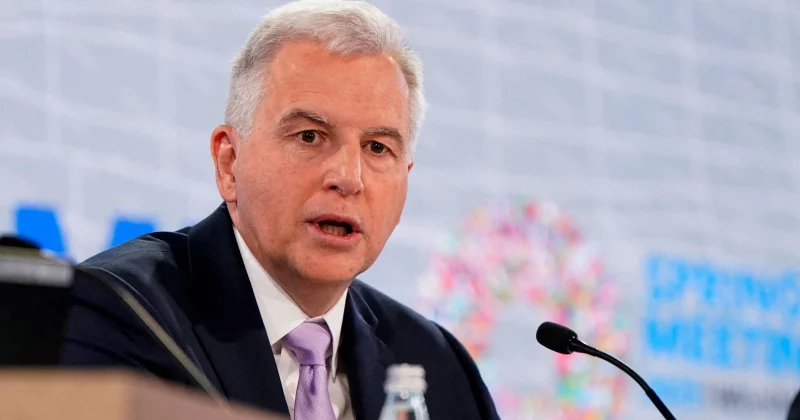
IMF urges EU to reform and use joint debt for spending needs
The International Monetary Fund wants Europe to pool its borrowing power for defense, energy, and innovation, but the political math is brutal.
The International Monetary Fund has a message for Europe: stop bickering and start borrowing together. On May 23, the IMF told EU finance ministers gathered in Nicosia that the bloc needs structural reforms, fiscal consolidation, and expanded joint debt to handle a wave of spending demands on defense, energy security, pensions, and innovation over the next 15 years.
The IMF explicitly described innovation, energy, and defense as “European public goods” that should ideally be financed at the EU level through common debt instruments.
The numbers behind the ask
Back in October 2025, the Fund recommended more than doubling EU spending on public goods, from 0.4% to 0.9% of Gross National Income. That translates to roughly €100 billion annually, funded through joint debt initiatives.
The Fund’s analysis projects that deeper fiscal integration could yield interest savings of around 0.47% of GDP for member states during the 2030 to 2040 period. The logic is simple: a joint EU bond backed by the collective weight of 27 economies borrows cheaper than, say, Italy borrowing on its own.
The IMF framed its recommendations around the mounting financial pressures facing Europe. Slowing economic growth, demographic shifts pushing pension costs higher, geopolitical instability demanding bigger defense budgets, and the energy transition all converging at once.
The political fault line
France, Italy, and Spain support expanded common debt. Germany and several northern EU states oppose it, with their opposition rooted in moral hazard concerns: if countries can borrow cheaply through EU-level instruments, what incentive do they have to keep their own fiscal houses in order?
The IMF’s recommendation that debt trajectories should head toward a sustainable decline is its way of threading the needle. It’s telling southern European governments they need to consolidate their national budgets while simultaneously arguing for new joint spending.
What this means for investors
If the EU moves toward expanded joint borrowing, EU-level bonds would likely trade at yields somewhere between German bunds and Italian BTPs. That means tighter spreads for peripheral European debt, which is bullish for holders of Italian, Spanish, and Greek government bonds. Conversely, any joint EU debt instrument could theoretically put slight upward pressure on the borrowing costs currently enjoyed by Germany and the Netherlands.
The IMF is framing this as a 15-year horizon challenge, but defense spending pressures are here now. The pandemic proved that existential pressure can move fiscal red lines that seemed immovable, as demonstrated by the €750 billion NextGenerationEU instrument.