
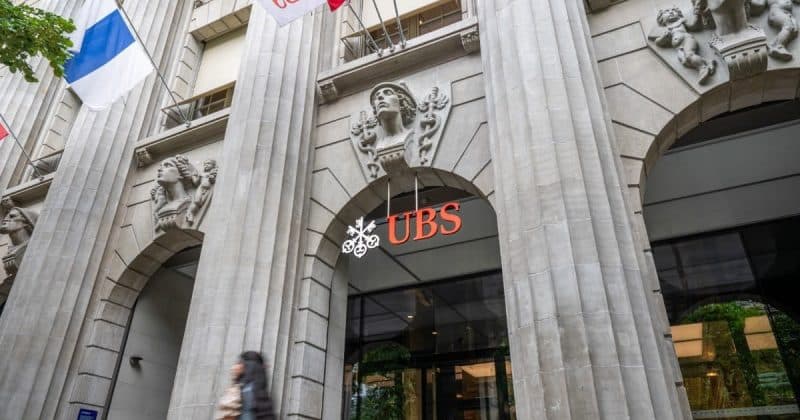
Swiss government’s capital plan for UBS Group receives IMF praise

Swiss government’s capital plan for UBS Group receives IMF praise

The IMF backs Switzerland's push to make UBS hold billions more in capital, calling the reforms 'bold' as the bank's balance sheet dwarfs the entire Swiss economy.

When your biggest bank holds assets worth roughly 167% of your country’s GDP, regulators tend to lose sleep. The International Monetary Fund just told Switzerland its plan to do something about that is on the right track.

The IMF’s 2025 Financial System Stability Assessment endorsed Switzerland’s overhaul of its “too big to fail” framework, specifically praising the reforms designed to address the systemic risks posed by UBS Group. The word the IMF used was “bold,” which in the typically measured language of international financial institutions, is about as enthusiastic as it gets.

The $20 billion question

UBS became a different kind of animal after swallowing Credit Suisse in the government-assisted rescue of March 2023. The combined entity is now so large relative to the Swiss economy that the country’s financial regulators had little choice but to rethink the rules.

The Swiss Federal Council’s plan, announced in April 2026, would require UBS to raise approximately $20 billion in additional Common Equity Tier 1 capital. The central mechanism is straightforward in concept: UBS would need to fully capitalize its foreign subsidiaries with CET1 capital, rather than relying on lighter-touch arrangements. That $20 billion figure was actually revised down from initial estimates that ran as high as $26 billion.

Advertisement

UBS views the requirements as excessive and misaligned with international standards. UBS’s own projections put the total capital needed at around $37 billion when factoring in integration effects from absorbing Credit Suisse. That would translate to annual capital costs of roughly $3 billion.

Parliament eyes a compromise

By June 2026, legislators were reportedly considering softening the CET1 requirement for foreign subsidiaries to somewhere between 70% and 80%, rather than the full 100% the Federal Council proposed. Another potential concession: allowing UBS to use Additional Tier 1 instruments, a slightly lower-quality form of capital that’s cheaper for banks to issue. If both compromises were adopted, UBS’s additional capital burden could drop to approximately $15 billion.

UBS shares rose 2% on reports of these potential compromises.

Why the Credit Suisse collapse changed everything

When Credit Suisse imploded in March 2023, the Swiss government orchestrated a shotgun marriage with UBS to prevent a disorderly failure. The rescue worked, but it exposed an uncomfortable truth: Switzerland’s existing “too big to fail” framework wasn’t built for a crisis of that magnitude.

Switzerland went from having two globally systemic banks to having one very, very large one. UBS now holds assets equivalent to approximately 167% of Swiss GDP. If UBS were to face serious trouble, there would be no domestic buyer large enough to absorb it, leaving the Swiss taxpayer as the backstop.

The IMF’s FSAP assessment validated the premise that a bank this dominant requires capital buffers that go beyond standard international requirements.

What this means for investors

At one end of the range of outcomes, the full $20 billion CET1 requirement survives parliament intact. At the other end, the compromise version lands closer to $15 billion. The 2% pop in UBS shares on compromise reports suggests the market is pricing in at least some regulatory relief, but even the lighter version would represent a significant capital raise, and the process of building that buffer will likely suppress shareholder distributions for an extended period.

UBS’s $37 billion capital estimate, which includes integration costs the government’s figure does not, represents a significant gap from the Federal Council’s $20 billion ask—and that gap is where the political battle will play out over the coming months.

Disclosure: This article was edited by Editorial Team. For more information on how we create and review content, see our Editorial Policy.

Swiss government’s capital plan for UBS Group receives IMF praise

Swiss government’s capital plan for UBS Group receives IMF praise

The IMF backs Switzerland's push to make UBS hold billions more in capital, calling the reforms 'bold' as the bank's balance sheet dwarfs the entire Swiss economy.

When your biggest bank holds assets worth roughly 167% of your country’s GDP, regulators tend to lose sleep. The International Monetary Fund just told Switzerland its plan to do something about that is on the right track.

The IMF’s 2025 Financial System Stability Assessment endorsed Switzerland’s overhaul of its “too big to fail” framework, specifically praising the reforms designed to address the systemic risks posed by UBS Group. The word the IMF used was “bold,” which in the typically measured language of international financial institutions, is about as enthusiastic as it gets.

The $20 billion question

UBS became a different kind of animal after swallowing Credit Suisse in the government-assisted rescue of March 2023. The combined entity is now so large relative to the Swiss economy that the country’s financial regulators had little choice but to rethink the rules.

The Swiss Federal Council’s plan, announced in April 2026, would require UBS to raise approximately $20 billion in additional Common Equity Tier 1 capital. The central mechanism is straightforward in concept: UBS would need to fully capitalize its foreign subsidiaries with CET1 capital, rather than relying on lighter-touch arrangements. That $20 billion figure was actually revised down from initial estimates that ran as high as $26 billion.

Advertisement

UBS views the requirements as excessive and misaligned with international standards. UBS’s own projections put the total capital needed at around $37 billion when factoring in integration effects from absorbing Credit Suisse. That would translate to annual capital costs of roughly $3 billion.

Parliament eyes a compromise

By June 2026, legislators were reportedly considering softening the CET1 requirement for foreign subsidiaries to somewhere between 70% and 80%, rather than the full 100% the Federal Council proposed. Another potential concession: allowing UBS to use Additional Tier 1 instruments, a slightly lower-quality form of capital that’s cheaper for banks to issue. If both compromises were adopted, UBS’s additional capital burden could drop to approximately $15 billion.

UBS shares rose 2% on reports of these potential compromises.

Why the Credit Suisse collapse changed everything

When Credit Suisse imploded in March 2023, the Swiss government orchestrated a shotgun marriage with UBS to prevent a disorderly failure. The rescue worked, but it exposed an uncomfortable truth: Switzerland’s existing “too big to fail” framework wasn’t built for a crisis of that magnitude.

Switzerland went from having two globally systemic banks to having one very, very large one. UBS now holds assets equivalent to approximately 167% of Swiss GDP. If UBS were to face serious trouble, there would be no domestic buyer large enough to absorb it, leaving the Swiss taxpayer as the backstop.

The IMF’s FSAP assessment validated the premise that a bank this dominant requires capital buffers that go beyond standard international requirements.

What this means for investors

At one end of the range of outcomes, the full $20 billion CET1 requirement survives parliament intact. At the other end, the compromise version lands closer to $15 billion. The 2% pop in UBS shares on compromise reports suggests the market is pricing in at least some regulatory relief, but even the lighter version would represent a significant capital raise, and the process of building that buffer will likely suppress shareholder distributions for an extended period.

UBS’s $37 billion capital estimate, which includes integration costs the government’s figure does not, represents a significant gap from the Federal Council’s $20 billion ask—and that gap is where the political battle will play out over the coming months.

Disclosure: This article was edited by Editorial Team. For more information on how we create and review content, see our Editorial Policy.