
UN shipping agency condemns Iran’s Strait of Hormuz sovereignty claims as crypto markets brace for volatility
The IMO Council urged member states to reject Tehran's unilateral control over the world's most critical oil chokepoint, a crisis now bleeding into Bitcoin and stablecoin markets.
The International Maritime Organization’s governing council voted on July 10, 2026, to condemn Iran’s claim of sovereignty over the Strait of Hormuz, urging every member state to reject what it called a “unilateral decision” to create a body controlling traffic through the waterway. Two days earlier, IMO Secretary-General Arsenio Dominguez had publicly denounced recent attacks on merchant vessels transiting the strait.
Iran has been demanding transit fees in Bitcoin and stablecoins for vessels passing through the strait, and has floated a $10 billion Bitcoin-denominated insurance platform for Hormuz maritime operations. That makes a geopolitical flashpoint in the Middle East suddenly, and somewhat unexpectedly, a crypto story too.
What’s actually happening in the strait
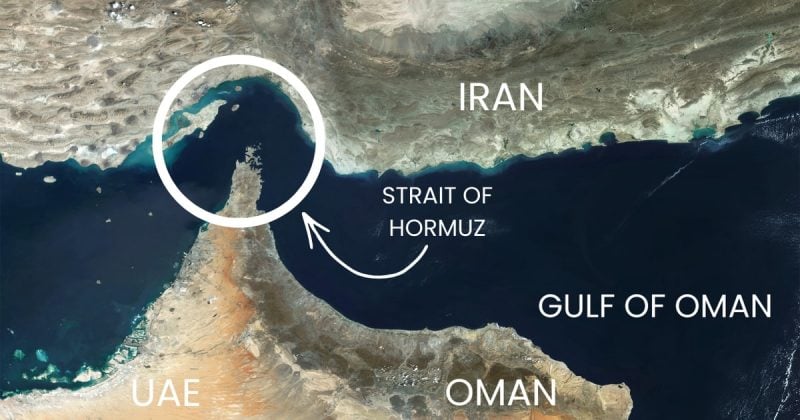
The Strait of Hormuz is a 21-mile-wide bottleneck between Iran and Oman. On any given day, it handles roughly 20-25% of global seaborne oil and a significant share of the world’s liquefied natural gas shipments.
Since late February 2026, the strait has been in varying states of disruption. US and Israeli military actions against Iran triggered retaliatory threats, direct attacks on commercial shipping, and periodic blockade attempts. The back-and-forth escalated to the point where approximately 20,000 seafarers found themselves stranded across roughly 2,000 vessels.
Brent crude oil prices reached $126 per barrel at the peak in March 2026, feeding directly into inflation expectations and squeezing liquidity across financial markets.
Iran’s crypto pivot and why it matters
Tehran has reportedly been charging fees pegged at $1 per barrel of oil in Bitcoin, a move that sidesteps US-controlled dollar payment infrastructure and international sanctions frameworks.
The news moving money, markets, and the world—before your day starts.
Daily. Free. Join 34,000+ readers across crypto, finance, and policy.
The proposed $10 billion Bitcoin insurance platform for maritime operations in Hormuz would represent one of the largest single-purpose Bitcoin allocations by a state-adjacent entity.
No major cryptocurrency protocols beyond Bitcoin and stablecoins have been directly implicated in these developments, which narrows the blast radius for crypto investors.
What crypto investors should be watching
The IMO condemnation strips away any veneer of international legitimacy from Iran’s control claims. If member states follow through on rejecting Tehran’s traffic authority, Iran faces a choice between backing down or escalating enforcement, which would further disrupt shipping and push oil prices higher.
The $126 per barrel Brent crude peak from March provides a useful benchmark. If tensions escalate beyond the current level, that number could be retested or exceeded.
For stablecoin markets specifically, Iran’s reported use of stablecoins for transit payments raises regulatory risk. US regulators have been increasingly focused on stablecoin compliance frameworks, and evidence of state-level sanctions evasion through stablecoins could accelerate legislative timelines or trigger executive action against specific issuers or protocols.