
Nexo Earn with Nexo
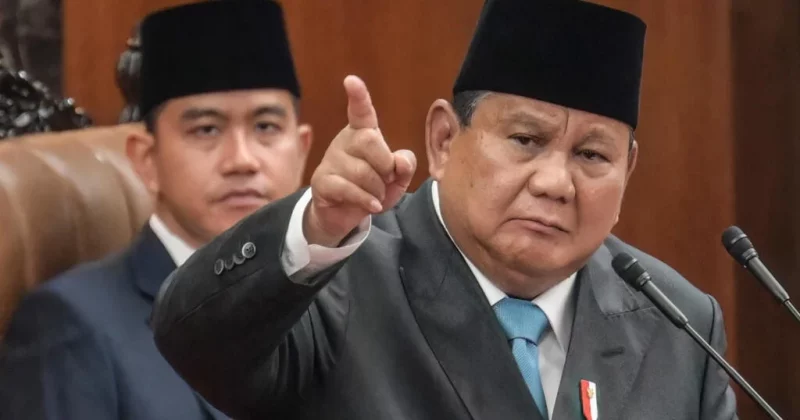
Indonesia’s President Prabowo Subianto announces major overhaul of natural resource trade

Indonesia’s President Prabowo Subianto announces major overhaul of natural resource trade

Jakarta plans to funnel coal and palm oil exports through state-owned firms to crack down on underinvoicing and offshore earnings diversion.

Indonesia, the world’s largest exporter of thermal coal and palm oil, is about to fundamentally reshape how those commodities leave the country. President Prabowo Subianto has announced a sweeping overhaul of the nation’s natural resource trade, requiring that strategic exports be routed through designated state-owned enterprises.

The move is aimed squarely at plugging revenue leaks. Think of it as Indonesia installing a toll booth on its most lucrative export highway, one staffed exclusively by government-controlled operators.

What the overhaul actually looks like

The new policy targets Indonesia’s most valuable commodity exports, starting with coal and crude palm oil. Under the proposed regulations, these exports would no longer flow freely through private trading channels. Instead, they would be funneled through specified state-owned enterprises, known locally as BUMN.

The logic is straightforward, even if the execution will be anything but. Jakarta believes that private exporters have been systematically underreporting the value of shipments, using transfer pricing to shift profits offshore, and diverting export earnings away from Indonesian banks. Routing everything through state firms is meant to give the government a direct line of sight into every transaction.

The transition is set to begin in June 2026, with full implementation targeted for September 1, 2026. That gives the private sector roughly a year to adjust, and gives the state-owned firms a window to build out the infrastructure and capacity needed to handle what will be an enormous volume of trade.

Here’s the thing: Indonesia exported tens of billions of dollars worth of coal and palm oil products in recent years. Asking state firms to manage that pipeline is not a small operational lift. It’s more like asking a regional airline to suddenly handle all domestic flights.

Advertisement

The bigger picture: state control and fiscal leakages

This isn’t happening in isolation. The export overhaul is part of a broader agenda under Prabowo’s administration to reclaim state assets and prevent what officials describe as economic leakages. The government has signaled that the framework could eventually expand beyond coal and palm oil to encompass additional strategic commodities.

That expansion would give Jakarta significant authority over the mechanics of Indonesian exports across multiple sectors. For a country that sits on vast reserves of nickel, tin, copper, and other critical minerals, the implications stretch well beyond agriculture and energy.

Indonesia has a history of using export controls to assert sovereignty over its natural resources. The country banned exports of unprocessed nickel ore in 2020, forcing miners to process the metal domestically. That policy reshaped global nickel supply chains and attracted billions in smelter investment, though it also drew a trade dispute at the World Trade Organization from the European Union.

The current overhaul follows a similar philosophical thread: Indonesia’s resources should generate maximum value for Indonesia, not for intermediaries or offshore entities skimming margins along the way.

Prabowo, who took office in October 2024 after winning the presidential election earlier that year, has made economic nationalism a central pillar of his agenda. The natural resource trade overhaul fits neatly within that framework, combining revenue optimization with a visible assertion of state control.

What this means for commodity markets and investors

For global commodity traders, the policy introduces a new layer of counterparty complexity. Instead of negotiating directly with Indonesian mining companies or plantation firms, international buyers may find themselves dealing with state-owned intermediaries. That could slow transaction times, introduce bureaucratic friction, and potentially alter pricing dynamics for Indonesian coal and palm oil.

Coal markets are particularly worth watching. Indonesia is the world’s top thermal coal exporter, and any disruption to the flow of shipments, even temporary ones during the transition period, could ripple through energy markets in Asia. Countries like China, India, Japan, and South Korea depend heavily on Indonesian coal to fuel power generation.

Palm oil markets face similar considerations. Indonesia and Malaysia together account for the vast majority of global palm oil supply. If Indonesian exports experience bottlenecks during the switchover to state-managed channels, buyers may front-load purchases or shift volumes toward Malaysian suppliers, at least temporarily.

The broader risk for investors is regulatory uncertainty. If the government expands this framework to cover nickel, tin, bauxite, or other minerals, companies with significant Indonesian exposure could see their supply chains and cost structures shift meaningfully. Foreign mining firms operating in Indonesia will be watching the September 2026 deadline closely for signals about how aggressively Jakarta intends to enforce the new rules.

There’s also a question of effectiveness. State-owned enterprises in Indonesia have a mixed track record when it comes to operational efficiency and governance. Whether routing exports through BUMN actually reduces underinvoicing and transfer pricing, or simply adds a new bureaucratic layer without meaningfully changing behavior, remains to be seen.

For crypto-adjacent investors focused on commodity-backed tokens or real-world asset tokenization in Southeast Asia, the policy adds a wrinkle. Any digital infrastructure built around Indonesian commodity exports would need to account for state-controlled intermediaries as mandatory participants in the trade flow. That’s not a dealbreaker, but it does narrow the design space for decentralized commodity trading platforms targeting Indonesian supply chains.

The September 2026 implementation date gives markets time to price in the changes, but the real test comes when state-owned firms actually start processing export volumes at scale. History suggests the transition will be messier than the policy documents imply.

Disclosure: This article was edited by Editorial Team. For more information on how we create and review content, see our Editorial Policy.

Indonesia’s President Prabowo Subianto announces major overhaul of natural resource trade

Indonesia’s President Prabowo Subianto announces major overhaul of natural resource trade

Jakarta plans to funnel coal and palm oil exports through state-owned firms to crack down on underinvoicing and offshore earnings diversion.

Indonesia, the world’s largest exporter of thermal coal and palm oil, is about to fundamentally reshape how those commodities leave the country. President Prabowo Subianto has announced a sweeping overhaul of the nation’s natural resource trade, requiring that strategic exports be routed through designated state-owned enterprises.

The move is aimed squarely at plugging revenue leaks. Think of it as Indonesia installing a toll booth on its most lucrative export highway, one staffed exclusively by government-controlled operators.

What the overhaul actually looks like

The new policy targets Indonesia’s most valuable commodity exports, starting with coal and crude palm oil. Under the proposed regulations, these exports would no longer flow freely through private trading channels. Instead, they would be funneled through specified state-owned enterprises, known locally as BUMN.

The logic is straightforward, even if the execution will be anything but. Jakarta believes that private exporters have been systematically underreporting the value of shipments, using transfer pricing to shift profits offshore, and diverting export earnings away from Indonesian banks. Routing everything through state firms is meant to give the government a direct line of sight into every transaction.

The transition is set to begin in June 2026, with full implementation targeted for September 1, 2026. That gives the private sector roughly a year to adjust, and gives the state-owned firms a window to build out the infrastructure and capacity needed to handle what will be an enormous volume of trade.

Here’s the thing: Indonesia exported tens of billions of dollars worth of coal and palm oil products in recent years. Asking state firms to manage that pipeline is not a small operational lift. It’s more like asking a regional airline to suddenly handle all domestic flights.

Advertisement

The bigger picture: state control and fiscal leakages

This isn’t happening in isolation. The export overhaul is part of a broader agenda under Prabowo’s administration to reclaim state assets and prevent what officials describe as economic leakages. The government has signaled that the framework could eventually expand beyond coal and palm oil to encompass additional strategic commodities.

That expansion would give Jakarta significant authority over the mechanics of Indonesian exports across multiple sectors. For a country that sits on vast reserves of nickel, tin, copper, and other critical minerals, the implications stretch well beyond agriculture and energy.

Indonesia has a history of using export controls to assert sovereignty over its natural resources. The country banned exports of unprocessed nickel ore in 2020, forcing miners to process the metal domestically. That policy reshaped global nickel supply chains and attracted billions in smelter investment, though it also drew a trade dispute at the World Trade Organization from the European Union.

The current overhaul follows a similar philosophical thread: Indonesia’s resources should generate maximum value for Indonesia, not for intermediaries or offshore entities skimming margins along the way.

Prabowo, who took office in October 2024 after winning the presidential election earlier that year, has made economic nationalism a central pillar of his agenda. The natural resource trade overhaul fits neatly within that framework, combining revenue optimization with a visible assertion of state control.

What this means for commodity markets and investors

For global commodity traders, the policy introduces a new layer of counterparty complexity. Instead of negotiating directly with Indonesian mining companies or plantation firms, international buyers may find themselves dealing with state-owned intermediaries. That could slow transaction times, introduce bureaucratic friction, and potentially alter pricing dynamics for Indonesian coal and palm oil.

Coal markets are particularly worth watching. Indonesia is the world’s top thermal coal exporter, and any disruption to the flow of shipments, even temporary ones during the transition period, could ripple through energy markets in Asia. Countries like China, India, Japan, and South Korea depend heavily on Indonesian coal to fuel power generation.

Palm oil markets face similar considerations. Indonesia and Malaysia together account for the vast majority of global palm oil supply. If Indonesian exports experience bottlenecks during the switchover to state-managed channels, buyers may front-load purchases or shift volumes toward Malaysian suppliers, at least temporarily.

The broader risk for investors is regulatory uncertainty. If the government expands this framework to cover nickel, tin, bauxite, or other minerals, companies with significant Indonesian exposure could see their supply chains and cost structures shift meaningfully. Foreign mining firms operating in Indonesia will be watching the September 2026 deadline closely for signals about how aggressively Jakarta intends to enforce the new rules.

There’s also a question of effectiveness. State-owned enterprises in Indonesia have a mixed track record when it comes to operational efficiency and governance. Whether routing exports through BUMN actually reduces underinvoicing and transfer pricing, or simply adds a new bureaucratic layer without meaningfully changing behavior, remains to be seen.

For crypto-adjacent investors focused on commodity-backed tokens or real-world asset tokenization in Southeast Asia, the policy adds a wrinkle. Any digital infrastructure built around Indonesian commodity exports would need to account for state-controlled intermediaries as mandatory participants in the trade flow. That’s not a dealbreaker, but it does narrow the design space for decentralized commodity trading platforms targeting Indonesian supply chains.

The September 2026 implementation date gives markets time to price in the changes, but the real test comes when state-owned firms actually start processing export volumes at scale. History suggests the transition will be messier than the policy documents imply.

Disclosure: This article was edited by Editorial Team. For more information on how we create and review content, see our Editorial Policy.