
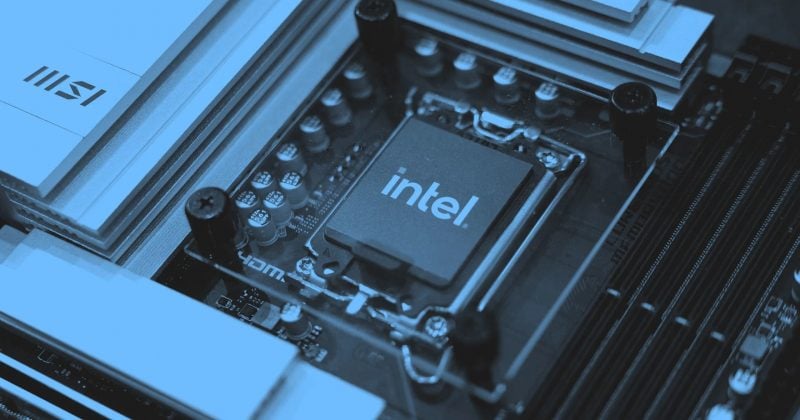
Intel plans to launch AI chip by year-end with lower-cost tech
The Crescent Island GPU ditches expensive high-bandwidth memory in favor of LPDDR5X, betting that cheaper inference chips are what the market actually needs.
Intel is making a play that sounds almost counterintuitive in the AI chip arms race: going cheaper on purpose.
The company’s Crescent Island GPU, announced in October 2025, packs 160 GB of LPDDR5X memory and is designed to run in air-cooled server environments. That’s a deliberate departure from the approach taken by Nvidia and AMD, which rely on high-bandwidth memory, or HBM, a faster but significantly more expensive component.
Why cheaper memory matters more than you think
LPDDR5X memory is substantially less expensive than HBM, and Intel is arguing that the performance tradeoff is worth it for inference workloads specifically. Inference is the process of actually running trained models to generate answers, write code, or power AI agents. These workloads run constantly, at scale, across thousands of servers, making cost per query a significant factor.
The air-cooling angle is equally significant. Liquid-cooled servers are more complex to deploy, more expensive to maintain, and require specialized data center infrastructure. By designing Crescent Island to work in standard air-cooled racks, Intel is lowering the total cost of ownership for enterprises that want to deploy AI inference without rebuilding their data centers from scratch.
Intel’s AI business is already surging
The company’s data center and AI segment posted revenue of $5.1 billion in Q1 2026, representing 22% growth year-over-year.
AI, tech, and the markets they move—in one daily briefing.
Daily. Free. Join 34,000+ readers across crypto, finance, and policy.
Intel’s stock has surged over 200% year-to-date in 2026, fueled by growing demand for AI data center capacity, a resurgence in CPU-based inference workloads, and expanding foundry partnerships under CEO Lip-Bu Tan’s leadership.
Customer sampling of the Crescent Island GPU is targeted for the second half of 2026.
What this means for investors
The 22% year-over-year revenue growth in data center and AI suggests this isn’t just a slide deck strategy. The stock’s 200% year-to-date performance indicates institutional investors have already started pricing in Intel’s AI turnaround story.
Worth noting for crypto-native readers: Intel’s AI chip developments have no direct connection to any tokens or blockchain protocols. Intel’s play here is a pure semiconductor story, and investors should evaluate it on those terms rather than looking for downstream crypto implications that don’t currently exist.