
IQM shares slip on first day of trading after NASDAQ debut
The Finnish quantum computing firm became the first European player in its field to list on a major US exchange, but the market greeted the milestone with a shrug.
Going public is supposed to be a celebration. For IQM Quantum Computers, the champagne was barely poured before the stock started sliding.
The Finnish quantum computing company began trading American Depositary Shares on the Nasdaq under the ticker IQMX on July 2, 2026, after completing its merger with Real Asset Acquisition Corp. (RAAQ), a blank-check firm. Shares declined on their debut day, a lukewarm welcome for a company that carries a pre-money equity valuation of roughly $1.8 billion.
What just happened, and why it matters
IQM reported audited revenue of €31 million (approximately $36 million) in its last fiscal year and has sold and deployed hardware: 18 quantum computers are currently running inside leading supercomputing centers, with total units sold ranging between 18 and 23 systems.
The company also comes to market with an order backlog exceeding €67 million. Ahead of the merger, IQM secured PIPE commitments totaling more than $146 million. The post-merger cash available to the company is expected to exceed $450 million.
IQM is the first European quantum computing company to list on a major US exchange.
AI, tech, and the markets they move—in one daily briefing.
Daily. Free. Join 34,000+ readers across crypto, finance, and policy.
SPAC debuts and the first-day slide
RAAQ was a blank-check firm, meaning it raised money specifically to find and merge with a target company. When that merger closes, the resulting public entity is immediately subject to market forces that a traditional IPO roadshow would have partially priced in through institutional book-building.
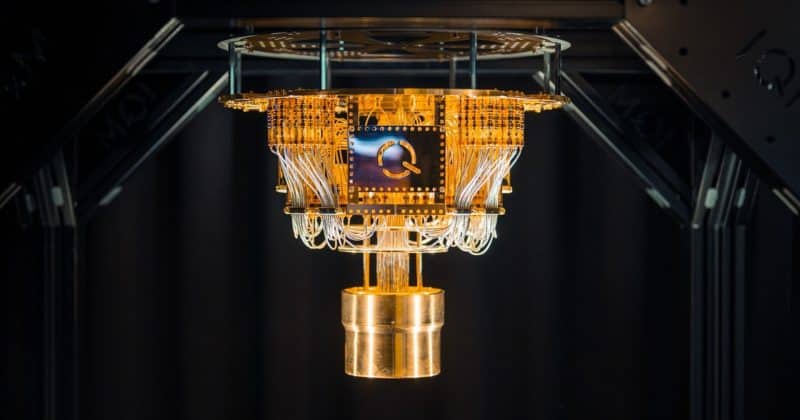
IQM’s superconducting approach puts it in the same technical lane as IBM and Google’s quantum divisions. The Finnish company’s differentiation historically rests on co-design, working directly with customers to tailor quantum systems for specific use cases rather than offering a one-size-fits-all product.
What investors should watch
The $450 million-plus in post-merger cash is the most immediately relevant figure for anyone considering a position in IQMX. Superconducting systems require cryogenic infrastructure, precision engineering, and continuous R&D investment.
The €67 million order backlog is the second figure worth tracking closely. The pace of backlog-to-revenue conversion will appear in upcoming quarterly disclosures.
Post-merger valuation near $1.9 billion against approximately $36 million in annual revenue implies a revenue multiple that demands significant growth to justify.